Furnaces Take a Turn for the Green
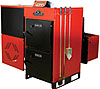
Wolf Steel Limited offers a biomass furnace that provides up to 120,000 Btuh and has the option of using three different kinds of fuel, including wood pellets, corn, or wheat. (Courtesy of Wolf Steel.)
Only 100 years ago, 90 percent of Americans burned wood to heat their homes. As fossil fuel use rose, the percentage of Americans using wood for fuel dropped, falling to as low as 1 percent by 1970, according to the U.S. Department of Energy. Now that the green movement is taking hold, interest in biomass heating is resurfacing as a renewable energy alternative.
Central heating by way of biomass fuels can be achieved by using a forced-air furnace that uses the same ductwork as traditional gas- or oil-fired furnaces. The type of fuel burned in these furnaces differs from one manufacturer to the next, but biomass fuels typically include corn, wheat, and wood (including wood pellets or chips). Biomass is considered to be a renewable energy source because it is always possible to grow more of it, so theoretically, the supply will never be gone.
The biomass furnaces available today are quite a step up from the smoky wood-burning stoves many of us remember from childhood. These state-of-the-art furnaces are cleaner burning, more efficient, and powerful enough to heat most regularly sized homes. With many customers looking for more green options, now may be the time for contractors to add biomass furnaces to their product line-up.
BIOMASS BENEFITS
Energy savings and comfort are two of the main benefits customers experience when they choose to have a biomass furnace installed. “Biomass or wood pellets can save a lot of money in home heating when compared to other fuels, especially heating oil, propane, and electricity,” said Karen McSherry, brand manager, Harman Home Heating, Halifax, Pa. “When compared to an electric heat pump system, the comfort level will be increased because you will actually feel warm air coming from the registers.”Harman’s PF100 furnace, which utilizes wood pellets, is 89 percent efficient and offers better fuel economy due to its large heat exchangers, which extract energy from the fire.
“Having more surface area means you will burn fewer pellets and get more heat from your stove,” said McSherry. “In addition, most Harman models have optional outside air kits, which boost efficiency even further.” Due to its higher efficiency levels, the Harman furnace qualifies for a federal tax credit.
Most biomass furnaces on the market today are fully automated and require little more effort than dumping fuel into a hopper and occasionally removing ashes. With the Harman PF100 furnace, the pellets feed into a patented feeder and burnpot at the rate needed to attain the desired room temperature as set by the homeowner. The furnace features a two-stage heat exchanger that delivers up to 112,000 Btu, and the onboard microprocessor monitors house temperature and adjusts the fire accordingly. The furnace is operated from a wall-mounted control center that lights up when it is time to refuel, but with its large, 160-pound hopper capacity, frequent refueling is unnecessary.
Wolf Steel Limited, Ontario, Canada, also offers a biomass furnace, and Steve Gauci, director of HVAC and retail operations, noted that customers who purchase their furnace are most interested in energy savings. “We are targeting customers who want to go green and save energy. Our furnace can provide up to 120,000 Btuh, and it has the option of using three different kinds of fuel including wood pellets, corn, or wheat. The fuels can also be mixed.”
While biomass furnaces can be installed in both retrofit and new construction applications, Gauci noted that most of their customers are looking at retrofitting an existing home with a biomass furnace. “Our furnaces hook right up to an existing forced air system and can take the place of a gas or oil furnace. The ductwork remains the same, and the heating contractor need only make sure the plenum is big enough for the new furnace, which weighs about 770 pounds.”
One main difference between a biomass furnace and traditional oil- or gas-fired furnaces, said Gauci, is that their biomass furnace only comes in one size, but using the optional wall thermostat to control the fuel feed system provides a constant temperature for each home.
“The large 10 cubic foot hopper provides continuous heat for up to five to eight days on a single loading. When the fuel is low, the controller flashes and a low fuel buzzer indicates the need to refuel.”
McSherry noted many people who purchase a pellet furnace have an existing form of heat they are not completely satisfied with, which is why their PF100 pellet furnace can be used as a stand-alone unit with its own ducts, or as an add-on that works in conjunction with an existing hot air furnace system. Pellet furnaces do require venting to the outside, and since a solid fuel is being burned, ashes will be produced, thus requiring some minimal maintenance to be performed on a regular schedule. The benefit of high combustion efficiency is that the ash pan only needs to be emptied monthly.
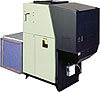
Harman’s PF100 furnace, which utilizes wood pellets, is 89 percent efficient and offers better fuel economy due to its large heat exchangers, which extract energy from the fire. (Courtesy of Harman Home Heating.)
FUEL ISSUES
Some customers may be reluctant to purchase a biomass furnace because they are concerned about the availability of fuel in their area. This concern can be overcome, said McSherry, as wood pellets are available at big box stores, farm and fleets, as well as hearth retail outlets. Pellets come in 40-pound bags and are normally ordered by the ton - a ton of pellets being 50 of these bags stacked on a pallet.“While fuel consumption will vary based on the climate and home size, a typical home will use between four and six tons of wood pellets year. Prices fluctuate according to the quality of fuel and geographical area, with high ash fuel being cheaper than premium pellets.”
As for storing the fuel, pallets of wood pellets can be wrapped in a tarp and stored outside, however inside storage is best to ensure moisture does not get into the pellets.
Some stores will hold pellets for customers, allowing them to take a ton at a time in the case of storage issues, said McSherry. This can be beneficial for customers, as they can purchase pellets during the spring and summer when prices are lower, then have them delivered for fall and winter use.
Gauci noted that while farmers may have a ready supply of fuel to use in their biomass furnaces, others may have to purchase dried corn or wheat from a local co-op. “The outlying areas of any city will have bags of corn or wheat. Our hopper holds 448 pounds of corn, which costs about $6, or 400 pounds of wood pellets, which are available everywhere.”
With more customers looking to go green, now may be the time to offer biomass furnaces as an alternative to traditional fossil fuel furnaces. As McSherry noted, “Green is no longer a trend, it is a way of life, and heating with biomass brings considerable benefits to our environment, as it is renewable and burning it is considered carbon neutral.”
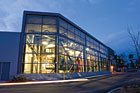
Middlebury’s $12 million biomass gasification system saves the college $700,000 in fuel costs per year, puts $800,000 of new money into the local economy, and will reduce carbon emissions by 40%. (Courtesy of Brett Simison.)
Sidebar: Cutting Costs at College
Middlebury College, Middlebury, Vt., has jumped onto the biomass bandwagon by installing a new biomass gasification plant. Centrally located on campus, the $12 million plant is the college’s most significant milestone toward its goal of becoming carbon neutral by 2016. The biomass boiler is expected to cut the college’s use of No. 6 heating oil in half - from 2 million gallons to 1 million gallons annually - and reduce the college’s carbon dioxide emissions by 40 percent, or 12,500 metric tons.The gasification system converts regionally grown wood chips (which are superheated in an oxygen-deprived environment) into gas, which then burns to provide steam for heating, cooling, hot water, and cooking throughout the campus. The plant also helps cogenerate 20 percent of the campus’s electricity.
In the hopes of developing its own sustainable supply of wood chips, the college is currently testing the feasibility of fast-growing willow shrubs as biomass fuel on a 10-acre plot just west of the campus. If the willows prove to be a viable fuel source, college officials will explore the feasibility of contracting with local farmers to grow willow as a cash crop on fallow farmland near the campus.
The plant, which came online in February 2009, cost $12 million and is expected to have a payback of 11 years.
Publication date: 11/16/2009
Looking for a reprint of this article?
From high-res PDFs to custom plaques, order your copy today!