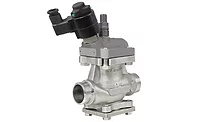
Diagnosing and curing a sick solenoid valve
But when solenoid valves do, in fact, experience a malfunction, the best way to a quick recovery is to first identify symptoms of the problem, then carefully examine possible causes. Here are some tips.
There are four symptoms that indicate a solenoid valve is malfunctioning. They include:
1.Failure to open;
2.Failure to close;
3.Internal or external leakage; and
4. Creating noise when energized.
So what causes these ailments? Follow this technical advice for diagnosing symptoms of an unhealthy solenoid valve and treating it properly for a quick recovery.
Symptom: valve won't open
When energized, a normally closed solenoid valve opens (see Figures 3 and 4). When the solenoid is energized, the plunger strikes the pole piece with an audible "click." If you don't hear a click, the valve isn't working properly.Diagnosis: Electrical or mechanical failure.
Remedy: First, be sure that there is a completed electrical circuit. Voltage to the coil should be at least 85% of the rating shown on the valve's nameplate.
Looking for quick answers on air conditioning, heating and refrigeration topics? Try Ask ACHR NEWS, our new smart AI search tool. Ask ACHR NEWS
If proper voltage is measured at the coil and you still don't hear a click, then a mechanical obstruction is preventing the plunger from moving. The obstruction may be caused by overpressurization, dirt, or worn components.
Next, check the pressure at the valve inlet to ensure that it doesn't exceed the maximum operating pressure differential (MOPD) as rated on the valve's nameplate.
If dirt is present in the system, disassemble and clean the valve and install a suitable filter upstream from the valve.
Important: Remember to evacuate the system or isolate the valve from the system's refrigerant before disassembling. Also, it's important to replace worn components with the correct manufacturer's rebuild kit.
Pilot-operated diaphragm or piston valves may fail to open if system pressure is below the minimum pressure differential requirement stated on the valve's nameplate.
In addition, if the diaphragm or piston pilot orifice (which controls the opening of the valve) is blocked by dirt or debris, pressure will remain above the diaphragm or piston, and the valve will not open. (The pilot orifice in offset pilot valves is located in the valve body, directly below the plunger.)
A torn diaphragm also allows too much pressure above the diaphragm, causing it to remain closed.
Symptom: valve won't close
Diagnosis: Electrical or mechanical failure.Remedy: When a de-energized valve won't close, again, check the electrical circuit to ensure that power is disconnected from the coil. Mechanical causes that inhibit movement of the plunger, including a missing or damaged plunger return spring, may not allow the plunger to seal off the main orifice or pilot orifice.
In the case of pilot-operated diaphragm or piston valves, a blocked bleed orifice can cause the valve to remain open.
When encountering "failure-to-close" characteristics, it is important to know whether the valve isn't closing at all, or if it is attempting to close but doesn't close completely because of internal seat leakage. In the case of internal seat leakage, other causes should be considered.
Symptom: valve won't open (normally open)
Diagnosis: When a normally open, de-energized valve won't open, it's an electrical or mechanical failure.Remedy: A normally open valve should open when it's de-energized. If it doesn't, overpressurization, dirt, or worn components may be at fault.
In this case, check the electrical circuit to ensure that power has been disconnected from the coil.
Symptom: valve won't close (normally open)
Diagnosis: The bleed orifice controls the closing for the energized valve and, if blocked, will not allow pressure to flow above the dia-phragm or piston, enabling them to close the valve.Remedy: A normally open valve should close when energized. Similar electrical causes to those identified under the "fails to open when energized" category should be considered.
Additionally, when examining pilot-operated diaphragm or piston valves, the bleed orifice in the diaphragm or piston should be inspected.
Symptom: internal seat leakage
Diagnosis: Internal seat leakage can be caused by debris that restricts the plunger disc or diaphragm from sealing completely on internal orifices.Deterioration of valve orifices or sealing materials, caused by wear or media incompatibility, also are possible causes of internal leakage.
Remedy: Pilot-operated valves, which require a minimum pressure differential to operate, may not seal off tightly, causing internal leakage if system pressure is less than the rated minimum pressure required.
Symptom: external seat leakage
Diagnosis: External leakage can be caused by missing or damaged external seals. Seals can be damaged by:- System media that is incompatible with the seals;
- Overpressure that causes the seals to dislodge; or
- Incorrect reassembly (if the valve has been disassembled).
Be sure to refer to the manufacturer's installation and maintenance instructions for correct brazing, disassembly, and torque specifications.
Improper installation also may cause external leakage.
Remedy: When installing mechanical connections to a solenoid valve, use a second wrench on the valve body for support so that the body won't be distorted. Never use the valve plunger tube or solenoid as a lever to provide support.
When brazing, be sure to wrap the valve in a wet rag (extended-end versions), or disassemble the valve if sweat connections are not extended-end versions.
Symptom: noise when energized
Diagnosis: Ac voltage solenoid valves may emit a slight hum when energized. This is typical because of the magnetic wave form caused by ac voltage. If this noise becomes excessive, however, there may be missing components from the solenoid assembly, or an incomplete magnetic circuit.Remedy: To complete the magnetic circuit, the plunger must make contact with the pole piece. Debris in the plunger enclosure tube, a worn plunger (or pole piece), damaged enclosure tube, or damaged plunger return spring may prevent the plunger from making contact with the pole piece.
Supply voltage lower than 85% of the nameplate rating may be insufficient to overcome the plunger return spring force. Noise will result.
Symptom: short coil life
Diagnosis: Excessive heat is typically the cause of short coil life. Heat can be generated by media temperature, ambient temperature, excessive voltage, or an incomplete magnetic circuit.Remedy: Care should be taken to specify a coil insulation system capable of withstanding the various operating temperatures. Never energize a coil when it isn't in the plunger tube.
Most solenoid coils today are epoxy or plastic encapsulated. However, if a tape-wound coil is used, moisture or dust may cause premature failure.
Altogether, solenoid valves are reliable and easy to maintain. If they are installed properly and inspected thoroughly in a regular maintenance program, they should operate efficiently and with few problems.
Sidebar: Take the quiz!
1. If proper voltage is measured at the coil and you still don’t hear a click, then a mechanical obstruction is preventing the plunger from moving. The obstruction may be caused by (underpressurization, overpressurization); dirt; or worn components.
2. A torn diaphragm also allows (too much, too little) pressure above the diaphragm, causing it to remain closed.
3. The bleed orifice controls the (closing, opening) for the energized valve and, if blocked, will not allow pressure to flow above the diaphragm or piston, enabling them to close the valve.
4. Pilot-operated valves require a (minimum, maximum) pressure differential to operate.
5. Supply voltage lower than (65%, 85%, 95%) of the nameplate rating may be insufficient to overcome the plunger return spring force. Noise will result.
Answers: 1. overpressurization; 2. too much; 3. closing; 4. minimum; 5. 85%.
Looking for a reprint of this article?
From high-res PDFs to custom plaques, order your copy today!