ACHR News
search
Ask ACHR NEWS AI
cart
facebook twitter instagram linkedin youtube
  • Sign In
  • Subscribe
  • Sign Out
  • My Account
ACHR News
  • NEWS
    • Breaking News
    • New HVAC Products
    • Featured Products
    • Manufacturer Reports
    • HVAC Data
    • Legislation
    • ACHR NEWS Centennial
  • RESIDENTIAL
    • Air Conditioners
    • Furnaces
    • Residential Heat Pumps
    • Ductless
    • Residential IAQ
    • Testing, Monitoring, Tools
    • Components & Accessories
  • COMMERCIAL
    • Air Handlers
    • Rooftop Units
    • Chillers and Cooling Towers
    • Commercial Heat Pumps
    • Boilers and Hydronics
    • VRF/Ductless
    • Commercial IAQ
  • REFRIGERATION
    • Refrigerants
    • Refrigerant Regulations
    • Leak Management
  • CONTRACTOR PRO
    • Geothermal
    • Homeowner Study
    • VRF and VRV Ductless
    • Unitary Trends
  • EDUCATION
    • Training and Education
    • Business Management
    • Service and Maintenance
    • Continuing Education
    • Market Research >
      • HVAC Brand Awareness Report
      • VRV, VRF, VRVZ Report
      • Unitary Trends Report
      • Water Heat Professionals Report
    • Webinars
    • Sponsor Insights
    • eProducts Info
    • White Papers
  • EVENTS
    • HVAC Contractor Forum
    • Industry Events and Webinars
  • MEDIA
    • Videos
    • AHR Expo 2025 Videos
    • Podcasts >
      • ACHR News Podcast
      • HARDI Podcasts
      • AHR Expo Podcasts
      • ACCA Podcasts
    • Interactive Spotlights
    • Quizzes
    • eBooks
    • HVAC Talkback
  • HVAC GROUP
    • ACHR NEWS >
      • Current Issue
      • Digital Edition
      • Subscribe
    • Distribution Trends
    • SNIPS NEWS >
      • Join SNIPS NEWS
    • Engineered Systems News >
      • Join ES News
    • HVACR Directory
    • Contests
    • Newsletters
    • Contact
    • Advertise
    • My Account
HVAC ContractingBusiness Management

Balancing Your Obligations Under the ADA

By Richard D. Alaniz
May 19, 2008
Richard D. Alaniz

With more than 65,000 vehicles on the road each day, managers at Atlanta-based United Parcel Service Inc. (UPS) thought they were protecting the company when they implemented a policy that required all applicants for driver positions to meet the U.S. Department of Transportation’s (DOT’s) hearing standards for drivers of the largest class of commercial vehicles. The company based its policy on three studies that showed that deaf drivers were, as a general rule, more susceptible to traffic accidents than their hearing counterparts. But while the policy may have reduced the risk of traffic accidents involving deaf drivers, it exposed the company to another type of risk - legal liability for violating the Americans with Disabilities Act (ADA).

In 1999, a group of 1,000 deaf or hearing-impaired UPS employees sued the company, arguing that the company’s blanket prohibition on hiring them for driver positions illegally prevented them from advancing their careers at the company and violated their rights under the ADA. After seven years of litigation, a California federal court ruled in the employees’ favor, finding that UPS’s policy violated the law. The court ruled UPS could no longer enforce its policy and ordered the company to pay the plaintiffs $5.8 million.

Although the case was recently reheard by the 9th Circuit Court of Appeals and sent back to the lower court for further proceedings, Bates v. UPS highlights the difficult situation companies face when trying to balance their need for employee and public safety with their legal obligations under the ADA.

PROTECTING WORKERS

Congress enacted the ADA in 1990, with an effective date of 1993, to, among other things, prevent employment discrimination against individuals with disabilities who are otherwise able to perform the essential functions of a job with or without “reasonable accommodations” from the employer.

The Act makes it unlawful for any employer of 15 or more people to discriminate “against qualified individuals with disabilities in job application procedures, hiring, firing, advancement, compensation, job training, and other terms, conditions, and privileges of employment.”

Courts have specifically found that employers violate the Act when they conduct pre-job offer medical screenings, specifically ask an applicant questions about whether he or she has a disabling condition, or automatically screen out people with disabilities by applying an employment test or qualification standard that is not directly related to an essential function of the job. However, employers may always require employees to maintain the appropriate licenses for the position they seek and meet any state or federally mandated standards, and they do not need to lower their safety standards to accommodate disabled individuals.

In Bates v. UPS the court found that UPS’s general policy against hiring deaf drivers violated the Act because it didn’t allow for an individual assessment of each drivers’ ability to safely operate a vehicle with accommodations such as extra mirrors and other visual aids. Further, the court found that although the standard UPS applied was mandated by the DOT for drivers of trucks heavier than 10,000 pounds, UPS violated the ADA when it applied that test to drivers for all vehicles in the absence of a clear showing that hearing-impaired individuals were any less capable of driving smaller vehicles safely.

ACCOMMODATION NATION

The Americans with Disabilities Act defines an individual with a disability as a person who “has a physical or mental impairment that substantially limits one or more major life activities; has a record of such an impairment; or is regarded as having such an impairment.” This means that employers must consider whether they must offer accommodations to individuals with a wide variety of physical or psychological impairments - a person with a back injury who requires special seat padding or back support, a diabetic who needs more frequent breaks during the day to eat or take insulin, and a person who has arthritis and needs an extra step to get into and out of a vehicle may all come under the coverage of the Act.

When considering whether it has a duty to accommodate such individuals, employers must carefully weigh what their legitimate business needs are and the employee’s ability to meet those needs. An employer does not need to create a new job to accommodate a disabled individual, but it may be required to modify aspects of the job - especially if certain duties are ancillary to the core job functions. For instance, if workers at a certain company generally work four hours before getting a 15-minute break, it may be a reasonable accommodation to give a worker with diabetes a 10-minute break every two hours. Mere inconvenience or a small expense to the employer is not enough “undue hardship” on the company to bring the employee outside the law’s protection.

While employers do not have to honor employees' demands for accommodations that are unreasonable or too burdensome, they are obligated to try to reach a compromise that will meet the employees’ needs. It’s essential for the employer to communicate with the employee and assess each individual’s situation. An employee with a disability should only be terminated if it is impossible for him to perform the essential functions of his job with accommodations that are reasonable, taking into account the employer’s size and resources.

In circumstances where the employer wants to verify the extent and seriousness of the employee’s medical condition, it must tread lightly. An employer may not require applicants to undergo medical examinations or ask questions about disabilites before extending a job offer. Nor may an employer ask the applicant’s doctor. However, after making a job offer, an employer may ask disability-related questions and perform medical examinations, and may condition the job offer on the results of these inquiries, so long as all employees in the same job classification are subject to the same examination or inquiry.

COMPLIANCE TIPS

It’s essential to remember that the ADA only requires employers to offer disabled individuals reasonable accommodations. That means that if a requested accommodation would either be unduly financially burdensome to the employer or would not enable the employee to perform the necessary job tasks, the employer does not have to grant it.

Thus, it’s important to have clear job descriptions that accurately describe the duties of the job and what capabilities employees must have. Whenever a job qualification standard, such as being able to climb stairs or ladders, tends to screen out people with disabilities, the onus will be on the employer to show that that qualification is job related and consistent with a business necessity.

Fortunately, courts have recognized that regular attendance is an “essential function” of all jobs, and the Equal Employment Opportunity Commission, which enforces the ADA, points out in its compliance guidelines that “an employer is not required to lower quality or production standards to make an accommodation.”      

The key to complying with the ADA is engaging in an interactive discussion with the employee to find out what accommodations would enable them to perform the essential functions of the job. Where employers get in trouble is when their policies exclude disabled people on the basis of their disability without considering what modifications might help in each individual case. Oftentimes, liability rests not on the employers’ inability to accommodate an employee, but rather on its unwillingness to find out whether it can.

Publication date: 05/19/2008

Share This Story

Looking for a reprint of this article?
From high-res PDFs to custom plaques, order your copy today!


Recommended Content

JOIN TODAY
To unlock your recommendations.

Already have an account? Sign In

  • HVAC-enrollment

    The Trades Are Back: HVACR Programs See Nearly 30% Enrollment Spike

    A new wave of future technicians is entering the pipeline.  
    News
    By: Matt Jachman
  • 2025 Top 40 Under 40

    2025 Top 40 Under 40 HVACR Professionals List

    The 11th annual Top 40 Under 40 list highlights those...
    HVAC Contracting
    By: Hannah Belloli-Oster
  • LG Ductless Mini-Split Systems

    The 9 Types of Heat Pumps

    As the U.S. moves toward electrification, heat pumps are...
    Air Source Heat Pumps
    By: Joanna R. Turpin
Subscription Center
  • Create an Account
  • Start a Subscription
  • Manage My Account
  • Sign Up for Newsletters
  • Visit Customer Service
  • Update Preferences

More Videos

Sponsored Content

Sponsored Content is a special paid section where industry companies provide high quality, objective, non-commercial content around topics of interest to The News audience. All Sponsored Content is supplied by the advertising company and any opinions expressed in this article are those of the author and not necessarily reflect the views of The News or its parent company, BNP Media. Interested in participating in our Sponsored Content section? Contact your local rep!

close
  • Piggy Bank
    Sponsored byWatercress Financial

    Energy Prices, Inflation, and HVAC: What Today’s Homeowners Care About

  • Refrigerated Food
    Sponsored bySolstice Advanced Materials

    R-455A Refrigeration: A Cold Storage Solution for the Future

  • Airex Rooftop Units
    Sponsored byAirex Manufacturing Inc

    Consolidating Roof Penetrations: A Growing Trend in Multifamily HVAC Design

Popular Stories

HVAC-Price-Increase-graphic

HVAC Price Increase List: June 2026

Trump-Section-232.jpg

Trump Reduces Section 232 Tariffs on HVAC Equipment to 15%

R410A-Refrigerant-Cylinder.jpg

Refrigerant Recovery is a Revenue Opportunity

Heat-pump-cutaway.jpg

PFAS Rules and A2L Building Codes Continue to Evolve

Midea-training.jpg

HVAC Workforce Crisis Expands Beyond Technicians to Instructor Shortages

View The ACHR NEWS
Centennial Anniversary Timeline

The ACHR News Timeline Chart
Submit a Letter
Submit a letter to our editors.

Events

November 6, 2025

Next-Gen Data Center Cooling: HVAC Innovation and Real-World Solutions

On Demand As AI workloads and high-density computing push traditional cooling methods to their limits, the data center industry is accelerating the adoption of next-generation HVAC technologies.

June 17, 2026

Decarbonization Without Disruption

This webinar will explore practical HVAC decarbonization strategies that minimize disruption while maximizing long-term performance and ROI.

View All Submit An Event

Poll

Summer Staff

Are you fully staffed for the summer season?
View Results Poll Archive

Products

BNI Mechanical/Electrical Square Foot Costbook, 2026 Edition

BNI Mechanical/Electrical Square Foot Costbook, 2026 Edition

See More Products
Decarbonization Without Disruption - Free Webinar - 6/17/2026

Related Articles

  • Determining Which Employees Are Disabled Under the New ADA Regulations

    See More
  • Workplace Safety, Disabled Employees, and the ADA

    See More
  • Diabetes, Epilepsy, and the ADA: Finding the Right Balance in the Workplace

    See More

Related Products

See More Products
  • Manual B.jpg

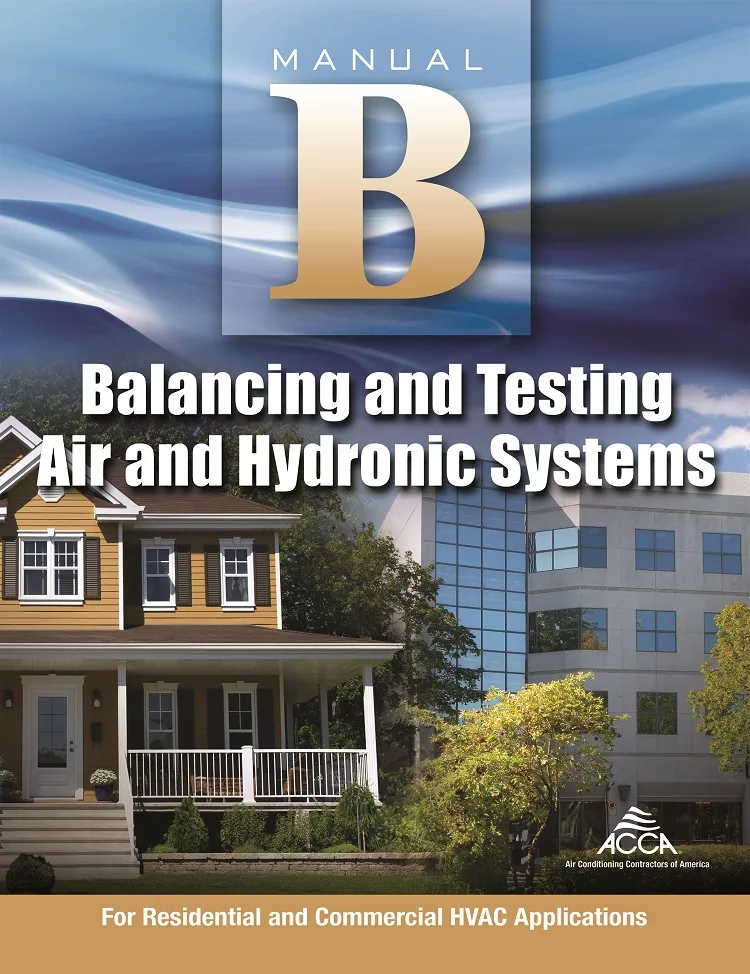
    Manual B - Balancing and Testing Air and Hydronic Systems

  • 9781482255676.jpg

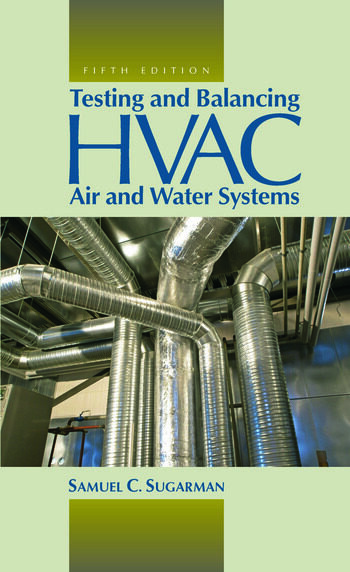
    Testing and Balancing HVAC Air and Water Systems, Fifth Edition

  • front cover only.jpg

    How to Market Your HVAC Business

See More Products

Related Directories

  • Your Bargain Mart

    We are a MRCOOL Dealer and carry contractor-grade HVAC equipment, air handlers, condensers, heat pumps, gas furnaces, evaporator coils and heat pumps, gas, and electric packaged units.
  • Hydro-Balance Corp.

    Coil cleaners, lubricants, coatings I.A.Q.
×

Sign Up. Stay Informed.

The #1 trusted source for the HVACR industry since 1926

SUBSCRIBE
  • RESOURCES
    • Advertise
    • Contact Us
    • Advisory Board
    • Classifieds
    • Submit a Letter
    • Directories
    • Store
  • ACCOUNT CENTER
    • Create an Account
    • Start a Subscription
    • Manage My Account
    • Sign Up for Newsletters
    • Visit Customer Service
    • Update Preferences
  • SERVICES
    • Marketing Services
    • Reprints
    • Market Research
    • List Rental
    • Survey/Respondent Access
  • STAY CONNECTED
    • LinkedIn
    • Facebook
    • Instagram
    • YouTube
    • X (Twitter)
  • PRIVACY
    • PRIVACY POLICY
    • TERMS & CONDITIONS
    • DO NOT SELL MY PERSONAL INFORMATION
    • PRIVACY REQUEST
    • ACCESSIBILITY

Copyright ©2026. All Rights Reserved BNP Media, Inc. and BNP Media II, LLC.

Design, CMS, Hosting & Web Development :: ePublishing