ACHR News
search
Ask ACHR NEWS AI
cart
facebook twitter instagram linkedin youtube
  • Sign In
  • Subscribe
  • Sign Out
  • My Account
ACHR News
  • NEWS
    • Breaking News
    • New HVAC Products
    • Featured Products
    • Manufacturer Reports
    • HVAC Data
    • Legislation
    • ACHR NEWS Centennial
  • RESIDENTIAL
    • Air Conditioners
    • Furnaces
    • Residential Heat Pumps
    • Ductless
    • Residential IAQ
    • Testing, Monitoring, Tools
    • Components & Accessories
  • COMMERCIAL
    • Air Handlers
    • Rooftop Units
    • Chillers and Cooling Towers
    • Commercial Heat Pumps
    • Boilers and Hydronics
    • VRF/Ductless
    • Commercial IAQ
  • REFRIGERATION
    • Refrigerants
    • Refrigerant Regulations
    • Leak Management
  • CONTRACTOR PRO
    • Geothermal
    • Homeowner Study
    • VRF and VRV Ductless
    • Unitary Trends
  • EDUCATION
    • Training and Education
    • Business Management
    • Service and Maintenance
    • Continuing Education
    • Market Research >
      • HVAC Brand Awareness Report
      • VRV, VRF, VRVZ Report
      • Unitary Trends Report
      • Water Heat Professionals Report
    • Webinars
    • Sponsor Insights
    • eProducts Info
    • White Papers
  • EVENTS
    • HVAC Contractor Forum
    • Industry Events and Webinars
  • MEDIA
    • Videos
    • AHR Expo 2025 Videos
    • Podcasts >
      • ACHR News Podcast
      • HARDI Podcasts
      • AHR Expo Podcasts
      • ACCA Podcasts
    • Interactive Spotlights
    • Quizzes
    • eBooks
    • HVAC Talkback
  • HVAC GROUP
    • ACHR NEWS >
      • Current Issue
      • Digital Edition
      • Subscribe
    • Distribution Trends
    • SNIPS NEWS >
      • Join SNIPS NEWS
    • Engineered Systems News >
      • Join ES News
    • HVACR Directory
    • Contests
    • Newsletters
    • Contact
    • Advertise
    • My Account
HVAC ContractingService and Maintenance

Noncontact Temperature Measurements Using IR Thermometers
May 27, 2005
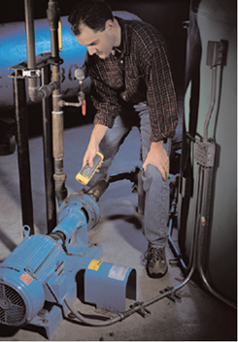
Infrared (IR) thermometers allow noncontact measurement of surface temperatures by analyzing the invisible, infrared spectrum emitted from an object.

IR devices, such as the Fluke 61 and 65 IR thermometers, make it safe to take surface temperature measurements of items like rotating, hard-to-reach, electrically live, or dangerously hot targets. For preventive maintenance tasks, they cut measurement time to almost zero with the ability to take a surface temperature reading in less than one second.

IR thermometers can be used to conduct a variety of different types of measurements, including:

  • HVACR: It's estimated up to 30 percent of air conditioning leaks are due to faulty ducting, which can be quickly and easily detected with an IR thermometer.

  • Electrical: IR thermometers can be used to troubleshoot problems in electrical connections and verify uninterruptible power supplies by locating hot spots in the output filters or DC battery connections. They can also be used to check components in battery bank, power panel terminations, ballasts, switch gears, and fuse connections that could be draining energy due to the heat created by loose connections or corrosion buildup.

  • Preventive maintenance: Using IR thermometers for preventive maintenance measurements of hard-to-reach equipment such as HVAC supply diffusers or dangerous equipment like motors, generators, and bearings helps identify potential problems.

  • Steam: IR thermometers are particularly useful in taking surface temperature measurements of uninsulated steam lines, steam valves and fittings, receiver tanks, and condensate return lines which pose a safety hazard due to the potential presence of live steam.

  • Fast test of multiple targets: IR thermometers are useful for checking multiple points easily from one location, saving time and money.

    Proper Use Of IR Technology

    Although IR temperature measurement will never be as accurate as a calibrated contact temperature device, a typical reading will be within 2 degrees F of the absolute temperature when the instrument is properly applied.

    Putting IR technology to use is easy but there are two critical parameters that must be understood to ensure proper and consistent temperature measurements with infrared-type devices:

  • Optical resolution, and

  • Emissivity.

    Figure 1. Optical resolution definition and examples.

    Optical Resolution

    Optical resolution refers to the sample area the IR meter is measuring at a given distance (see Figure 1). Optical resolution is also referred to as the "distance-to-spot-size ratio" or "field-of-view."

    Know your application! A device with a 4:1 optical resolution cannot effectively be used to measure an item's temperature 15 feet away - even if the laser beam sight can go that far. On the other hand, the 4:1 ratio gives a smaller minimum spot size than the 10:1 (i.e., the 4:1 can sample a smaller spot than the 10:1).

    Try to determine how you are going to apply the IR thermometer before purchasing, and then buy the one that provides the appropriate optical resolution for the application. Many erroneous readings are taken because the technician unknowingly samples a larger area than the object he is trying to measure.

    Figure 2. Emissivity definition and examples.

    Emissivity

    Emissivity indicates the ability of an object to emit infrared energy. Emissivity is based upon the material from which the object is constructed and the surface finish. Values can range from less than 0.1 for a highly reflective body to 1.0 for an ideal black body (see Figure 2).

    Items such as soft-drawn copper are very smooth and shiny even under a microscope, while other objects such as lacquer paint appear quite porous under the microscope. The porous object will have a relatively high emissivity (typically 0.7 to 0.98), while new soft-drawn copper (shiny, not oxidized) will have a low emissivity (typically below 0.2). Shiny objects have a tendency to reflect IR energy from objects surrounding them, which dilutes the IR energy from the measured object. A porous body tends to absorb surrounding IR energy, thus emitting its IR energy without dilution (like a black body).

    Low-cost IR measurement instruments (under $400) are typically fixed at 0.95 emissivity (the Fluke 61 and 65 IR thermometers have a 0.95 emissivity). To get an effective absolute temperature reading, the surface being measured must have an emissivity close to 0.95. This can be accomplished by measuring a surface that is not too reflective. A shiny surface can be coated with black paint, electrical tape, felt pen, or anything else that will be less reflective.

    If a 0.95 fixed emissivity IR instrument is used to measure an object that is not close to 0.95, the reading will be incorrect as follows:

  • If the measured object is warmer than ambient temperature, the reading will be erroneously lower than the actual temperature.

  • If the measured object is colder than ambient temperature, then the reading will be erroneously higher than the actual temperature.

    The Effect Of Incorrect Application

    Understanding the optical resolution and emissivity ratings of your IR thermometer and the target you plan to measure will help you avoid inaccurate measurements. The example below illustrates how an incorrect application can lead to inaccurate results.

    The Task
    A technician needs to take a temperature measurement on an air conditioning system's new chill water line to calculate the efficiency of the system's heat exchanger. The technician has just purchased his first IR thermometer and is anxious to put it to use. He decides to compare it against his digital contact thermometer. Here are the facts:

  • IR thermometer: Fixed at 0.95; Optical resolution of 4:1

  • Target size: 2-inch diameter copper pipe (Hint: This pipe will provide a 2-inch diameter sample area from the side.)

  • Ambient temperature: 74 degrees F

  • 55 degree chill water line

    Attempt # 1:
    The technician already knows the proper line temperature of the chill water line is around 55 degrees F. He holds the IR thermometer 12 inches away from the line and reads a temperature of 72 degrees F. He moves the thermometer to within three inches of the target and the measurement on the IR thermometer lowers to 68 degrees F. A slight improvement, but still not close to the expected value.

    In this first attempt, the technician has adjusted his distance from the target to fall within the instrument's optical resolution, but has not accounted for emissivity differences between the instrument rating and the material.

    Attempt # 2:
    Ten minutes later, the technician returns to the air conditioning unit with his IR instruction sheet and some black electrical tape in hand. He applies a few pieces of the electrical tape to cover the supply and discharge of the shiny copper chill water line. Upon remeasuring at a distance of three inches with the IR thermometer targeted at the electrical tape, the thermometer registers 56 degrees F, which is within the accuracy specifications for the instrument.

    He then measures the discharge at the heat exchanger, which is 72 degrees. With the two temperature readings, he can now calculate the heat removal rate on the heat exchanger, which is the measure of the system's efficiency. The technician leaves the jobsite with a better understanding of IR technology and the constraints of optical resolution and fixed emissivity.

    Reprinted with permission from the Fluke Corp. Application Note "Non-contact temperature measurements using IR thermometers." For more information, visit www.fluke.com.

    Publication date: 05/30/2005

  • Looking for quick answers on air conditioning, heating and refrigeration topics? Try Ask ACHR NEWS, our new smart AI search tool. Ask ACHR NEWS →

    Share This Story

    Looking for a reprint of this article?
    From high-res PDFs to custom plaques, order your copy today!


    Recommended Content

    JOIN TODAY
    To unlock your recommendations.

    Already have an account? Sign In

    • HVAC-enrollment

      The Trades Are Back: HVACR Programs See Nearly 30% Enrollment Spike

      A new wave of future technicians is entering the pipeline.  
      Training and Education
      By: Matt Jachman
    • 2025 Top 40 Under 40

      2025 Top 40 Under 40 HVACR Professionals List

      The 11th annual Top 40 Under 40 list highlights those...
      HVAC Residential Market
      By: Hannah Belloli-Oster
    • LG Ductless Mini-Split Systems

      The 9 Types of Heat Pumps

      As the U.S. moves toward electrification, heat pumps are...
      News
      By: Joanna R. Turpin
    Subscription Center
    • Create an Account
    • Start a Subscription
    • Manage My Account
    • Sign Up for Newsletters
    • Visit Customer Service
    • Update Preferences

    More Videos

    Sponsored Content

    Sponsored Content is a special paid section where industry companies provide high quality, objective, non-commercial content around topics of interest to The News audience. All Sponsored Content is supplied by the advertising company and any opinions expressed in this article are those of the author and not necessarily reflect the views of The News or its parent company, BNP Media. Interested in participating in our Sponsored Content section? Contact your local rep!

    close
    • Piggy Bank
      Sponsored byWatercress Financial

      Energy Prices, Inflation, and HVAC: What Today’s Homeowners Care About

    • Refrigerated Food
      Sponsored bySolstice Advanced Materials

      R-455A Refrigeration: A Cold Storage Solution for the Future

    • Airex Rooftop Units
      Sponsored byAirex Manufacturing Inc

      Consolidating Roof Penetrations: A Growing Trend in Multifamily HVAC Design

    Popular Stories

    Refrigerants-and-gauge.jpg

    HVAC Industry Warns of Counterfeit Refrigerants Entering U.S. Supply Chain

    Data_Center_facility.jpg

    HVAC Manufacturers Respond to Growing Data Center Backlash

    Lennox equipment

    Platinum Equity to Sell Heat Controller to Lennox

    HVAC Minute retail refrigeration system

    EPA Final Rule’s Impact on R-410A Deadlines

    HVAC-tech-van.jpg

    Report: Only 65% of HVAC Technician Time is Billable Hours

    View The ACHR NEWS
    Centennial Anniversary Timeline

    The ACHR News Timeline Chart
    Submit a Letter
    Submit a letter to our editors.

    Events

    November 6, 2025

    Next-Gen Data Center Cooling: HVAC Innovation and Real-World Solutions

    On Demand As AI workloads and high-density computing push traditional cooling methods to their limits, the data center industry is accelerating the adoption of next-generation HVAC technologies.

    July 28, 2026

    How Top Home Services Companies Turn Every Conversation Into Predictable Revenue

    In this webinar, we'll outline how top contractors are turning every conversation into predictable revenue by coaching every comfort advisor visit, not just the ones a manager rides along on.

    View All Submit An Event

    Poll

    Summer Staff

    Are you fully staffed for the summer season?
    View Results Poll Archive

    Products

    BNI Mechanical/Electrical Square Foot Costbook, 2026 Edition

    BNI Mechanical/Electrical Square Foot Costbook, 2026 Edition

    See More Products
    Designing Systems Using A2L Refrigerant - Free Webinar - 7/22/2026

    Related Articles

    • Telatemp: IR Thermometer

      See More
    • Raytek Corp.: NONCONTACT THERMOMETERS

      See More
    • Raytek Corporation: NONCONTACT THERMOMETERS

      See More

    Related Products

    See More Products
    • drafting.gif

      Sheet Metal Drafting Using Solidworks, 1/e

    • Using Schematic Diagrams to Troubleshoot HVAC/R Electrical Circuits

    See More Products

    Related Directories

    • measureQuick®

      measureQuick is an application that technicians use to display measurements from arrayed smart tools, run equipment diagnostics, view just-in-time education and resources, generate easy-to-read homeowner-facing PDF reports and more.
    • measureQuick® (Software/Video)

      measureQuick is an application that technicians use to display measurements from arrayed smart tools, run equipment diagnostics, view just-in-time education and resources, generate easy-to-read homeowner-facing PDF reports and more.
    ×

    Sign Up. Stay Informed.

    The #1 trusted source for the HVACR industry since 1926

    SUBSCRIBE
    • RESOURCES
      • Advertise
      • Contact Us
      • Advisory Board
      • Classifieds
      • Submit a Letter
      • Directories
      • Store
    • ACCOUNT CENTER
      • Create an Account
      • Start a Subscription
      • Manage My Account
      • Sign Up for Newsletters
      • Visit Customer Service
      • Update Preferences
    • SERVICES
      • Marketing Services
      • Reprints
      • Market Research
      • List Rental
      • Survey/Respondent Access
    • STAY CONNECTED
      • LinkedIn
      • Facebook
      • Instagram
      • YouTube
      • X (Twitter)
    • PRIVACY
      • PRIVACY POLICY
      • TERMS & CONDITIONS
      • DO NOT SELL MY PERSONAL INFORMATION
      • PRIVACY REQUEST
      • ACCESSIBILITY

    Copyright ©2026. All Rights Reserved BNP Media, Inc. and BNP Media II, LLC.

    Design, CMS, Hosting & Web Development :: ePublishing