ACHR News
search
Ask ACHR NEWS AI
cart
facebook twitter instagram linkedin youtube
  • Sign In
  • Subscribe
  • Sign Out
  • My Account
ACHR News
  • NEWS
    • Breaking News
    • New HVAC Products
    • Featured Products
    • Manufacturer Reports
    • HVAC Data
    • Legislation
    • ACHR NEWS Centennial
  • RESIDENTIAL
    • Air Conditioners
    • Furnaces
    • Residential Heat Pumps
    • Ductless
    • Residential IAQ
    • Testing, Monitoring, Tools
    • Components & Accessories
  • COMMERCIAL
    • Air Handlers
    • Rooftop Units
    • Chillers and Cooling Towers
    • Commercial Heat Pumps
    • Boilers and Hydronics
    • VRF/Ductless
    • Commercial IAQ
  • REFRIGERATION
    • Refrigerants
    • Refrigerant Regulations
    • Leak Management
  • CONTRACTOR PRO
    • Geothermal
    • Homeowner Study
    • VRF and VRV Ductless
    • Unitary Trends
  • EDUCATION
    • Training and Education
    • Business Management
    • Service and Maintenance
    • Continuing Education
    • Market Research >
      • HVAC Brand Awareness Report
      • VRV, VRF, VRVZ Report
      • Unitary Trends Report
      • Water Heat Professionals Report
    • Webinars
    • Sponsor Insights
    • eProducts Info
    • White Papers
  • EVENTS
    • HVAC Contractor Forum
    • Industry Events and Webinars
  • MEDIA
    • Videos
    • AHR Expo 2025 Videos
    • Podcasts >
      • ACHR News Podcast
      • HARDI Podcasts
      • AHR Expo Podcasts
      • ACCA Podcasts
    • Interactive Spotlights
    • Quizzes
    • eBooks
    • HVAC Talkback
  • HVAC GROUP
    • ACHR NEWS >
      • Current Issue
      • Digital Edition
      • Subscribe
    • Distribution Trends
    • SNIPS NEWS >
      • Join SNIPS NEWS
    • Engineered Systems News >
      • Join ES News
    • HVACR Directory
    • Contests
    • Newsletters
    • Contact
    • Advertise
    • My Account
HVAC ContractingService and Maintenance

Higher Amps: For Better or for Worse?
By Neil Simon
August 10, 2009
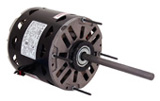
Here is an example of a PSC design that is more efficient than a previous design, and uses about 14 percent few amps. If the two motors were compared just based on amps, it might be incorrectly concluded that the previous design was a stronger motor, which is not the case.

A critical element of motor servicing technique is being able to determine whether or not a replacement motor that is not an exact duplicate of the original is suitable for the application. As a technician, you must consider a number of factors, but for this article, I’d like to focus on one of the more important issues: nameplate amps.

One typical way that technicians determine whether the replacement motor has sufficient power output is to compare the nameplate amps of the original motor with the replacement model. If the replacement motor’s amp rating is at least as high as the original, you can consider the replacement suitable. In many cases, this comparison simply confirms what other factors, such as nameplate horsepower and rated voltage, tell us. This practice is most satisfactory when there is little or no variation in the efficiency from the original motor to the replacement. This method works well, for example, with most three-phase motors.

In other cases, however, comparing amps may be misleading. The comparison process tends to break down when the motors in question are single-phase models where there is a wide range of efficiencies common for a single design. This category includes permanent-split-capacitor motors, shaded-pole, and some types of split-phase and capacitor-start motors.

Since nameplate amps reflect the total current consumption of the motor (which includes both the current converted to output power and the current lost to heat due to design inefficiency), higher nameplate amps can just as likely mean poor efficiency as higher power output.

As motor manufacturers become increasingly sensitive to the energy efficiency issue, they work hard to develop motors that deliver higher power while consuming the same or fewer watts. That efficiency may or may not be reflected in the amp rating of the motor. For the service technician, this generally means placing more importance on comparing the horsepower of certain motors rather than comparing amps of the replacement to the original.

Since there are no efficiency standards for most single-phase motors, there is one good way for the technician to verify that a replacement motor of the same horsepower but higher or lower amps is a satisfactory replacement. The method is to measure the actual amps delivered to the replacement motor in its normal operating state (under normal load) and compare that measurement only to the nameplate amps for that particular replacement motor.

In summary, using just an amp comparison is not sufficient with certain types of motors. You need to be aware of variations in efficiency and take this factor into account when determining a successful replacement.

Publication date: 08/10/2009

Links

  • A.O. Smith Electrical Products Co.

Share This Story

Looking for a reprint of this article?
From high-res PDFs to custom plaques, order your copy today!


Neil Simon aka the Motor Doctor, is regional sales manager for A.O. Smith Electrical Products Co. For more information, visit www.aosmithmotors.com.

Recommended Content

JOIN TODAY
To unlock your recommendations.

Already have an account? Sign In

  • HVAC-enrollment

    The Trades Are Back: HVACR Programs See Nearly 30% Enrollment Spike

    A new wave of future technicians is entering the pipeline.  
    Training and Education
    By: Matt Jachman
  • 2025 Top 40 Under 40

    2025 Top 40 Under 40 HVACR Professionals List

    The 11th annual Top 40 Under 40 list highlights those...
    HVAC Residential Market
    By: Hannah Belloli-Oster
  • LG Ductless Mini-Split Systems

    The 9 Types of Heat Pumps

    As the U.S. moves toward electrification, heat pumps are...
    Ground Source Heat Pumps
    By: Joanna R. Turpin
Subscription Center
  • Create an Account
  • Start a Subscription
  • Manage My Account
  • Sign Up for Newsletters
  • Visit Customer Service
  • Update Preferences

More Videos

Sponsored Content

Sponsored Content is a special paid section where industry companies provide high quality, objective, non-commercial content around topics of interest to The News audience. All Sponsored Content is supplied by the advertising company and any opinions expressed in this article are those of the author and not necessarily reflect the views of The News or its parent company, BNP Media. Interested in participating in our Sponsored Content section? Contact your local rep!

close
  • Piggy Bank
    Sponsored byWatercress Financial

    Energy Prices, Inflation, and HVAC: What Today’s Homeowners Care About

  • Refrigerated Food
    Sponsored bySolstice Advanced Materials

    R-455A Refrigeration: A Cold Storage Solution for the Future

  • Airex Rooftop Units
    Sponsored byAirex Manufacturing Inc

    Consolidating Roof Penetrations: A Growing Trend in Multifamily HVAC Design

Popular Stories

HVAC-Price-Increase-graphic

HVAC Price Increase List: June 2026

Trump-Section-232.jpg

Trump Reduces Section 232 Tariffs on HVAC Equipment to 15%

R410A-Refrigerant-Cylinder.jpg

Refrigerant Recovery is a Revenue Opportunity

Heat-pump-cutaway.jpg

PFAS Rules and A2L Building Codes Continue to Evolve

Kroger.jpg

Kroger to Spend $100 Million to Reduce Refrigerant Leaks

View The ACHR NEWS
Centennial Anniversary Timeline

The ACHR News Timeline Chart
Submit a Letter
Submit a letter to our editors.

Events

November 6, 2025

Next-Gen Data Center Cooling: HVAC Innovation and Real-World Solutions

On Demand As AI workloads and high-density computing push traditional cooling methods to their limits, the data center industry is accelerating the adoption of next-generation HVAC technologies.

June 17, 2026

Decarbonization Without Disruption

This webinar will explore practical HVAC decarbonization strategies that minimize disruption while maximizing long-term performance and ROI.

View All Submit An Event

Poll

Summer Staff

Are you fully staffed for the summer season?
View Results Poll Archive

Products

BNI Mechanical/Electrical Square Foot Costbook, 2026 Edition

BNI Mechanical/Electrical Square Foot Costbook, 2026 Edition

See More Products
A2L Refrigerants - Free Webinar - May 21, 2026

Related Articles

  • FRIEDRICH-FLOATING-AIR

    Built for Technicians, Better for Everyone: The Case for Mini-Splits

    See More
  • Feb. 23, 2007: ARI Asks for Better Tax Treatment for Commercial HVACR Equipment

    See More
  • Regular Homeowners Opt for Better Systems

    See More

Related Products

See More Products
  • TGW_Entry Level_cover.jpg

    Technician’s Guide & Workbook for Entry Level Tech's

  • Manual_SPS_new.jpg

    Manual SPS HVAC Design for Swimming Pools and Spas [ANSI/ACCA 10 Manual SPS - 2010 (RA 2017)]

  • ACCA Tech Guide_EPA 608_COVER_small.jpg

    Technician's Guide & Workbook for EPA 608 Test

See More Products

Related Directories

  • Association for Facilities Engineering-AFE

    AFE provides education, certification, technical information and other relevant resources for plant and facilities operations, engineering and maintenance professionals worldwide.
×

Sign Up. Stay Informed.

The #1 trusted source for the HVACR industry since 1926

SUBSCRIBE
  • RESOURCES
    • Advertise
    • Contact Us
    • Advisory Board
    • Classifieds
    • Submit a Letter
    • Directories
    • Store
  • ACCOUNT CENTER
    • Create an Account
    • Start a Subscription
    • Manage My Account
    • Sign Up for Newsletters
    • Visit Customer Service
    • Update Preferences
  • SERVICES
    • Marketing Services
    • Reprints
    • Market Research
    • List Rental
    • Survey/Respondent Access
  • STAY CONNECTED
    • LinkedIn
    • Facebook
    • Instagram
    • YouTube
    • X (Twitter)
  • PRIVACY
    • PRIVACY POLICY
    • TERMS & CONDITIONS
    • DO NOT SELL MY PERSONAL INFORMATION
    • PRIVACY REQUEST
    • ACCESSIBILITY

Copyright ©2026. All Rights Reserved BNP Media, Inc. and BNP Media II, LLC.

Design, CMS, Hosting & Web Development :: ePublishing