Treating a Motor That 'Nuisance Trips'
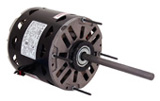
Here is an example of a PSC design that is more efficient than a previous design, and uses about 14 percent few amps. If the two motors were compared just based on amps, it might be incorrectly concluded that the previous design was a stronger motor, which is not the case.
Many fractional horsepower motors come equipped with an internal overload device that is sensitive to both current and temperature. This thermal-overload protector (called a “thermo,” or “overload,” or simply “OL”) may either require manual resetting or can reset automatically. It is designed to protect the motor’s windings from the damaging effects of too much heat or too much current.
In situations like this, where there appears to be no mechanical or electrical problem, you may be tempted to blame the thermal device itself. Don’t give into the temptation, however, or you may find yourself treating the symptom, not the problem itself. Remember, thermos are extremely reliable, and their job is to alert you to an unseen, but potentially catastrophic problem with the application. As a good MD (Motor Doctor), you should take a few moments to probe for answers.
For example, you may have inadvertently substituted the wrong motor in the application. Have you matched the motor to the operating condition? Do the voltages of the replacement motor and the original correspond? One way to monitor all of these variables is to use a clamp-on ammeter to determine that you did not exceed the motor’s nameplate amps.
A related consideration is determining that you have the right load for the motor. Has the load changed from the original equipment load? You may find that a larger diameter fan has been applied to the motor, or a larger blower wheel. Or the pulley ratio is different from the original specification. Or, in some cases, the original motor’s horsepower was marginal for the driven load - and the replacement motor’s horsepower could be even more marginal. Once again, a clamp-on ammeter can help you reach a correct diagnosis.
If a motor in an older application suddenly begins to nuisance trip, you may want to look for blockages in airflow caused by airborne debris. Other airflow problems include applying a motor with excessive horsepower for the load in an air-over application. Too much horsepower often provides inadequate airflow to dissipate heat - even if the load is light. You may find that added or repositioned baffles or filters have redirected airflow or decreased the amount of airflow.
Another condition that may cause unexpected thermal tripping is excessive ambient temperature. Almost all motors are designed to produce their nameplate-rated output up to a specific temperature. If the environmental temperature is higher than the nameplate rating, the motor is at risk, even if everything else about the load and power supply fall within normal ranges. If a motor begins to nuisance trip, consider the environmental temperature issue. With motor-driven devices located in mechanical rooms, check to see if additional heat-generating equipment has been installed in the room. Or perhaps room ventilation has changed, either due to construction or ventilating equipment failure.
Consider the effects of foreign material or contaminants. Material can build up on the surfaces of motors, even enclosed designs that prevent foreign materials from entering the motor. Oily vapors caused by cooking oil or other chemicals can condense on the motor. Dust and lint adhere easily to these oily films, creating a very effective insulation. This may affect both the air movement over the motor as well as the motor’s ability to dissipate heat. The results are often higher internal temperatures and thermal tripping.
One last item to check is the power supply leading into the motor. Overvoltage and undervoltage can cause the motor to overheat, resulting in nuisance tripping. To check for this condition, use a voltmeter to measure the power supply while the motor and the other equipment on the same circuit are running.
It’s very easy to blame nuisance tripping on the thermal device. Don’t be fooled! Listen to what the thermo is trying to tell you and always take the time to search for the root cause of the problem. You’ll avoid bigger problems down the road.
Publication date: 12/08/2008
Links
Looking for a reprint of this article?
From high-res PDFs to custom plaques, order your copy today!