GreenChill Catches Secondary-Loop Fever
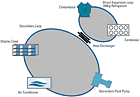
An example of secondary loop technology in a supermarket. (Courtesy of The Dow Chemical Company.)
Apparently that is having an impact. During the FMI Energy and Technical Services Conference, representatives of Dow Chemical Co. held a press briefing to announce that the company had become part of GreenChill, and it is “supplying more Dowfrost™ heat transfer fluid for secondary loop refrigeration jobs during 2008 than ever before.”
According to Harold Nicoll, communications leader for Dow, “A substantial increase in construction of food coolers using secondary loop technology is driving demand. Supermarket owners and operators are interested in secondary loop refrigeration because of reduced refrigerant charges and system leaks as well as increased energy efficiency.”
Nicoll said secondary loop demand “is most pronounced in North America.” He said one Dow customer is currently involved in 100 such projects. In the secondary loop approach, the charge of the primary refrigerant (typically an HFC such as R-404A or R-507) can be reduced by 60 percent or more if it is used to refrigerate a secondary coolant which is then distributed to the individual food display cases.
For that loop, Dow is promoting its Dowfrost “because ingredients in Dowfrost are (identified as) ‘generally regarded as safe’ (GRAS) by the U.S. Food and Drug Administration,” said Nicoll. He also said the product is registered with the National Sanitation Foundation and is acceptable for use as a heat transfer fluid where there is possibility of incidental food contact.
Publication date: 12/01/2008
Looking for a reprint of this article?
From high-res PDFs to custom plaques, order your copy today!


