Trump Taps Keith Sonderling as Labor Secretary, Signaling Shift on Workforce Priorities
Acting head of both the Office of Ethics and Department of Labor, Sonderling nominated to be permanent DOL head
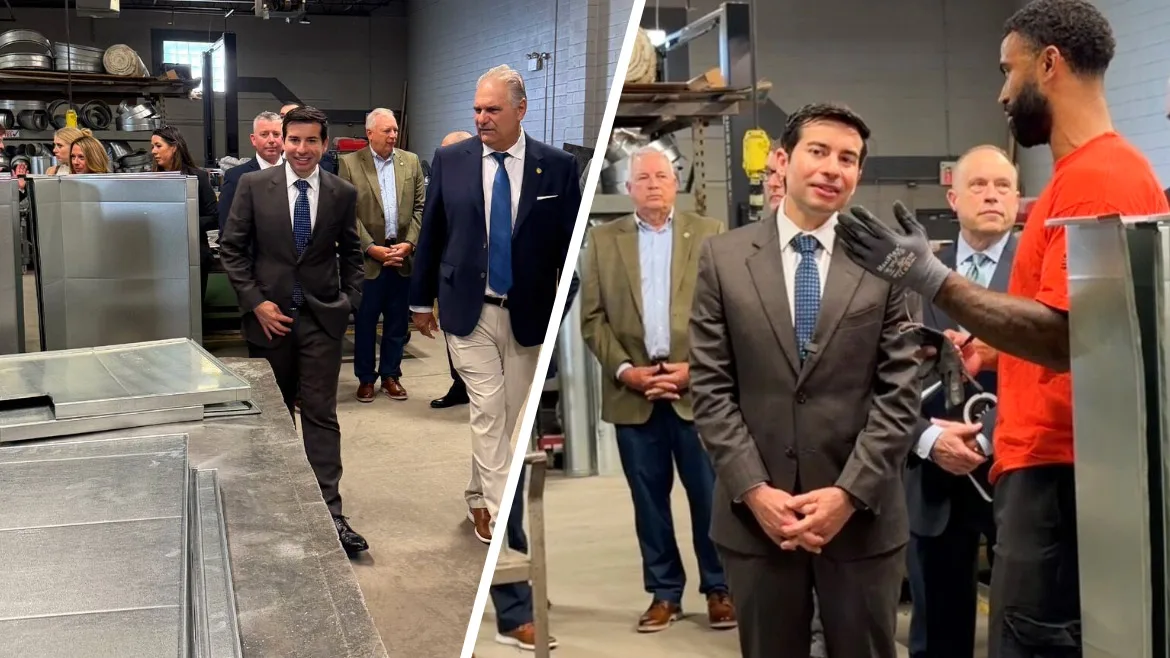
SHEET METAL: Keith Sonderling, tapped by President Trump to serve as Labor Secretary, speaks with sheet metal workers and leaders in Philadelphia about the future of American jobs.
President Trump’s nomination of Keith Sonderling as Secretary of Labor is more than just a changing of the guard – it’s a clear signal of how the administration wants the country to think about the future of work, workforce development, and government priorities.
On Monday, Trump announced via Truth Social that he was nominating Sonderling, who has served as acting Labor Secretary since April, to the post full-time. “It is my Great Honor to announce that I am nominating Keith E. Sonderling, the outstanding Acting United States Secretary of Labor, to be permanent,” the president wrote. Sonderling, in turn, called the chance to serve “the greatest honor of my life” and pledged to advance Trump’s agenda on behalf of workers, unions, and businesses alike – if confirmed by the Senate.
He took over this spring after former Secretary Lori Chavez-DeRemer resigned amid a swirl of investigations into her and her husband’s alleged misconduct. For a look at her signature apprenticeship initiatives and her fraud prevention drive, see our one-year review of Chavez-DeRemer’s trade surge. For the full story on her resignation and the surrounding turmoil, read our coverage of her tenure’s abrupt end.
Last week, Sonderling also donned yet another hat, this time as acting director of the U.S. Office of Government Ethics after the previous director, David Huitema, was ousted in 2025 and the post sat vacant for months. It’s become a running joke in Washington – call it the “Rubio effect” – that the shrinking circle of trusted Trump loyalists means a handful of star pupils are tapped to juggle multiple high-profile jobs at once. Sonderling, now wearing both the Labor and Ethics hats, stands out for staying in the President’s good graces – while still earning respect from both business and labor circles.
If confirmed, Sonderling will soon face a new round of scrutiny. The Senate Health, Education, Labor and Pensions (HELP) Committee, now under Republican control, will decide whether to advance his nomination to the full Senate. Last year, the same panel sent Chavez-DeRemer’s nomination to the floor by a 14-9 margin, with some cross-party support. Sonderling’s confirmation hearings are expected to be contentious, with Democrats likely to press him on the administration’s proposed 25.9 percent cut to the Labor Department’s budget for fiscal 2027.
Nearly half of those cuts target the Job Corps program, a decades-old initiative providing free education and training to low-income young people. Sonderling has defended the reductions as “responsible and well-reasoned,” saying the administration is focused on “highest priority functions” and will disinvest in programs it deems “wasteful, duplicative, unproven, non-essential, or ineffective.”
Meanwhile, the economic backdrop is complicated. Unemployment has hovered between 4.1 percent and 4.5 percent throughout Trump’s second term, according to the Bureau of Labor Statistics – not topping 5 percent since August 2021. But inflation is gnawing away at wage gains. As of last month, the consumer price index rose by 4.2 percent, outpacing annual wage growth by nearly a point, with the highest inflation in three years blamed on energy price hikes triggered by the Iran war.
Against this backdrop, Sonderling is making his case not just on Capitol Hill but on the ground with industry leaders. In June in Philadelphia, he met with local HVAC contractors, union leaders, and executives to discuss the future of workforce development in the skilled trades. The conversation, hosted by the Sheet Metal and Air Conditioning Contractors’ National Association (SMACNA), drew participants from companies like Prime Sheet Metal Inc., Fisher Balancing Company, and others invested in the region’s infrastructure boom.
Sonderling emphasized the importance of registered apprenticeship programs – long a cornerstone of the sheet metal industry – as well as public-private partnerships and safety. He pointed to recent investments in trades workforce development by heavyweights like Google, BlackRock, and Meta, and called for expanding apprenticeship opportunities nationwide. “Preparing the next generation of skilled trades professionals will take industry partnerships and smart policy,” Sonderling said, echoing a theme that’s likely to resurface in his Senate confirmation hearings.
Philadelphia's sheet metal industry, with its long tradition of developing highly trained craftsmen and women through registered apprenticeship programs, was well represented at the discussion. Industry leaders used the opportunity to share their perspectives on recruitment, training, and the workforce challenges ahead, emphasizing the need for Washington to stay engaged and invest in the skilled trades.
As Sonderling awaits his Senate hearing, the fight over the Labor Department’s future is just beginning. Will Congress sign off on a leader promising tough budget choices and streamlined priorities? Or will the coming debate expose fault lines over how America supports its workers in a time of economic uncertainty and rapid change?
Either way, the next Labor Secretary’s decisions will ripple far beyond Washington – shaping not just policy, but the lives of millions of workers, families, and businesses across the country.
Looking for a reprint of this article?
From high-res PDFs to custom plaques, order your copy today!