Inside Kingspan’s All-Electric HQ: How Innovation Drives Sustainability in Commercial Construction
A fully electrified, high-efficiency HQ in Florida built for net zero and circularity
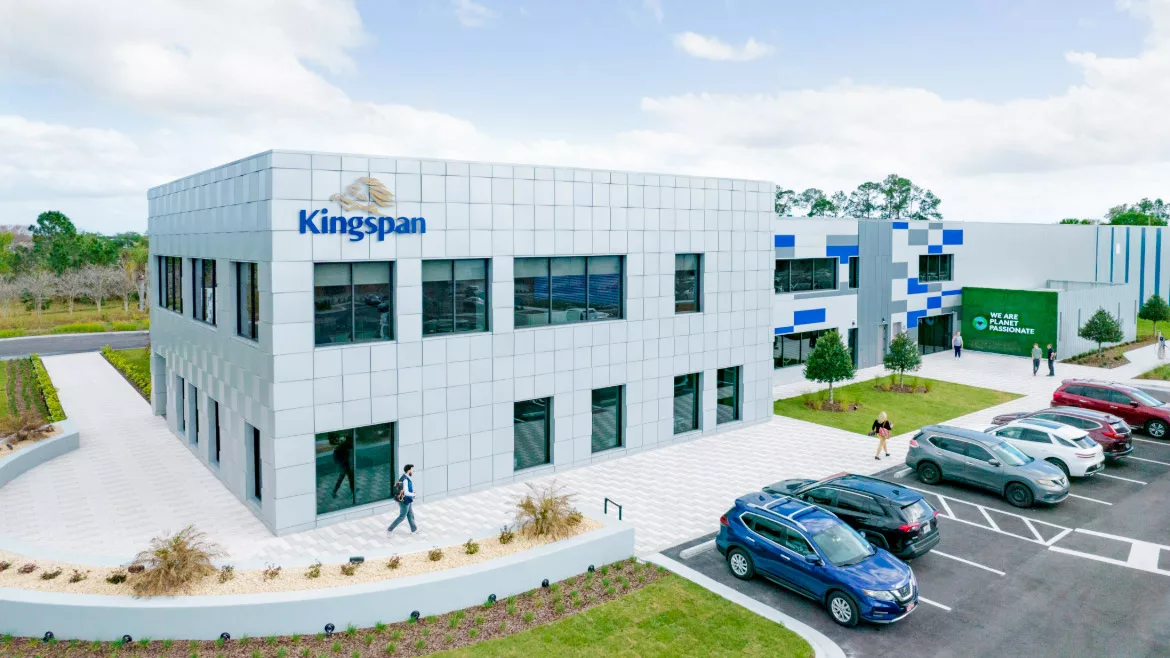
HVAC: Kingspan’s all-electric North American headquarters in Florida showcases high-performance insulated panels, advanced HVAC systems, and circular construction practices.
As the demand for sustainable, energy-efficient buildings accelerates across North America, Kingspan Insulated Panels North America has set a bold new standard with its next-generation, all-electric headquarters in Florida. This 29,000-square-foot facility was designed to meet the highest benchmarks for performance, comfort, and environmental responsibility—pushing the envelope with advanced HVAC systems, high-performance insulated panels, and a commitment to material circularity.
To understand what it takes to deliver a project of this caliber, we spoke with key members of the Kingspan team: Karim Muri, vice president of marketing services and strategy development; Kelly Buffey, sustainability manager; and Ethan Kohlbacher, mechanical engineer. Their insights shed light on the technical challenges, product choices, and lessons learned throughout the design, construction, and operation of this groundbreaking headquarters.
All-Electric Factory Innovations
The NEWS: What were the core design and technical challenges in creating a fully all-electric HVAC system for a 29,000-square-foot facility in Florida’s climate?
Karim Muri: The core challenges stemmed from balancing the facility's energy needs with Florida's hot and humid climate. Ensuring effective cooling while maintaining energy efficiency was critical, as the building needed to remain comfortable without relying on natural gas.
The NEWS: How does the heat recovery HVAC system operate in this facility, and what drove the choice of system and controls?
Karim Muri: The heat recovery HVAC system captures excess heat within the facility and redistributes it, improving energy efficiency. The system's advanced controls were chosen to optimize HVAC operations and minimize energy waste, ensuring a comfortable indoor environment while being energy-efficient.
The NEWS: What were the biggest hurdles in eliminating natural gas from all building systems, and how was this achieved without sacrificing comfort or performance?
Karim Muri: The major hurdle was removing the reliance on natural gas for heating and backup power. This was overcome by incorporating electric heating systems and efficient heat-recovery processes, ensuring comfort and performance were not compromised.
Envelope Performance and Product Selection
The NEWS: Can you break down the decision process for selecting QuadCore KarrierPanel, K-Roc HF panels, and QuadCore KS Series panels for the various sections of the envelope? What performance metrics were prioritized?
Karim Muri: When selecting materials for the building envelope, the team focused on solutions that delivered both excellent thermal performance and durability. Each panel had a specific role based on those priorities.
The QuadCore KarrierPanel stood out because of its impressive thermal insulation properties. It was designed to offer high R-values (up to 8.0 per inch), which help keep the building comfortable in both hot and cold temperatures. KarrierPanel also uses Kingspan’s KarrierRail to securely transmit loads from a wide range of façade options, enabling design flexibility for the facility.
The K-Roc HF panels, on the other hand, were chosen for their mineral fiber insulation core, which provides up to a 3-hour fire rating in wall applications. In certain areas of the building where fire-rated walls were required, these panels provided the necessary protection while still delivering thermal efficiency.
As for the QuadCore KS Series panels, these were selected for their combination of thermal performance and aesthetics. Coming in a wide range of profile options – Azteco Embossed, Micro-Rib, Mini Micro-Rib, Mini-Wave, Shadowline and Vektra – the choice of these panels helped the team ensure that the building would meet its efficiency goals without sacrificing design.
The NEWS: How did the combination of Kingspan wall, roof, and façade systems impact the building’s overall thermal performance and air tightness?
Karim Muri: The integration of Kingspan’s wall, roof and façade systems was a major contributor to the building’s thermal performance and air tightness. By using a continuous layer of rigid insulation throughout the building envelope, the panels helped reduce heat transfer, preventing the building from losing energy to the outside environment. In Florida’s hot climate, this was especially important because it reduced the amount of energy needed to cool the building. The panels also played a key role in maintaining a comfortable indoor temperature without requiring the HVAC system to overwork itself.
The airtightness of the building was another important benefit. The interlocking joints in the Kingspan panels created a tight seal that prevented air from leaking in or out, which is crucial for keeping the building’s internal climate stable. This helped in reducing drafts and temperature fluctuations, ensuring that the building remained comfortable and efficient.
The NEWS: What role did the new insulated panels and airtightness strategies play in reducing the building’s HVAC load and sizing requirements?
Karim Muri: The new insulated panels and airtightness strategies worked hand in hand to significantly reduce the building’s HVAC load and the HVAC system's sizing requirements. By offering high thermal resistance, the panels acted as a strong barrier to heat transfer, meaning the building didn’t require constant heating or cooling to maintain a comfortable indoor environment. As a result, the HVAC system didn’t need to be as large or as powerful as it would have been in a less efficient building.
The airtightness of the building was also a major factor. By sealing the building tightly and preventing air from escaping, the need for constant HVAC operation was minimized.
Indoor Air Quality and Controls
The NEWS: The building uses advanced 0.1-micron air filters. Can you share data or targets on indoor air quality improvements post-renovation?
Ethan Kohlbacher: Before the air handling units were tied to the building management system, CO₂ in meeting rooms often rose to an uncomfortable 1000 ppm. As we have integrated more controls into the HVAC system, CO₂ levels now range from 600–800 ppm.
The NEWS: What advanced controls and automation are used to manage HVAC loads and occupant comfort? Are there lessons learned that would apply to other commercial retrofits?
Ethan Kohlbacher: Our air quality monitors are tied to air handling units through a building management system. By constantly measuring the amount of CO₂ that has accumulated on each floor and in each room, we are able to adjust the amount of outdoor air we pull in and to direct that air to the rooms that need it. This works with our 52 independently adjustable variable air volume controllers, allowing us to meet occupant needs throughout the building.
When retrofitting an advanced building control system, plan to spend time tuning your system extensively. VAVs will need to be adjusted to maximize individual control while minimizing chances for VAVs to fight one another.
When retrofitting an advanced building control system, plan to spend time to tune your system extensively. VAVs will need to be adjusted to maximize individual control while minimizing chances for VAVs to fight one another.
Energy Use and Daylighting
The NEWS: Can you share projected or measured EUI (Energy Use Intensity) for the building, and how it compares to a code-minimum facility of this size and location?
Kelly Buffey: At this stage, specific EUI values are not available; however, the building was designed and modeled to significantly outperform a code-minimum baseline in alignment with LEED Gold certification and ILFI Net Zero Energy Certification targets. Energy modeling was conducted to optimize system efficiency, reduce loads through a high-performance enclosure, and support all-electric operation with the goal of achieving net zero energy performance. Based on these design strategies, the project is expected to achieve a substantially lower EUI than a comparable code-compliant facility, with final measured data to be confirmed once the PV system is operational.
The NEWS: How did daylighting strategies (such as Solatube SolaMaster skylights) integrate with HVAC design to minimize cooling loads while maximizing natural light?
Karim Muri: The Solatube SolaMaster skylights were integrated into the design to maximize the use of natural daylight, reducing the need for artificial lighting and thus lowering cooling loads by minimizing heat from electric lights.
Circularity and Onsite Waste Reuse
The NEWS: How was insulation waste foam from the adjacent manufacturing facility integrated back into the construction? Did this affect the thermal or structural performance of the slabs and pavers?
Karim Muri: The insulation waste foam was reused as part of the cement mixture for concrete floor slabs and pavers, maintaining the thermal and structural integrity of the slabs and pavers without affecting performance.
The NEWS: What steps did you take to ensure recycled and reused materials didn’t compromise the building envelope’s performance or the HVAC system’s efficiency?
Karim Muri: Kingspan ensured that recycled and reused materials were tested for their compatibility with the building envelope and HVAC systems, ensuring they met performance standards without compromising efficiency.
Certifications and Futureproofing
The NEWS: What technical requirements had to be met for LEED Gold and ILFI Net Zero Carbon + Energy certification, specifically regarding HVAC and enclosure systems?
Kelly Buffey: To achieve LEED Gold certification and ILFI Net Zero Carbon Certification / ILFI Net Zero Energy Certification, the project required fully electric, high-efficiency HVAC systems to eliminate on-site fossil fuel use and reduce operational carbon. The design utilized heat pump-based solutions such as VRF/VRV with heat recovery paired with DOAS and ERV systems, supported by an integrated BAS for demand-controlled ventilation, humidity control, energy tracking, and optimized performance. Additionally, a high-performance building enclosure with strong insulation, airtightness, and minimized thermal bridging was required to reduce energy demand and support net zero energy targets.
The NEWS: Are there plans for future upgrades – such as battery storage or enhanced controls – as the facility adds solar PV to further reduce operational carbon and optimize HVAC performance?
Kelly Buffey: Battery storage for solar continues to improve rapidly, with advancements in efficiency, capacity, and cost making it an increasingly viable solution for reliable energy management. As these technologies evolve, we recognize the importance of continually reassessing what makes the most sense from both a performance and economic standpoint. Rather than relying on a fixed approach, we evaluate emerging storage options, system designs, and market conditions to ensure we are deploying solutions that deliver the greatest value and resilience. This ongoing review allows us to stay aligned with innovation while making practical, data-driven decisions that support long-term energy goals.
Lessons for the Industry
The NEWS: What advice would you share with other facility managers or building owners considering a transition to all-electric HVAC and high-performance enclosures?
Kelly Buffey: Facility managers and building owners should approach all-electric HVAC and high-performance enclosures as an integrated system, starting with a tight, well-insulated envelope to reduce loads and enable efficiency. It’s important to model energy performance early and reassess system sizing, costs, and design choices as technologies and project conditions evolve. Incorporating a full photovoltaic (PV) system can further offset electrical demand, support decarbonization goals, and enhance long-term operating cost savings—especially when aligned with building load profiles. Together, these strategies improve energy efficiency, occupant comfort, and resilience while positioning facilities for future energy and regulatory requirements.
The NEWS: Looking back, what would you do differently in the design or implementation of the HVAC and enclosure systems?
Ethan Kohlbacher: The main thing I would do differently would be to test the HVAC control systems early and often. It is much easier to diagnose mechanical problems when there is free access above the ceiling, and many programming bugs can be found with only a handful of components functioning.
Looking for a reprint of this article?
From high-res PDFs to custom plaques, order your copy today!