State of the SMACNA Chapters: Navigating Change with Tradition and Innovation
Skilled labor shortages, evolving labor laws, technological shifts, and legislative advocacy define the current landscape of SMACNA chapters

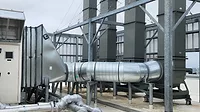
CLINIC: The Mayo Clinic’s Anna-Maria and Stephen Kellen Research Building in Rochester, Minnesota, features standout architectural work by M.G. McGrath – a SMACNA and SMARCA member. (Courtesy of M.G. McGrath)
As Sheet Metal and Air Conditioning Contractors’ National Association (SMACNA) chapters across the country face a rapidly changing construction landscape, industry veterans and leaders share a common thread: a commitment to sustaining skilled labor, embracing technology thoughtfully, and advocating for fair policies that protect contractors and workers alike.
The story of the trade is not just one of legislation or technology, but of people – apprentices learning their craft, contractors balancing costs, and chapters uniting their voices for the future.
Building a Skilled Workforce Against the Current
In the Mississippi River Valley region, where Iowa and Illinois meet, Chris Bornhoeft of Bornhoeft Heating & Air Conditioning offers a perspective grounded in day-to-day realities. Though not a chapter leader in Illinois, Chris speaks for the boots-on-the-ground experience of contractors navigating a complex market.
“We have no idle workers waiting on the sidelines,” he said, reflecting on a record number of apprentices entering the trade. But it’s not just about quantity. “We want people to pass the trade on. It’s about building a workforce that sticks around and values the craft.”
The region’s industrial roots run deep – from ag machinery giants like John Deere to ethanol and soybean processing plants. Now, data centers are creating new opportunities, but also new demands on the labor pool. Licensing differences between Illinois and Iowa complicate cross-border work. “It’s harder for Illinois workers to get into Iowa than the other way around,” Bornhoeft explained, pointing to regulatory friction that adds a layer of challenge to workforce mobility.
Material costs and tariffs have tightened budgets, forcing contractors and homeowners alike to be more deliberate. “Prices have gone up so much that people are skittish,” Bornhoeft noted, describing a market where value engineering and cautious decision-making have become the norm.
Yet, through it all, there is determination. Apprenticeships are thriving, and contractors understand that investing in skills today is investing in the trade’s future.
Tony Adolfs, executive vice president of SMACNA Greater Chicago, brings a chapter leader’s perspective on the region’s unique blend of opportunity and challenge. Adolfs notes that “every sector in our market is booming.” Yet, he points to potential workforce shortages and the delicate negotiations needed to keep member contractors competitive – especially as wage and benefit packages in the collar counties have, for the first time, edged past those in Chicago proper. “It’s a challenge to maintain a competitive wage for sheet metal workers while ensuring our contractor members remain profitable,” Adolfs said.
He also highlights the region’s ongoing transformation, with warehouses rising across the suburbs and major projects like the expansion at O’Hare Airport and a new casino downtown. “Everywhere you turn, there’s a new clinic, a new data center, or a conversion of old commercial space to residential,” he observed.
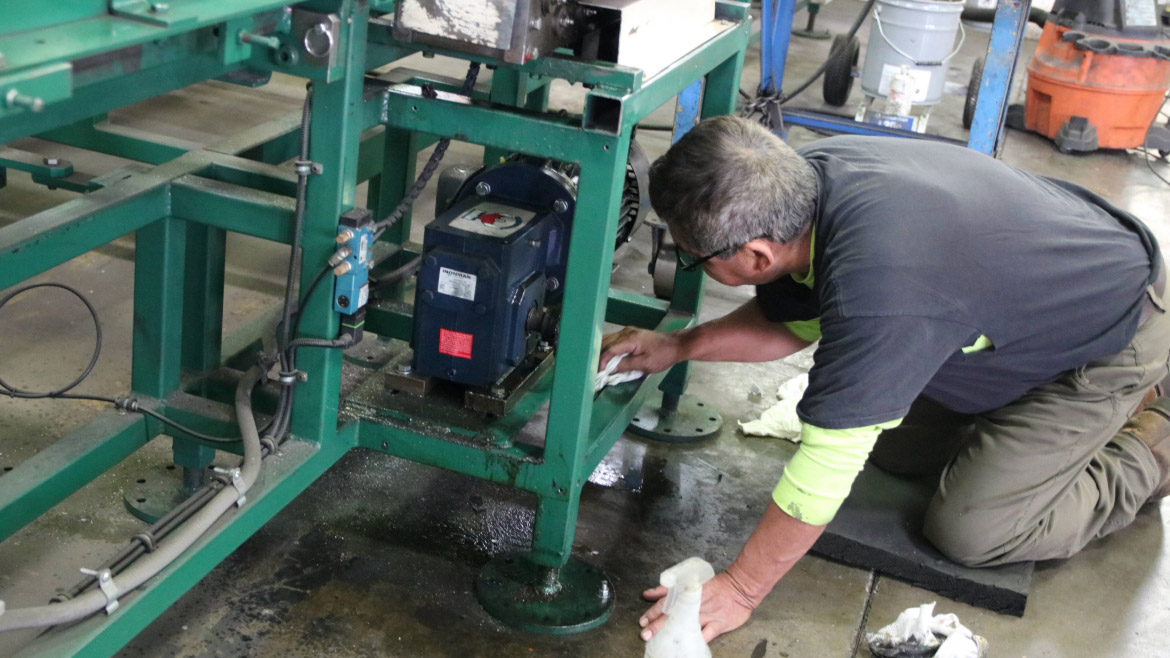
SHOP: A SMACNA member technician operates precision sheet metal machinery, shaping components for a commercial project. (Staff photo)
Legislative and Workforce Shifts in the Upper Midwest
Further north, John Quarnstrom, CEO of SMARCA – covering Minnesota, North Dakota, and South Dakota – offers a detailed view of the challenges and opportunities shaping the upper Midwest’s sheet metal industry.
Like Bornhoeft, Quarnstrom notices differences between states. While data centers are rising with a fury in the Dakotas, Minnesota lags behind. He credits the regulatory environment and the business community’s generally less favorable view of the state.
One of the most significant shifts Quarnstrom highlights is the introduction of paid time off mandates in Minnesota. “With the new paid family leave program, that’s a dramatic shift from how construction, the unionized construction industry, has fit everything into hourly cost,” he explained. This traditional hourly cost model, which neatly bundled retirement contributions and health benefits into predictable hourly rates, is suddenly fractured. The mandates create uncertainty: “We don’t know for certain who’s going to take it and who isn’t,” Quarnstrom said of paid time off. This unpredictability complicates how contractors price jobs and manage cash flow. “When you bill on a time and material basis, everyone understands the wage sheet you show them, but the overhead cost now includes paid time off mandates that don’t fit into that model.”
Despite these challenges, Quarnstrom sees progress on the workforce front. “We are doing better than many parts of the country on labor, and I really credit Local 10 with that,” he said. The local union is proactive, “working hard to bring in new people” and meeting contractor demand more effectively than other trades in the region. Apprenticeships form the backbone of this success. “We have pre-apprentices in all of our sheet metal contracts,” Quarnstrom noted, emphasizing a structured approach to nurturing future workers.
The chapter’s scope extends beyond the typical commercial sheet metal work into architectural sheet metal, a sector that holds a surprisingly significant share in the Twin Cities. “Between 15 and 20% of the hours are architectural,” Quarnstrom shared. In fact, among the ten largest sheet metal contractors in the chapter, two specialize exclusively in architectural metal, demonstrating the power of the specialization within the market.
Safety and training are pillars of the chapter’s support for contractors. SMARCA employs a full-time safety director who provides essential training free of charge – including specialized programs like infectious control (ICRA) for healthcare construction sites. “Our safety director is certified to teach, and in areas with a lot of healthcare work, he has trained a lot of employer personnel,” Quarnstrom explained. This service reduces barriers for contractors needing to meet strict job site requirements without adding extra costs.
Quarnstrom’s reflections paint a picture of an industry in transition – balancing the pressures of new labor laws and economic uncertainty while investing in the long-term health of its workforce. “We’re continuing to improve the training and professionalism,” he said, “and the general perception of our contractors is that the quality of apprentices being turned out is improving.” Contractors themselves are noticing the difference: “The people coming out of these programs are getting better,” he concluded.
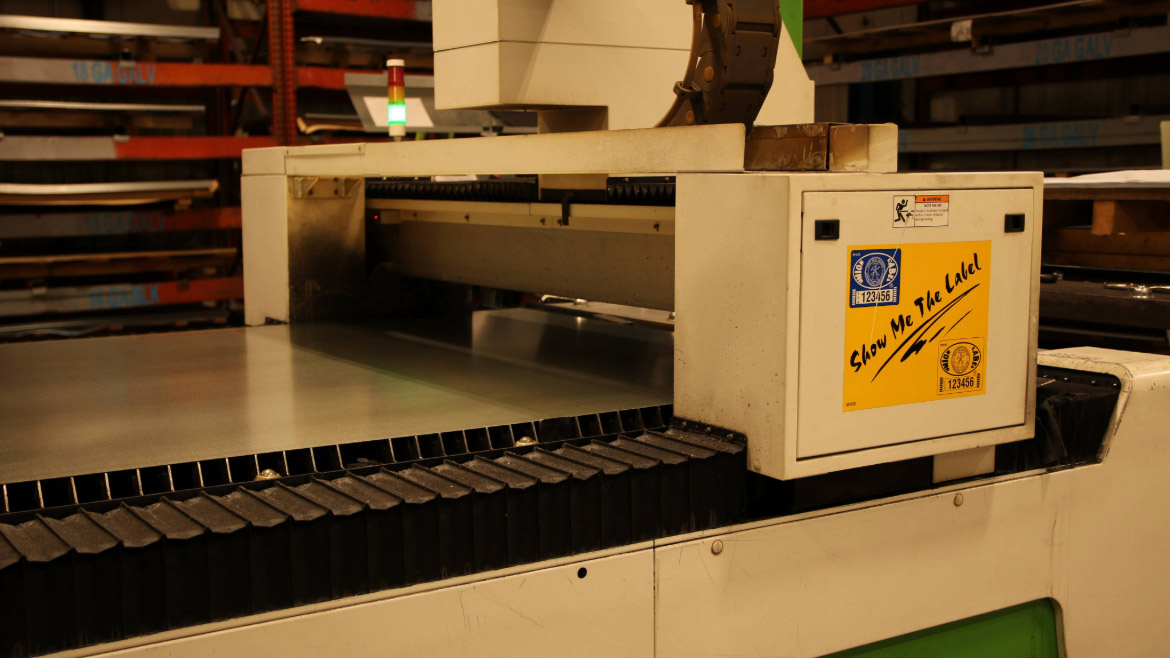
PLASMA: A plasma cutting table slices through sheet metal while each finished piece receives a sticker to assist tin knockers further down the line as they assemble ductwork. (Staff photo)
Bridging Generations Through Technology and Mentorship
In the Southeast, Ginger Slaick, executive vice president of Georgia and North Carolina SMACNA chapters, highlights how technology and mentorship intertwine to shape the trade’s future.
“One of the intangible benefits of technology is the ability to impart our isolated knowledge... and create a virtual language that can be passed on to generations,” she said, stressing that technology alone isn’t enough. Reverse mentoring – where younger, tech-savvy workers guide veterans in digital tools, while veterans share industry wisdom – is crucial.
Slaick warns against overreliance on AI:
“AI can provide vast knowledge, but it can’t provide the qualitative industry piece, the human element,” she said, comparing knowledge to understanding ductwork exists, to the wisdom in knowing the practical constraints of installing it properly.
For younger generations, construction is often experienced as a digital, gamified environment. She said that while some “struggle with the cloud environment, not the younger generation,” underscoring how technology is the glue fostering collaboration across generations.
Slaick also emphasizes the role mentorship programs play in career development and organizational cohesion.
“We are seeing more formal and informal mentoring – where young detailers get to connect their digital work with real-world shop floor and job site experiences … helping them understand how their work impacts the entire workflow,” Slaick said.
One Voice for Contractors
On the West Coast, Chris Walker, executive vice president of CAL SMACNA, offers a powerful example of collective advocacy. “There are seven SMACNA chapters in California, but there is one voice in Sacramento,” he declared, emphasizing unity in a complex political landscape.
Walker has championed Senate Bill 440 in California – the Private Works Change Order Fair Payment Act – a landmark reform ensuring timely payments for approved change orders on private projects. This bill addresses chronic payment delays and power imbalances that have destabilized subcontractors.
“Change order reform isn’t just a contractor issue – it’s about fairness and stability for the entire construction industry,” Walker said. “We’ve shown meaningful reform is possible when we work together.”
He also noted that the California SMACNA chapters worked together to pass SB 61 to cap retention at 5% in private works.
“These two bills, taken together, are a monumental sea change for subcontractors and their cash flow at a time they need it most,” Walker said, with a nod to challenges faced by sheet metal shops across the country. Linda Jennings, executive director of member development and innovation at SMACNA National, says the solution is innovation.
“Across every SMACNA chapter, we see contractors and members not just adapting to change, but leading it – finding inventive ways to develop talent, harness technology, and advocate for fair policy,” Jennings said. “Our strength as a national association is in how we share these innovations and support each other.”
The state of SMACNA chapters today is a story of balancing tradition with progress. Bornhoeft’s pragmatic focus on workforce development; Adolfs striking a balance to keep shops and wages competitive; Quarnstrom’s legislative and workforce leadership; Slaick’s vision for intergenerational knowledge transfer; and Walker’s legislative advocacy weave together a portrait of an industry that is both resilient and forward-looking.
This is the state of SMACNA: diverse in geography and focus, united in purpose, and steadfast in building the future of sheet metal contracting.
Looking for a reprint of this article?
From high-res PDFs to custom plaques, order your copy today!