Harris and SFSU Deliver State-of-the-Art LEED Gold Science Building
With LEED Gold certification, all-electric systems, and pioneering energy recovery solutions, San Francisco State University’s new science building sets a new standard for sustainability
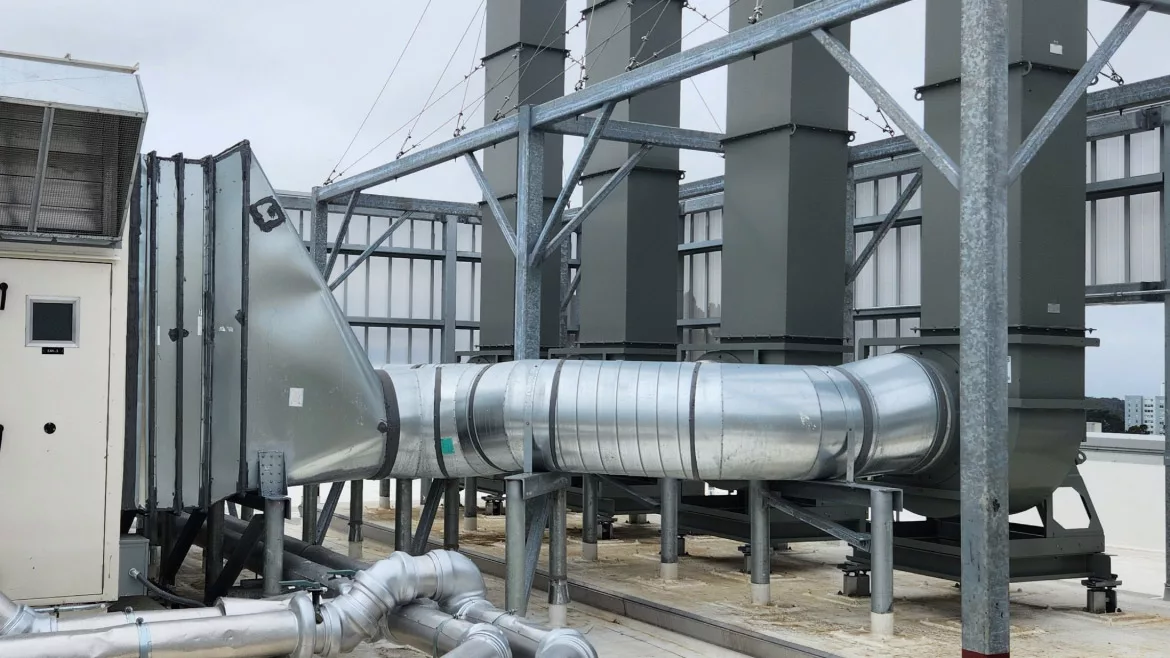
ROOFTOP: Carefully routed and insulated ductwork atop the science building ensures efficient airflow and supports the advanced ventilation strategies that make this facility a model for sustainable lab design.
With a focus on sustainability and advanced building performance, Harris has successfully delivered a new 126,000 gross square foot science building for San Francisco State University (SFSU). Officially opening its doors in August 2024, the facility marks a milestone in energy-efficient purpose-built academic spaces, particularly for STEM education. With LEED Gold certification and a fully electric infrastructure, this cutting-edge facility is already exceeding expectations and setting new ones for sustainable laboratory buildings.
The five-story structure now serves as the academic hub for SFSU’s Department of Chemistry and Biochemistry, the School of Engineering and a variety of specialized laboratory and administrative spaces. Beyond the labs and classrooms, the building also includes communal spaces designed to encourage collaboration and community among students and faculty.
At the heart of this project was a design-build partnership that emphasized both performance and flexibility. The Harris Design Studio worked in close coordination with bridging documents provided by AEI Consultants and the Harris construction team to bring the university’s goals to life.
The result is a high-performance environment that’s not only tailored for complex academic functions but is also resilient, efficient and forward-looking. From concept to construction, every decision was made with long-term sustainability and student success in mind.

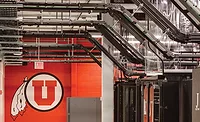
CHILLER: The innovative water-source heat recovery chiller system repurposes lab exhaust air, capturing energy that would otherwise be wasted to drive major efficiency gains.
Rethinking Lab Sustainability
Laboratory buildings are among the most energy-intensive types of facilities in any sector, often compared to hospitals in terms of HVAC complexity and energy demand. Due to occupant safety concerns, lab exhaust air cannot be recirculated back into the building, meaning large volumes of conditioned air are used only once before being expelled. This reality makes lab buildings extremely difficult to design with energy efficiency in mind, especially while maintaining proper ventilation and safety standards.
But in this case, the team delivered a creative innovation: a water-source heat recovery chiller system that captures energy from lab exhaust. It’s a rarely deployed solution that repurposes the lab’s exhaust air as a constant and reliable energy source.
This air, while no longer usable for ventilation, maintains a stable temperature year-round, making it an ideal candidate for energy recovery. The system effectively mimics the benefits of a geothermal loop but without the need for costly and invasive drilling.
Because lab exhaust cannot be reused for ventilation, most systems treat it as a byproduct to be managed, not leveraged. But with this project, the heat recovery chiller finds value in that waste stream. In essence, the building turns a necessary energy cost into an opportunity for thermal exchange and savings, providing long-term operational benefits and environmental gains.

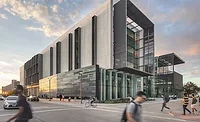
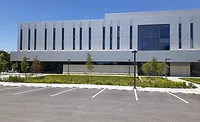
BUILDING EXTERIOR: With its striking, modern facade, the new SFSU science building stands as a visible testament to the university’s commitment to sustainability and high-performance academic spaces.
Engineering for Efficiency
The SFSU Science Building is a fully electric facility, avoiding the use of fossil fuels altogether and aligning with California’s aggressive decarbonization goals. It features a Dedicated Outdoor Air System (DOAS) that separates ventilation from the heating and cooling systems, delivering 100% fresh conditioned air to the building while maximizing energy efficiency. By decoupling ventilation from temperature control, the system allows for more precise airflow management and less energy waste.
Other sustainable features include:
• Battery storage technology to ensure standby power readiness
• Responsive lab exhaust fans that modulate based on real-time sensing of chemical fumes, reducing unnecessary energy use
• On-site solar panels contributing to renewable power generation
• Advanced controls and monitoring to maintain optimal energy performance
The building was designed to achieve an Energy Use Intensity (EUI) of 93 kBtu per square foot per year, already a 30% improvement over the baseline of 136 kBtu per square foot per year. Early data suggests the building is trending well below even that projection, with final numbers expected to confirm even greater efficiency once a full year of operation has been logged. The team anticipates that this project will serve as a reference point for future energy modeling of similar building types.
A Model for the Future
SFSU’s new science building is more than just a place of learning. It is a case study in how to do things differently. It shows that even the most challenging building types can be approached with creativity, technical rigor and a commitment to sustainability.
As universities across the country look to modernize their facilities while meeting stricter environmental targets, this project stands out as proof of what’s possible. Harris has not only delivered a building; we have delivered a strong blueprint for the next generation of sustainable lab design.
Looking for a reprint of this article?
From high-res PDFs to custom plaques, order your copy today!