Supreme Court Tariff Ruling Brings Some Clarity, But Metal Tariffs Still Haunt Contractors
Despite a Supreme Court ruling striking some tariffs, uncertainty around costs and contract protections continues to complicate bidding for federal work

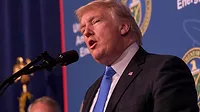
IEEPA: President Trump addresses reporters at the White House following the Supreme Court’s decision striking down the IEEPA tariffs, vowing to pursue new trade measures despite the ruling.
Sheet metal contractors received a jolt of clarity last week after the U.S. Supreme Court tossed out the so-called “Liberation Day” tariffs, ruling that the president can’t use emergency powers under the International Emergency Economic Powers Act (IEEPA) to impose broad duties. But for most contractors – especially those sourcing steel and aluminum – the ruling didn’t touch the tariffs that matter most.
Section 232 tariffs on steel, aluminum, and copper remain firmly in place, and for many SMACNA members, that means the cost pain continues. “Our firms are still experiencing trade and tariff complications due to ongoing barriers and fees on our Canadian metal suppliers,” said Stan Kolbe, SMACNA’s executive director of government and political affairs. “Steel and aluminum tariffs have been in place since March of last year and were bumped to 50 percent soon after that time.”
While the Supreme Court decision brings relief for some importers of components, electronics, and finished goods, Kolbe notes most metal supply and equipment costs for contractors are unaffected.
“The Section 232 tariffs remain in place without relief from the Supreme Court,” he said.
Tariff Relief – But Only For Some
In fact, with billions of dollars potentially flowing back to importers, California Governor Gavin Newsom and Illinois Governor JB Pritzker have demanded immediate refund checks for residents and businesses in their states – Pritzker even sent Trump an invoice for nearly $9 billion.
Trade experts expect more tariff changes in the months ahead, with possible new actions under Sections 232, 338, and 301. The situation is fluid, and contractors are bracing for more changes – not fewer.
Since returning to office, the Trump administration has finalized several trade agreements and continues to negotiate others. Notable recently signed deals include agreements on reciprocal trade and investment with countries like Indonesia, Taiwan, Argentina, and El Salvador. Meanwhile, negotiations remain ongoing with countries such as Thailand and Vietnam, where frameworks have been announced but full agreements are still in progress. This mix of signed agreements, frameworks in negotiation, and tariffs informs the administration’s insistence at the State of the Union that trading partners honor their commitments, even as the Supreme Court’s tariff ruling complicates enforcement.
"Whether they’re signed or in negotiation or agreed to in principle – they better hold to those deals, right, Scott?” President Trump asked his Treasury Secretary Scott Bessent.
Contractors Feel the Real-World Impact
For contractors working on federal and state infrastructure projects, the hit from metal tariffs has been real – and in many cases, severe. Many are locked into contracts that were bid before these tariffs hit, with no way to recover the added costs.
While the Federal Acquisition Regulation (FAR) includes Economic Price Adjustment (EPA) clauses help with unforeseen spikes, subcontractors rarely get this protection. Kolbe said, “Subcontractors are unfairly burdened with the responsibility of absorbing the rising costs caused by tariffs, which are outside their control.”
SMACNA has been pushing the administration and Congress to act:
- Administrative Guidance: Direct federal agencies to let subcontractors invoke EPA provisions for tariff-driven cost increases.
- Tariff-Only Adjustments: Limit EPA relief to cost increases, so contractors aren’t penalized if tariffs are later dropped.
- Clear Documentation: Standardize the paperwork for proving tariff-driven price hikes.
SMACNA is also urging Congress to pass legislation requiring EPA clauses in all subcontracts for federal projects affected by tariffs, and to ensure those protections can’t be used retroactively to lower prices if tariffs fall after work starts.
For some contractor groups, tariffs aren’t always the top concern. John Quarnstrom, CEO of the Sheet Metal, Air Conditioning and Roofing Contractors Association (SMARCA), which represents union contractors across Minnesota and the Dakotas, said that for many of his members, “availability of certain products and inputs is more of a concern than any cost increases resulting from tariffs.”
The Supreme Court ruling is a step, but for most contractors, the toughest tariffs are still here, Kolbe said, concluding, “Without access to the protections afforded by EPA clauses, subcontractors face significant financial strain, and many may be forced to forego participating on or bidding federal contracts.”
Looking for a reprint of this article?
From high-res PDFs to custom plaques, order your copy today!