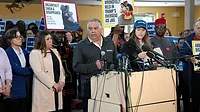
SMART Rallies as Supreme Court Blocks Return of Deported Sheet Metal Worker
Unions condemn wave of deportations targeting organized labor across the country
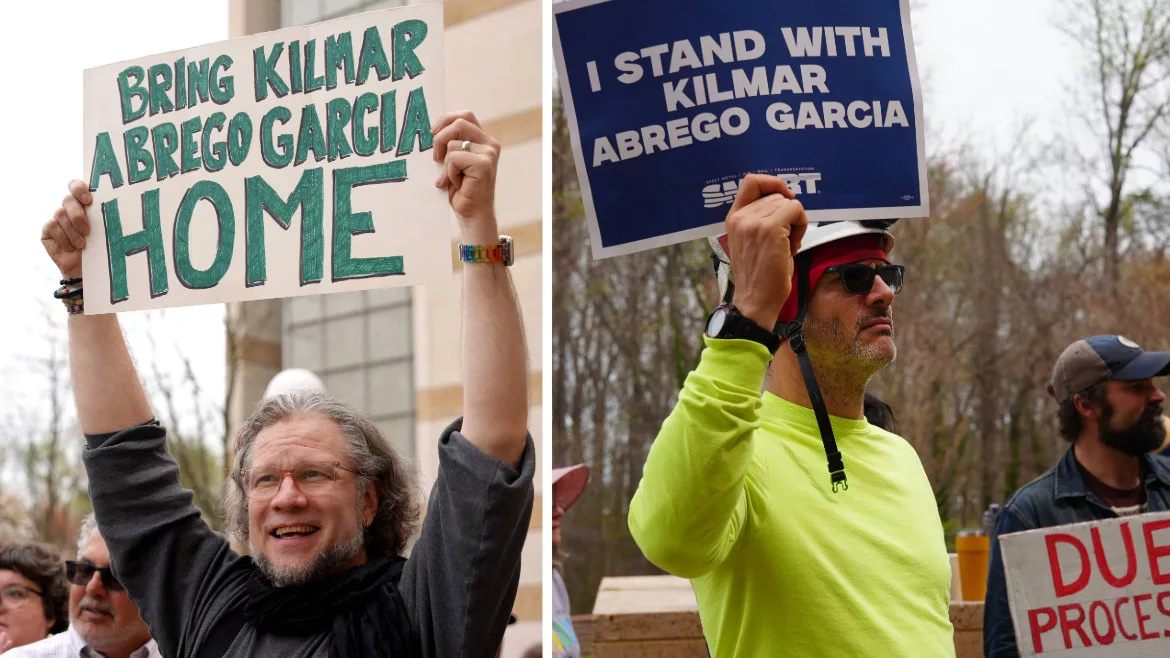
RALLY: SMART union members rally outside federal courthouse in Baltimore to demand return of wrongfully deported sheet metal apprentice Kilmar Armando Abrego Garcia. (Courtesy of SMART)
In a contentious 5-4 decision, the Supreme Court has blocked a federal district court order that would have required the return of wrongfully deported sheet metal apprentice Kilmar Armando Abrego Garcia to the United States. Chief Justice Roberts, writing for the majority, focused heavily on what he termed "improper venue shopping" by the plaintiffs, suggesting they had sought out sympathetic courts to hear their case.
However, in a dramatic reversal on Thursday, the Court issued a brief, unsigned decision ordering the Trump administration to "facilitate" Abrego Garcia's return to the United States. The Court sided with the District Court judge who had initially ordered his return, stating that "The order properly requires the Government to 'facilitate' Abrego Garcia's release from custody in El Salvador and to ensure that his case is handled as it would have been had he not been improperly sent to El Salvador."
While the decision marks a rare victory for those challenging the administration's deportation orders, the Court left several key specifics unresolved. The justices remanded the case back to the district court to clarify certain aspects of the decision "with due regard for the deference owed to the Executive Branch in the conduct of foreign affairs." For this, the Trump Administration is calling the unanimous unsigned order on Thursday a victory.
In response to the Supreme Court's decision, Sheet Metal Workers International Association (SMART) General President Michael Coleman issued the following statement:
"Since last week, our demand has been a simple one — one that echoed the calls of Kilmar's family, community and allies: Bring Kilmar home and give him the due process that is his right," Coleman said.
"In court last Friday, U.S. Department of Justice attorney Erez Reuveni admitted that there was nothing in the record to support ICE apprehending and deporting Abrego Garcia. The federal district court judge who heard Kilmar's case stated she '[hadn't] been given any evidence' to support the government's allegation of gang affiliation and ordered the government to bring Kilmar home. On Monday, a three-judge panel of the United States Court of Appeals for the Fourth Circuit unanimously denied the government's request for a stay. And yesterday, the United States Supreme Court reaffirmed the government's responsibility to facilitate Kilmar's return from El Salvador," Coleman summarized.
He added that SMART's call remains unchanged, and it is now backed by the Supreme Court: "The government must bring Kilmar Armando Abrego Garcia home and grant him due process. We are overjoyed for Kilmar and his family, and we look forward to the Trump administration taking immediate steps to bring him back to the U.S."
The Supreme Court's decision included a statement from the three members of the court's liberal wing that was sharply critical of the administration's arguments. "The Government's argument, moreover, implies that it could deport and incarcerate any person, including U.S. citizens, without legal consequence, so long as it does so before a court can intervene," wrote Justices Sonia Sotomayor, Elena Kagan and Ketanji Brown Jackson, joined in their dissent by Conservative Justice Amy Coney Barrett.
This case has drawn national attention since Abrego Garcia was wrongfully deported to El Salvador on March 12, when ICE agents detained him while driving home from work with his son. The decision to send him specifically to El Salvador—despite the administration having discretion to deport him to other countries—has drawn particular scrutiny given his previously documented fears of persecution there. Despite having protected legal status in the United States, he was deported and is now being held in El Salvador's CECOT prison, notorious for its inhumane conditions.
The path to Abrego Garcia's return remains complicated. While the Trump administration admitted to the "administrative error" in court filings on March 31, El Salvador's government has given no assurances it will comply with U.S. court orders to release him. The administration has seized on this uncertainty, arguing in court that it cannot force a sovereign nation to act. This standoff between El Salvador's apparent reluctance and the Supreme Court's order for the U.S. to "facilitate" Abrego Garcia's return has created a diplomatic quandary that could test the limits of both countries' legal systems.
In exchange for detaining the deportees in what one judge has called "one of the most dangerous prisons in the Western Hemisphere," the Salvadoran government is receiving $6 million from the U.S. government. This arrangement has drawn criticism from human rights organizations and legal experts who argue it creates perverse incentives for both governments to maintain the status quo.
The case has particular significance given Abrego Garcia's background. A first-year sheet metal apprentice with SMART Local 100, he had lived in the United States for 15 years and supported his wife and three small children. He had received withholding of removal status in 2019, a protection specifically granted due to concerns about potential persecution in El Salvador, where he had faced threats and extortion from the violent Barrio 18 gang.

SOLIDARITY: SMART General President Michael Coleman addresses union members at a Baltimore federal courthouse rally Friday, declaring "The Trump administration can't hide behind procedural excuses. (Courtesy of SMART)
The Supreme Court's 5-4 administrative order represents more than just a procedural setback. By accepting the government's arguments about venue, the Court has effectively created a roadblock for similar cases seeking emergency relief for wrongful deportations. The majority opinion suggests that such cases must be filed in specific jurisdictions, a requirement that critics argue could make it practically impossible for wrongfully deported individuals to obtain timely relief. The dissenting justices warned that this interpretation could leave individuals like Abrego Garcia with "rights without remedies."
The timing of this case is particularly notable as it unfolds against the backdrop of the Trump administration's recent invocation of the 18th-century Alien Enemies Act and promises of mass deportations. Human rights organizations continue to express concern about conditions in Salvadoran prisons, where Abrego Garcia is currently being held.
The case has garnered significant support from the broader labor movement. Multiple unions, including the United Auto Workers, Service Employees International Union (SEIU), and United Electrical, Radio and Machine Workers of America (UE), have joined forces to protest what they see as an assault on workers' rights and due process. SMART has held rallies across the country to raise awareness and demand Abrego Garcia's return.
Labor leaders have expressed outrage at the Supreme Court's administrative order, viewing it as part of a broader pattern of using procedural technicalities to deny substantive rights. The nine national unions that issued the joint statement have announced plans to escalate their campaign, arguing that the Court's focus on venue shopping ignores the fundamental human rights violations at the heart of these deportations. "When the highest court in the land chooses procedural gymnastics over justice, it falls to the labor movement to stand up for what's right," the statement declared.
Looking for a reprint of this article?
From high-res PDFs to custom plaques, order your copy today!