Insulation’s Moment: Safety, Predictability, and the New Demands on HVAC Systems
Experts are urging specifiers to rethink the role of duct insulation – not only for energy savings, but for fire safety and long-term reliability
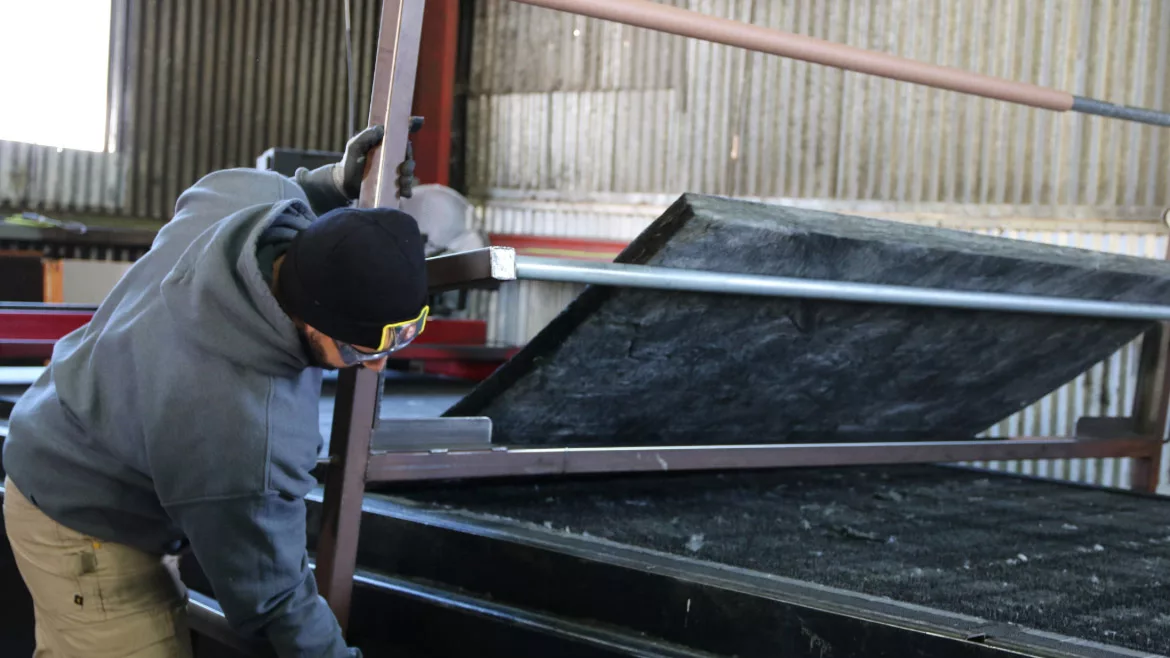
CLEAN CUT: Insulated duct fabrication, often utilizing advanced water jet cutting and jet liners, allow sheet metal workers to create precisely lined ducts that offer both thermal and acoustic benefits.
As buildings push ever closer to aggressive decarbonization goals, the conversation around HVAC systems is changing. No longer is energy efficiency the sole province of engineers and designers. The day-to-day maintenance team now finds itself at the heart of the effort, tasked with turning high-performance blueprints into real-world results.
Insulation, often taken for granted, is one of the unsung heroes in this equation. David Burd of Owens Corning noted that duct insulation’s primary job is straightforward: “The goal is to get air from the air handler to the intended space with as little change in temperature as possible.” Yet, beneath this simple mandate lies a complex world of materials science, safety, and evolving codes. “Additionally, another factor often considered and sought after is the acoustic benefit provided by many insulation products, especially for interior duct insulation such as duct liners,” Burd explained. “Some of the most common materials used to insulate ductwork are fiberglass, mineral wool, polyethylene foam, and elastomeric foam insulations.”
While the market offers a range of choices, Burd was quick to point out that not every material is suitable for every scenario. “It’s got to fit the application and all the performance criteria for that given application,” he said. Weight, fire performance, and acoustic properties all factor into the decision. “Some heavier materials, like certain types of mineral wool, are used for specialized fire protection, but their weight can make them impractical for much of the ductwork in commercial settings.” The right insulation balances energy savings, safety, and ease of installation.
Yet the most advanced product on the market is only as good as its installation and upkeep. Neglected maintenance can quickly undermine efficiency and safety, regardless of initial investments. This was a central theme when TJ Stock, HVAC Portfolio Manager at Johns Manville, joined an ES NEWS webinar panel alongside industry leaders including TJ Wheeler of Friedrich Air Conditioning and David Rames of Midea.
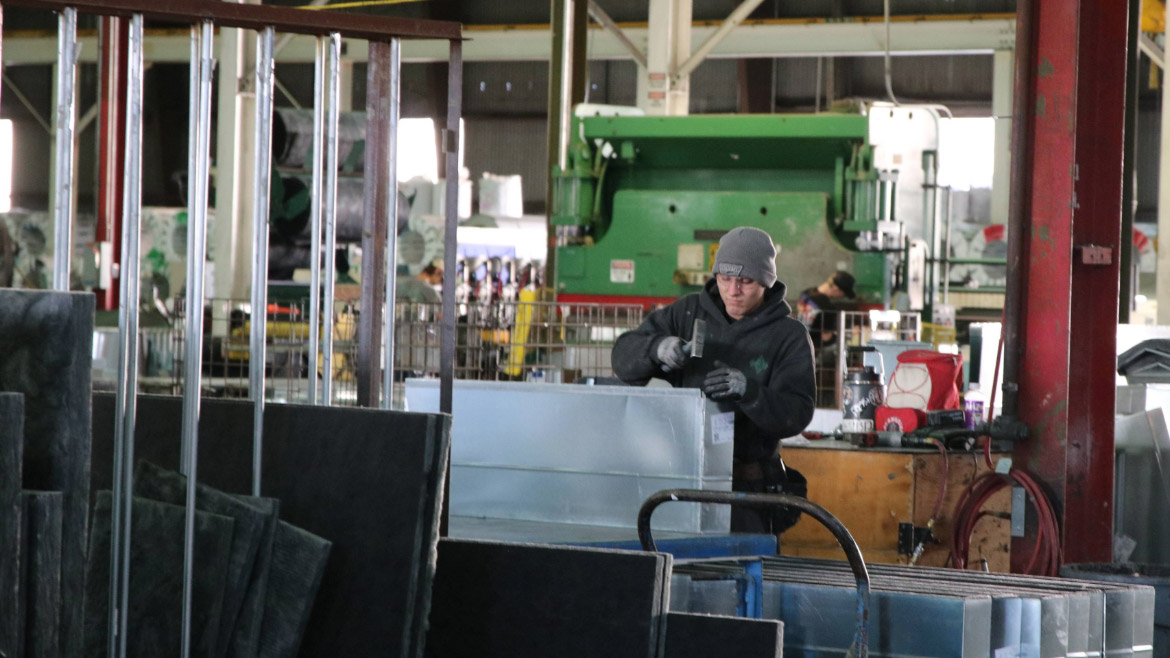
SMART AIRFLOW: Manifolding and prefabrication in the sheet metal shop setting often involves insulation. (Staff photo)
The panelists agreed: as systems grow more sophisticated, the margin for error shrinks. Variable airflow valves, smart controls, and demand-controlled ventilation promise big gains, but only if regular service keeps every component in tune. Insulation, for its part, protects against not only temperature and humidity swings, but also the unpredictable variables that erode predictability in real-world operation.
“Insulation is effectively there to protect you, not only from the variations within hot and cold, but also within wet and dry,” Stock noted. Burd echoed this in a separate interview, pointing out that insulation’s contribution to predictability is often underestimated. “When we test systems, we do so at optimal temperature and humidity ranges. The closer you can keep the system to those conditions with proper insulation, the more predictive and reliable the equipment will be in the field,” he said. Learn more about Johns Manville duct insulation, including Linacoustic RC duct liner, in our past reporting.
Safety, meanwhile, remains paramount. Burd underscored that the fire and smoke performance of duct insulation is measured in the Steiner tunnel, with tests such as ASTM E84 and UL 723 providing the benchmarks for flame spread and smoke developed indices. “The foremost means of determining fire and smoke performance is testing conducted in a Steiner tunnel,” he said. “The results of these tests are reported as flame spread index, otherwise known as FSI, and smoke developed index, also known as SDI. For both results, the higher the number, the worse the fire and smoke performance. A UL Class 1 duct has an FSI not greater than 25 and an SDI not greater than 50.” Achieving these numbers is more than just a regulatory hurdle – they can mean the difference between a safe evacuation and a catastrophic outcome.
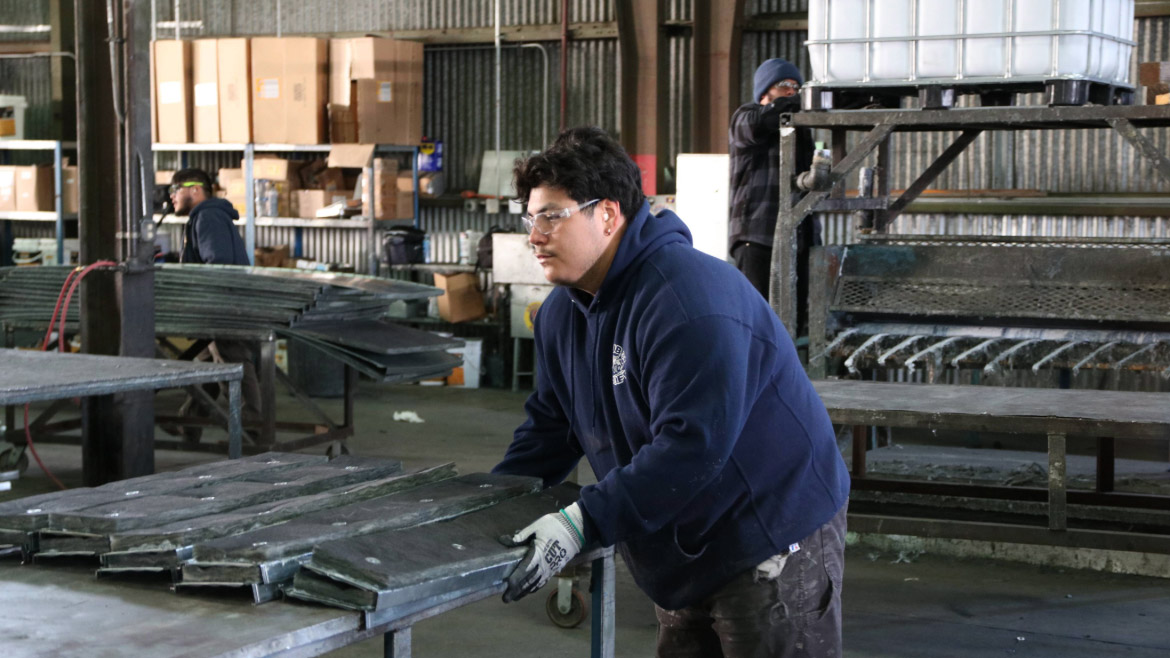
PRECISION FABRICATION: Sheet metal workers must expertly measure, cut, and assemble ductwork while applying insulation to maintain energy efficiency and minimize condensation throughout the system. (Staff photo)
Burd explained the importance of these standards with clarity. “Most fire deaths are not caused by burns, but by smoke inhalation,” he said, referencing the National Fire Protection Association. “The synthetic materials commonplace in today’s homes, hospitals, and commercial buildings produce especially dangerous substances.”
Burd noted, that according to NFPA, “as fire grows inside a building, it consumes most of the oxygen, slowing the burning process, and this incomplete combustion results in toxic gases. These gases can then incapacitate the people who are on the inside of the building.” Modern codes and standards, developed by organizations like ASHRAE and UL, have evolved to ensure materials and systems allow building occupants enough time to escape. “Engineering bodies work to develop new testing methods or enhance current ones that give us data to support evidence that the conditions in the early stages of fire will stay conducive for long enough to allow the occupants to get out,” Burd said.
Confusion sometimes surrounds the difference between UL Class 1 and “NFPA Class A.” Burd clarified: “UL Class 1 refers to a specific classification within UL 181, indicating an FSI not greater than 25 and an SDI not greater than 50. In contrast, ‘NFPA Class A’ isn’t a standard ductwork classification – NFPA relies on UL 181 classifications to ensure fire safety.”
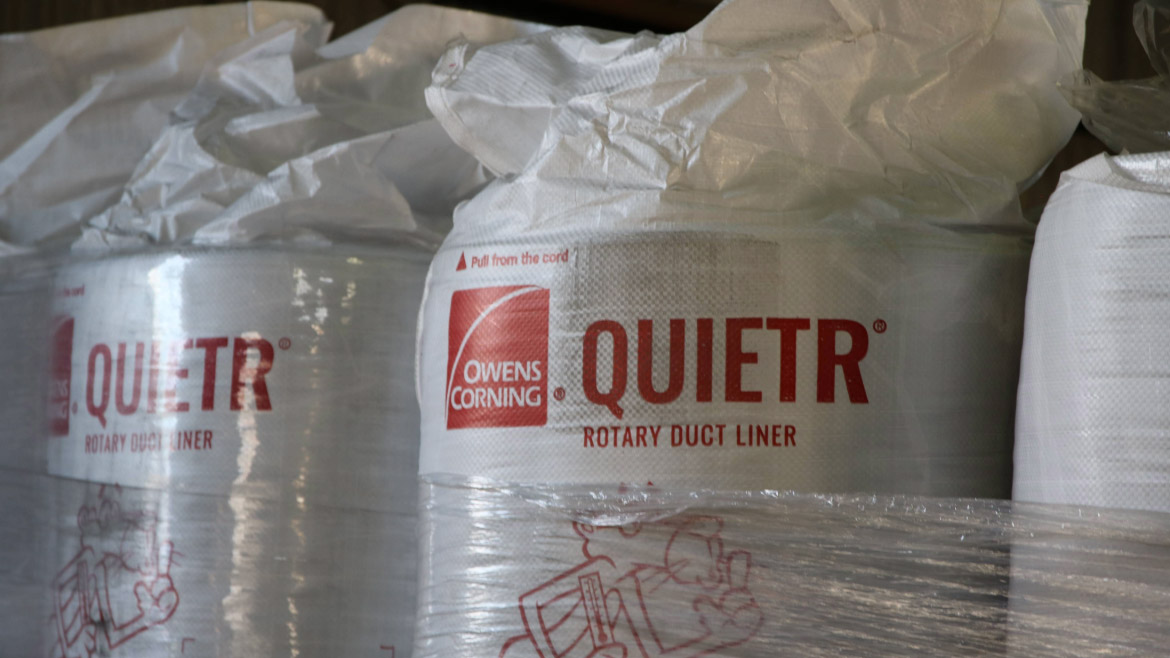
QUIET CONTROL: Rotary Duct Liner QuietR from Owens Corning is specifically engineered to reduce noise and thermal loss in sheet metal HVAC systems, helping create quieter, more comfortable indoor spaces by absorbing sound and limiting heat transfer. (Staff photo)
Not all insulation is created equal. In a recent NAIMA comparison study, fiberglass duct liners averaged an FSI of 17 and SDI of 3.5, while elastomeric products averaged 36 and 222, respectively – a disparity with real consequences in a fire scenario. “When a building is on fire, smoke fills the building, seeking the most minor paths of resistance, including the air ducts and plenums,” Burd said. “What we don’t want to have happen is to have the duct liner itself contributing to the amount of smoke developed.”
Burd cited that, as a result of the study, NAIMA recommended that building professionals – designers, specifiers, project managers, and building managers – request third-party ASTM E84 test reports for the materials or products cited in specifications, and reevaluate products as necessary. “If you have standard specifications for elastomeric duct liner products, it may be worthwhile to call out specific products that you have obtained E84 result reports for, or remove elastomeric from the standard specification until more information is provided.” The full NAIMA study, “Fire Performance of Duct Liners: A Product Comparison Study,” is available at insulationinstitute.org.
Performance and longevity are closely linked to these decisions. “If you insulate the supply and return ducts, it’s going to be more efficient. If you put duct liner in the ductwork, you’re also going to help the sound levels,” Rames observed. Cleaner, quieter, more efficient systems are not just a technical achievement – they’re a competitive advantage for contractors and a selling point for building owners.
The message is clear: whether retrofitting an office tower, building a new hospital, or operating a data center, attention to insulation and maintenance isn’t just box-checking. It’s central to meeting the stricter standards of tomorrow’s built environment, delivering on the promise of lower carbon, safer buildings, and systems that last.
Looking for a reprint of this article?
From high-res PDFs to custom plaques, order your copy today!