How Connected Mechanical Services Can Help with Aging Buildings
According to the World Economic Forum, 80% of current buildings will still be in use in 2050
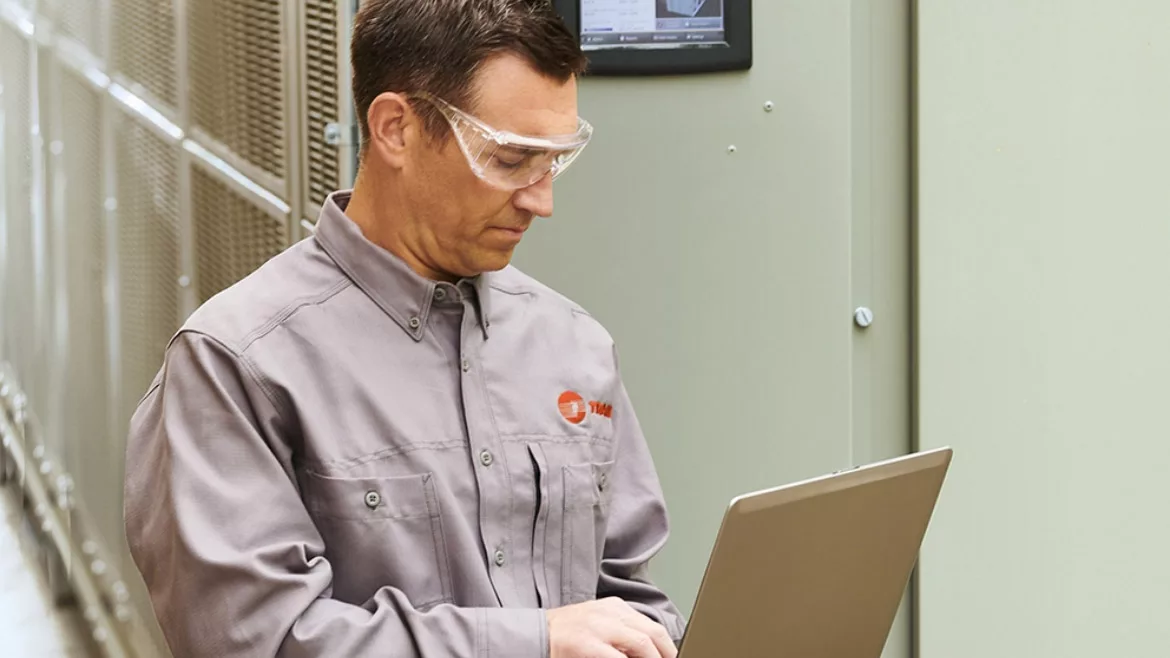
IoT: A service technician reviews real-time HVAC data on a laptop while inspecting rooftop equipment, reflecting the growing role of IoT.
HVAC equipment is a substantial investment and a critical component of any commercial building. Extending its life and avoiding unexpected downtime are top priorities. The Internet of Things (IoT) has revolutionized HVAC systems over the past two decades, enabling most new systems to connect to the internet.
The Legacy Approach to HVAC Maintenance
Despite great strides in technological advancement, most HVAC equipment is serviced the same way it always has been – physically on site, with little to no deep analysis using data or advanced analytics.
Traditionally, HVAC maintenance has relied on scheduled in-person inspections and reactive repairs. Technicians would visit a site periodically, often independent of the equipment’s actual needs. This intermittent approach limited visibility into equipment performance between inspections, leading to unexpected breakdowns and expensive repairs.
This approach has led to common challenges:
- Unexpected downtime due to equipment failures, impacting occupants and critical operations
- Expensive emergency service activities with little visibility ahead of time
- Higher-than-needed energy costs of running equipment
- Increased lifecycle costs of owning equipment due to poor operation that largely goes unseen for a long time
Building systems, more than ever before, have a compelling need to adopt the power of cloud connectivity and advanced analytics to bring our HVAC systems into the next generation.
Connected Mechanical Services Concept
Connected Mechanical Services (CMS) leverage IoT to continuously monitor and collect data on HVAC systems. This connectivity allows for the integration of HVAC system data, providing deeper, data-rich insights into system performance. Embedded sensors, setpoints, and operational data are communicated to the cloud, providing continuous information on system performance. Cloud-based analytics convert this raw data into actionable insights, offering facility managers and servicing partners real-time performance data, historical trends, mechanical problem alerts, maintenance recommendations, and energy consumption metrics.
This technology-driven visibility provides facilities with a 24/7 view into equipment performance, enabling proactive maintenance and more impactful service models that maximize operational budgets and ensure money is spent where it makes sense.

A technician discusses HVAC system performance trends with a building owner. (Courtesy of Trane)
Benefits of Shifting from Legacy to Connected Maintenance
This shift from legacy to connected maintenance offers several benefits:
- Manage Operational Expenses: CMS reduces the total cost of ownership by helping facility managers avoid unexpected expenses associated with equipment failures. Technicians can focus on specific issues identified through data analysis, making regular maintenance more efficient.
- Use Resources and Budget Wisely: Up to 65% of service calls can be addressed remotely, reducing the need for on-site visits. Service technicians can triage and troubleshoot problems using precise diagnostic information, lowering the cost and time required to resolve issues.
- Energy Reduction: Continuous monitoring ensures HVAC systems run at peak efficiency, reducing energy consumption and helping companies achieve sustainability goals.
- Increase Performance: Data analysis highlights operational challenges, reducing operational costs and extending the lifespan of HVAC equipment.
Real-World Applications of CMS
Consider a facility manager overseeing a large commercial building equipped with CMS. The service provider sends a report indicating reduced efficiency in one of the HVAC units and potential issues with a chiller's compressor and oil system. The facility manager schedules a maintenance visit, and the technician arrives with the necessary parts and tools to address the problems, preventing a potential breakdown.
This is not just theory – this is real life. A manufacturing facility in Michigan received a report from its service provider showing a potential failure that would have brought their operations to a halt and could have forced them to discard an entire run of products. Instead of dealing with this equipment failure and subsequent downtime, they had enough forewarning to fix the problem before the unit experienced a catastrophic failure.
Implementing CMS in Buildings
To take advantage of modern technology, you need data to be available. This means HVAC equipment should use modern controls with enough data to properly determine equipment health and operational trends. Equipment such as chillers or complex rooftop units installed decades ago likely don’t have the information needed to conduct a rigorous analysis. Considering an upgrade to utilize the latest technology is advisable when equipment age is reaching the end of its recommended service lifetime.
To use cloud analytics and data storage, connectivity must be achieved. This is usually done by using existing building network infrastructure over Wi-Fi or wired Ethernet connections, or by utilizing cellular connectivity solutions to achieve cloud connectivity.
Any connected solution should consider cybersecurity measures to make sure the integration of Operational Technology (OT) and Information Technology (IT) does not expose your business to undue risk. Utilizing encryption protocols, access controls, and sound data storage practices is key. Ensuring network isolation away from sensitive data, and compliance with any industry regulations such as GDPR or HIPAA, should also be considered.
Partner with your service provider to ensure that you’re designing and implementing data and connectivity into your HVAC systems to utilize these critical capabilities.
Conclusion
Connected mechanical services can transform how facility managers maintain, service, and manage their HVAC assets. Embracing CMS generates significant savings in time and money, improves business outcomes, and enhances peace of mind. As we look to the future, these innovative solutions will be essential in maintaining the aging infrastructure of commercial buildings.
Looking for a reprint of this article?
From high-res PDFs to custom plaques, order your copy today!