How to Ace VRF Installation and Service
The efficiency of VRF systems comes with a price: Precise installation is a must, and maintenance can be costly
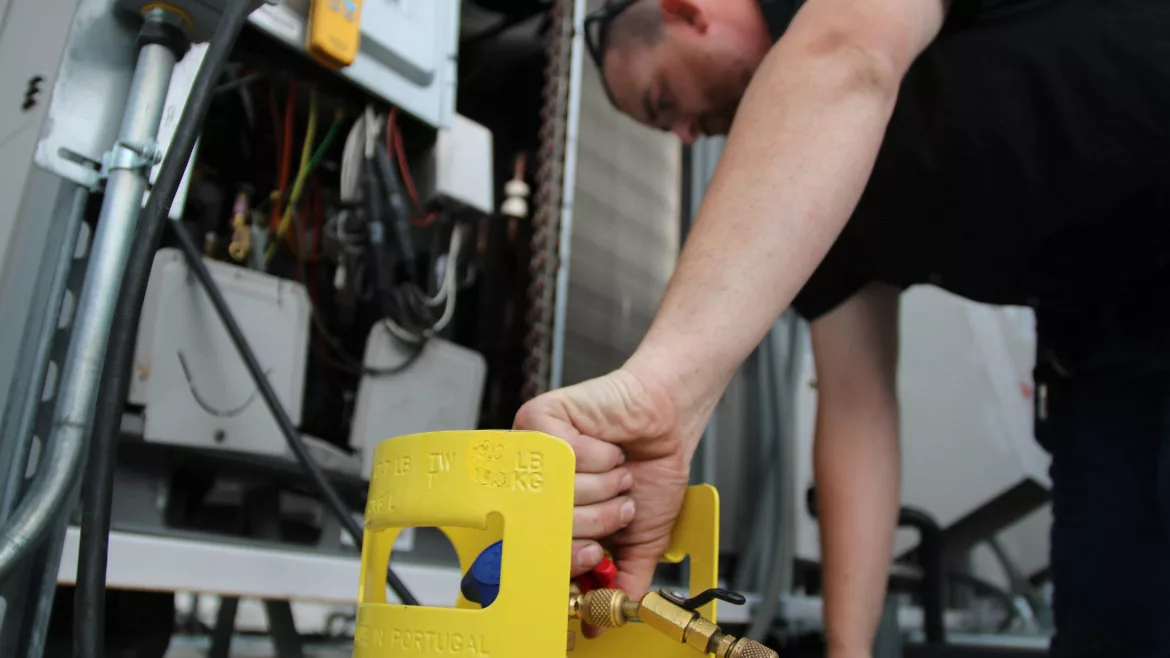
VRF: Nick Newsom inspects VRF components on a downtown Birmingham rooftop, tackling complex systems one service call at a time. (Staff photos)
Variable Refrigerant Flow (VRF) is everywhere these days. If you work in HVAC, you can’t escape it. The brochures promise efficiency, flexibility, and comfort – sometimes they sound like VRF can solve world hunger if you just follow the install manual. But ask the guys who’ve lived with these systems, and you’ll get a lot more than a sales pitch.
Here’s what I heard from two folks who eat, sleep, and sometimes curse VRF: Chris Hedlund (Local 80’s service guru), and Nick Newsom (RW Mead’s hands-on fix-it guy). What’s working, what’s not, and what’s next.
Hedlund sees a common problem that often gets overlooked: VRF just isn’t the right tool for every job. “Heat pump VRF in a hotel? That’s just asking for angry tenants. You need heat recovery there, not some value-engineered shortcut,” he said. Heat pump VRF systems can only heat or cool at one time – never both simultaneously. He says that’s a dealbreaker for places like hotels, apartments, or multi-tenant offices where some people want heat while others want to cool.
The problem is that heat recovery VRF systems – ones that can simultaneously heat and cool different zones by moving heat around – are more complex and costly. So some installers or specifiers opt for the cheaper heat pump VRF through “value engineering,” even when it’s the wrong fit.
“That’s where I see the biggest problem is misapplication,” Hedlund said. “It’s not just about poor installation. It’s about choosing the wrong system for the application.”
Tech Gets More Complex, Rules Get Tougher
Technology itself isn’t standing still either. Hedlund laid out the headaches around refrigerants: “With every new blend, you have to swap out half your tools. Recovery machine, vacuum pump, you name it. And nobody in the field really knows what’s coming next. Some days, the supply house doesn’t even have the new stuff – so guys end up mixing refrigerants, which is a disaster.”
Newsom, who’s in the trenches every day, echoed the frustration. “Every week there’s a new rule. The manufacturers say, ‘this is better for the ozone,’ and I’m all for that. But drop the change on us with no warning, and now half my tools are paperweights.”
He’s juggling apps, error codes, wiring diagrams, and a mountain of regulations. “You have to like to learn, or be a glutton for punishment.”

WIRING: Navigating the maze of piping and wiring, Nick Newsom diagnoses a VRF unit issue high above Birmingham’s streets.
When VRF Works, and How to Do it Right
VRF is a highly efficient, and results in lower utility bills for building owners. This efficiency does have a price when it comes to maintenance, however.
Hedlund explained the trade-offs in no uncertain terms. “We’ve been servicing VRF for 15 years now, and the long-term costs can be astronomical,” he said. Unlike traditional rooftop units that might last 20 years, many VRF manufacturers recommend replacing compressors every 10 years – no exceptions. “They want you to install a new circuit board every time you do a compressor replacement. That board alone adds significant cost, and some units have two compressors, doubling the risk and expense.”
He went on to share the maintenance nightmare behind the scenes. “When you need to change a part, you have to pull all the refrigerant out. Some of these systems have well over 100 pounds of refrigerant – that’s a huge recovery job. Then you have to do a static pressure test, hold it for a specific time, evacuate moisture. Vacuum pumps can run for 4 to 8 hours, sometimes longer. It’s not like a quick fix.”
On top of that, the nature of VRF indoor coils – which handle both heating and cooling – means they constantly flex between hot and cold cycles seasonally. This thermal cycling accelerates wear and leads to more frequent leaks and failures. “The coil is running cold all summer, hot all winter, sometimes switching modes day to day depending on tenant use. That causes refrigerant leaks and compressor failures that are costly to repair,” Hedlund said.
Many customers don’t realize this upfront. “The sales pitch is all about energy efficiency, and yes, VRF shines there. But the reality is some customers come to regret these systems because of the unreliability and repair costs.”

TROUBLESHOOT: Hands-on and tech-savvy, Nick Newsom troubleshoots VRF equipment on a rooftop in Michigan.
Hedlund also emphasized the critical importance of choosing the right VRF type for the application.
“The heat pump system you see everywhere only provides heat or cooling at one time. That’s fine for big open areas or common spaces, but it’s not suitable for apartments, hotels, or mixed-use buildings where different zones demand different temperatures simultaneously,” he said. “For those applications, you need heat recovery VRF, which can simultaneously heat some zones while cooling others by transferring heat internally.”
Unfortunately, Hedlund said, heat recovery systems are often skipped in favor of cheaper heat pump VRF systems. “That’s a recipe for tenant complaints and constant service calls. Misapplication like this is as big a problem as poor installation.”
This combination of complex maintenance, application challenges, and high upfront and ongoing costs means VRF isn’t a set-it-and-forget-it solution. For Hedlund, the lesson is clear: “If you’re going to do VRF, you have to do it right, and you have to educate customers about the true costs and considerations upfront. Otherwise, they’ll come back regretting the decision.”

VALUE: RW Mead and Sons does not value engineer anymore, because the long term services implications make it not worth it for "us or the client," Chris Hedlund says.
Hybrid VRF: Hopes and Cautions
Hedlund sees promise in hybrid VRF systems, sometimes called HVRF or HBC, which combine refrigerant and water to boost efficiency and reduce environmental risks.
He was cautiously optimistic. “It could change everything. Or it could be another shortcut that backfires if people don’t do it right. As always, it’s the basics – right system, right place, right install.”
If you take one lesson from these guys, it’s this: the customer’s needs should come first, even if that means saying no.
Hedlund’s company, RW Mead & Sons, has turned down jobs where the specs were off. “We don’t value engineer anymore. Not worth it for us or the client.”
VRF isn’t going away. But the future belongs to those willing to keep learning, to keep pushing for quality, and to tell hard truths when the install – or the application – just isn’t right.
Looking for a reprint of this article?
From high-res PDFs to custom plaques, order your copy today!