Throwback Thursday
Smoke Detection Requirements In Data Centers
Keep up on recent code changes
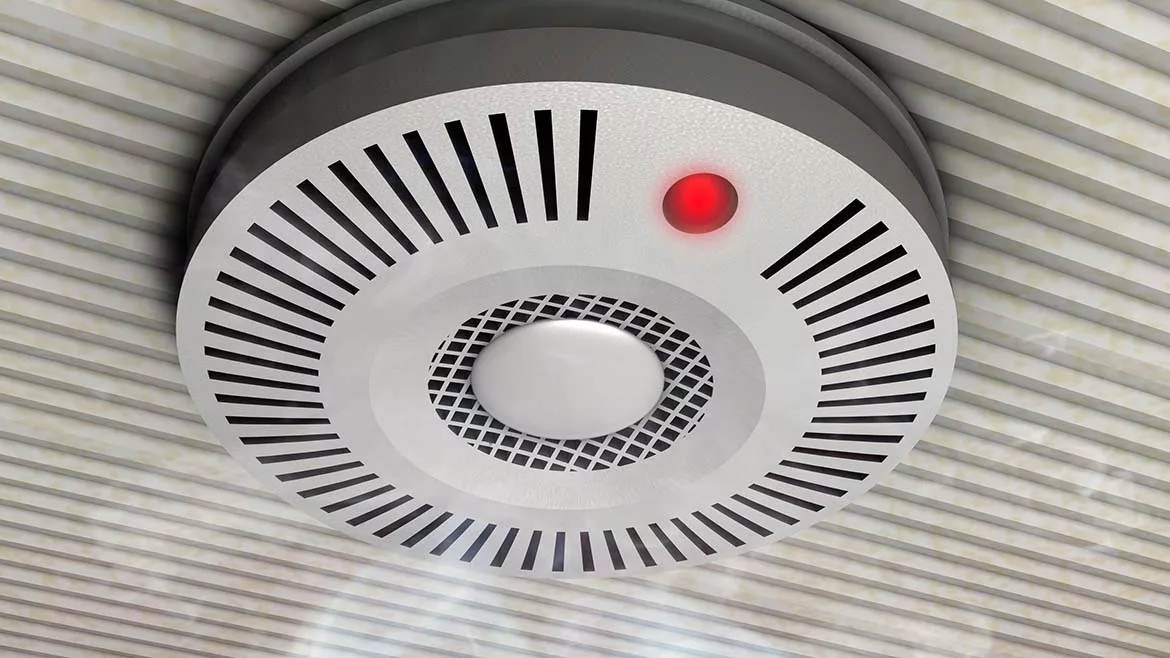
Smoke detection in data centers is critical, not only for life safety reasons, but also to reduce fire-related business interruption and property damage. Data centers are unique environments, which can prove challenging. Heavy power loads or a defective piece of equipment can very quickly lead to overheating or a short circuit in a data center. A constant ignition source such as electricity, and combustible materials, such as plastics in printed circuit boards, are always present. Also, hot/cold aisle systems lead to extremely high air velocity and complex airflow patterns that tend to dilute smoke. Additionally, in some vertical market businesses, interruption costs could be measured in millions of dollars per minute. For these reasons, it is essential that smoke be detected as early as possible.
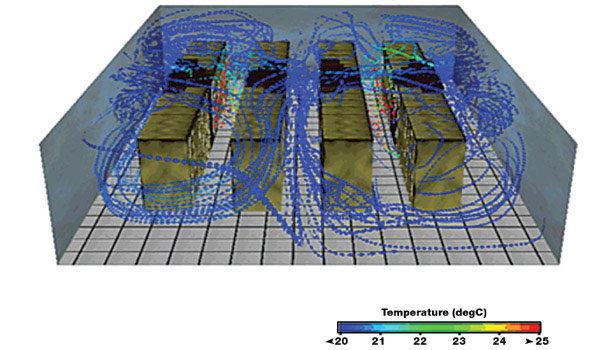
FIGURE 1: Complex airflow pattern in a data center.
High sensitivity smoke detection is typically deployed in a data center to notify authorized personnel early of a potential situation. They can then investigate and take appropriate measures (i.e., shut down an overheated server) to limit smoke exposure to other IT equipment and minimize downtime. Air sampling smoke detection (ASSD) systems are ideal for providing very early warning smoke detection. Other alternatives, such as high sensitivity spot detectors, can also provide early notification of smoke while being compliant with the latest standards for fire detection requirements in data centers. Regardless of which detection technology is chosen, proper installation is critical.
Smoke Detection Technologies
Before getting into the best smoke detection approach for minimizing business interruption in a data center, it is important to define what the difference is between air sampling and spot smoke detectors.
An air sampling type detector consists of a piping or tubing distribution network that runs from the detector to the area(s) to be protected. An aspiration fan in the detector housing draws air from the protected area back to the detector through air sampling ports, piping, or tubing. At the detector, the air is analyzed for fire products.
A spot smoke detector is a device in which the detecting element is concentrated at a particular location. That smoke detector typically uses photoelectric or ionization smoke detection algorithms.
Ionization smoke detection is the principle of using a small amount of radioactive material to ionize the air between two differentially charged electrodes to sense the presence of smoke particles. Smoke particles entering the ionization volume decrease the conductance of the air by reducing ion mobility. The reduced conductance signal is processed and used to convey an alarm condition when it meets pre-set criteria.
Photoelectric light-scattering smoke detection is the principle of using a light source and a photosensitive sensor arranged so that the rays from the light source do not normally fall onto the photosensitive sensor. When smoke particles enter the light path, some of the light is scattered by reflection and refraction onto the sensor. The light signal is processed and used to convey an alarm condition when it meets pre-set criteria.
Fire Protection Code and Installation / Design Standards
It is also important to note the relevant fire protection code and associated installation and design standards as defined by NFPA (National Fire Protection Association) and FM (Factory Mutual) Global.
NFPA 72 is the National Fire Alarm and Signaling Code and covers the application, installation, location, performance, inspection, testing, and maintenance of fire alarm systems, fire warning and emergency warning equipment, and their components. The code’s purpose is to define the means of signal initiation, transmission, notification, and annunciation; the levels of performance; and the reliability of the various types of fire alarm systems.
NFPA 75 is the Standard for the Protection of Information Technology Equipment and covers the requirements for the protection of information technology equipment and information technology equipment areas. This standard sets forth the minimum requirements for the protection of information technology equipment and related areas from damage by fire or its associated effects — namely smoke, corrosion, heat, and water.
NFPA 76 is the Standard for the Fire Protection of Telecommunications Facilities and provides requirements for fire protection of telecommunications facilities where telecommunications services, such as telephone (landline, wireless), data, internet, voice-over internet protocol (VoIP), and video transmissions are rendered to the public. The standard’s purpose is to provide a minimum level of fire protection in telecommunications facilities, provide a minimum level of life safety for the occupants, and protect the telecommunications equipment and service continuity.
FM Data Sheet 5-32 is the Property Loss Prevention Data Sheet for Data Centers and Related Facilities, it contains property loss prevention recommendations for data centers and their critical systems and equipment. This data sheet also identifies the hazards associated with these facilities and recommends risk-mitigation solutions from a property protection and business continuity perspective.
NFPA 72 Smoke Detection Requirements for High Airflow Environments
According to NFPA 72 (2013 edition), spot detector spacing shall be reduced for high airflow environments, like data centers, in accordance with Table 17.7.6.3.3.2, Smoke Detector Spacing Based on Air Movement. This table does not apply when air sampling or projected beam detectors are used. They are to be installed in accordance with the manufacturer’s installation instructions. As noted in the table, at 7.5 or fewer air changes per hour (ach), smoke detector spacing is 30 ft, or 900 sq ft. As the number of air changes per hour increases, the more the detector spacing and effective coverage area is reduced. For example, at 60 ach (the highest entry in the table), detector spacing is reduced to provide 125 sq ft coverage area per detector. It is important to note that modern data centers have ach that often exceed 60 ach; however, this NFPA 72 table does not yet address that. As a result, a Fire Protection Research Committee was formed to study the effect of high airflow on detection in data centers.
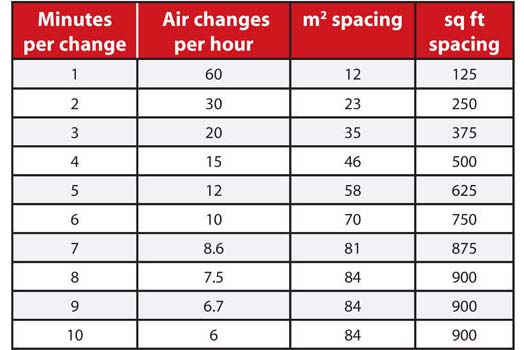
TABLE: NFPA 72, Table 17.7.6.3.3.2, Smoke Detector Spacing Based on Air Movement (not to be used underfloor or above-ceiling spaces.)
When using air sampling, NFPA 72 (2013 edition) 17.7.3.6.8 states that sampling system piping shall be conspicuously identified as "Smoke Detector Sampling Tube – Do Not Disturb" at:
- Changes in direction or branches of piping
- Each side of penetrations of walls, floors, or other barriers
- Intervals on piping that provide visibility within the space, but no greater than 20 ft (6.1 m).
This is in the code to prevent damage by those working in the space where the sampling pipe is located. Damage to the sampling pipe could result in the fire alarm system being significantly compromised.
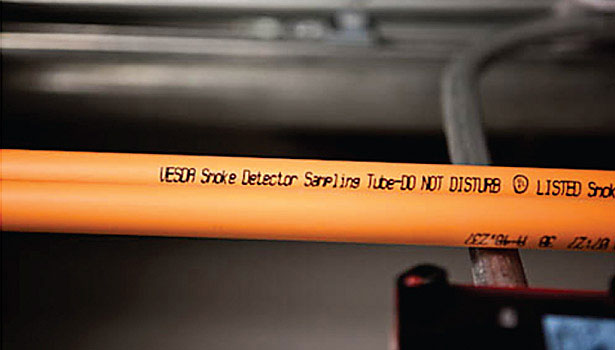
FIGURE 2: Sampling pipe labeled in accordance with NFPA 72.
NFPA 76 VEWFD
Just like data centers, telecommunications facilities are considered mission critical facilities since it is critical to maintain telephone service for their customers. This identified need led to defining requirements for a very early warning fire detection (VEWFD) system. NFPA 76 (2012 edition) defines VEWFD systems as systems that detect low-energy fires before the fire conditions threaten telecommunications service. The minimum sensitivity settings above ambient airborne levels for the VEWFD systems installed are as follows:
1. Alert condition includes the following:
- Air sampling systems: 0.2% per-foot obscuration (effective sensitivity at each port)
- Spot detectors: 0.2% per-foot obscuration
2. Alarm condition includes the following:
- Air sampling systems: 1.0% per-foot obscuration (effective sensitivity at each port)
- Spot detectors: 1.0% per-foot obscuration
The alert (pre-alarm) condition is intended to provide for an initial response by authorized personnel prior to fire department notification. It is important to note that spot detectors can be used for VEWFD, as long as they provide a pre-alarm or alert condition at 0.2%/ft obscuration and alarm indication at 1.0%/ft obscuration. An example of a VEWFD, or high sensitivity spot detector on the market, is the Siemens advanced FDOOT441 (Fire Detector Optical Thermal) multi-criteria detector. In general, detection that meets NFPA 76 (2012 edition) VEWFD requirements are an excellent choice, not only for telecommunications facilities, but also for data centers.
NFPA 75 and FM Data Sheet 5-32 Changes
Recently, there have been changes in NFPA 75 and FM Data Sheet 5-32 (Property Loss Prevention Data Sheet for Data Centers and Related Facilities) as related to smoke detection in data centers. NFPA 75 (2013 edition) has been updated to say the following: “Detection and suppression components within aisle containment systems shall be rated for the intended temperatures of hot aisles when installed in those locations.”
Similarly, FM Global Data Sheet 5-32 was updated in July 2012 to say: “Verify that the FM-approved detection within the containment system (hot aisle) is listed for the ambient temperature of its location.”
These changes were made because temperatures of hot aisles are exceeding 100°F (38°C), and most smoke spot detectors are listed for a maximum operating temperature of 100°F (38°C). This is not an issue for air sampling since its associated sampling pipe is rated to withstand those temperatures, but it is also not an issue for select smoke detector manufacturers such as Siemens. For example, the Siemens FDOOT441 multi-criteria detector has an operating temperature range from +32°F (0°C) to 120°F (49°C), which allows it to operate in hot aisle locations.
Other changes in FM Global Data Sheet 5-32 include: “Use one of the following FM-approved VEWFD systems, as appropriate for the characteristics of the occupancy: A) Air aspirating, or B) Intelligent high-sensitivity spot detection; photoelectric type.”
Previously, this data sheet called for an equal amount of photoelectric and ionization detectors when spot detectors were used instead of air sampling or air aspirating detection. The change was made due to FM Global determining that some ionization detectors did not detect fires involving plastic. They also did not detect some fires where the airflow was from below the floor or when airflow was from ceiling-mounted diffusers to a low exit point.
Air Sampling vs. Spot Detection
Air sampling detection provides proactive detection in high airflow environments by actively drawing and sampling air from a protected zone via multiple sampling holes in a pipe network. It is extremely sensitive and is considered an active device, as opposed to passive spot detectors. In addition, air sampling detection provides a single test point for maintenance and commissioning. With high sensitivity spot detectors, the equipment cost and programming complexity is significantly lower. Also, since high sensitivity spot detectors are addressable, they can better indicate the source of the smoke at the fire alarm control panel.

FIGURE 3: Air sampling detection in a data center.
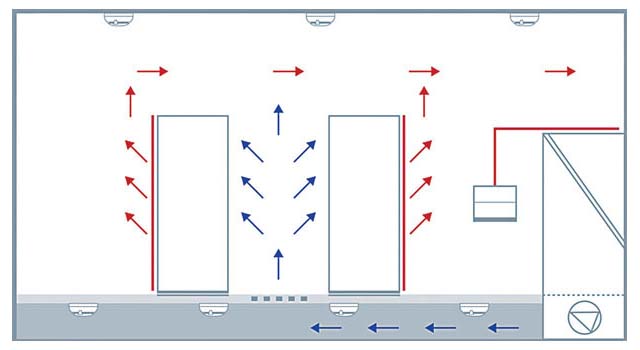
FIGURE 4: Sampling pipe labeled in accordance with NFPA 72.
Hybrid Detection Approach
Instead of choosing air sampling over high sensitivity spot detectors, a cost-effective solution is a hybrid approach, where high sensitivity spot detectors are on the ceiling and under the subfloor (if one exists), while air sampling is across the return air grille of the computer room air conditioner (CRAC) or air-handling unit (AHU). In data centers and telecommunications facilities, smoke will most likely follow the path of the air circulated by the AHU. The effects of this air movement on smoke detection at the ceiling can be overcome by complementing ceiling sampling with sampling across the return air vent of the AHU. Placing air sampling pipes with sample ports (holes) on the return air vent can increase the reliability of smoke detection, since smoke will be detected as early as possible. In the event the AHU is shut down, there is the added assurance that the addressable high sensitivity spot detector will pinpoint the source of the smoke. Or, if the AHU is not shut down, the high sensitivity spot detector can identify the location of the smoke migration.
Conclusion
In summary, air sampling smoke systems are an excellent choice in providing VEWFD for mission critical applications. Some manufacturers offer close integration between their fire alarm control panel and air sampling type detectors. Additionally, high sensitivity spot detectors that provide VEWFD systems are also on the market, and can minimize business disruption in a data center as a result of a fire. Regardless of the detection technology chosen, it is important to follow the appropriate NFPA code or standard.
Works Cited
NFPA 72 – National Fire Alarm and Signaling Code, 2013 Edition.
NFPA 75 - National Fire Protection Association Standard for the Fire Protection of Information Technology Equipment, 2013 Edition.
NFPA 76 - National Fire Protection Association Standard for the Fire Protection of Telecommunication Facilities, 2012 Edition.
FM Global Property Loss Prevention Data Sheet 5-32 - Data Centers And Related Facilities, July 2012.
This article was originally posted on www.missioncriticalmagazine.com.
Looking for a reprint of this article?
From high-res PDFs to custom plaques, order your copy today!