TODAY’S BOILER | JANUARY 2023
Decarbonization Strategies for Boiler Systems
New technologies continue to emerge, while existing ones are being improved upon for performance and cost reduction.
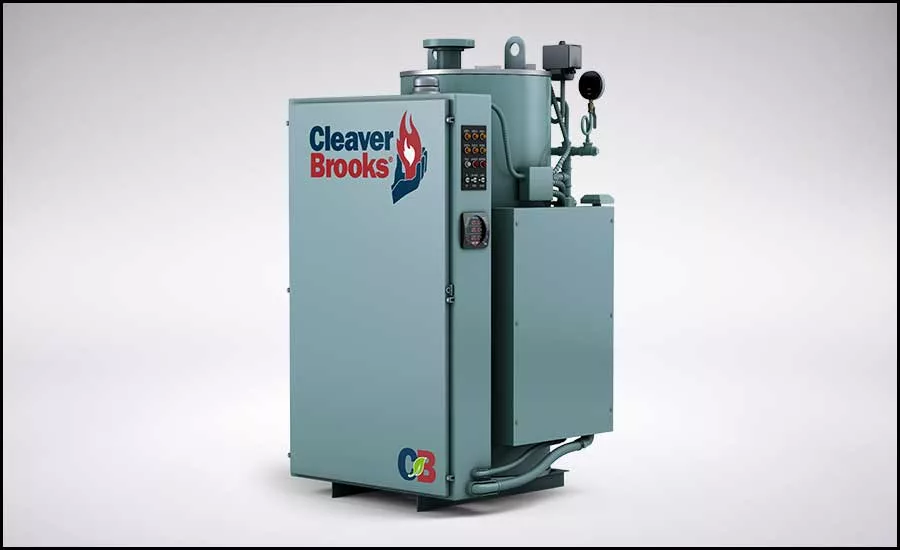
FIGURE 1. Hydrogen-burning boilers have been around for more than 25 years. Images courtesy of Cleaver-Brooks
Throughout the world, nations have set net-zero targets to limit the amount of CO2 expelled into the atmosphere. Companies and institutions are getting on board, looking for ways to meet their sustainability goals and reduce their carbon footprints.
To achieve low- to zero-carbon emissions, there are several strategies along with emerging technologies.
Energy Efficiency
The greenest Btu is the one that is not produced. Companies should optimize their boiler systems to ensure they operate as efficiently as possible, since CO2 is directly proportional to the amount of fuel used. The higher the efficiency, the lower the fuel consumption and CO2.
Bringing in a boiler plant optimization specialist to evaluate a system is advisable. He or she can identify specific areas for improvement, resulting in a quantifiable increase in energy efficiency and a reduction in emissions. In addition, he or she can recommend specific ways to minimize fuel usage, such as adding heat recovery and returning condensate.
Renewable and Alternative Fuels
There are a number of renewable and alternative fuel options available, including hydrogen, biomass, digester gas, landfill gas, and biomethane. These fuels require more complex burners and controls, making them better suited for industrial applications than commercial ones.
Hydrogen-burning boilers have been around for more than 25 years. All Cleaver-Brooks industrial boilers can burn hydrogen. With hydrogen, no CO2 is produced, so the process is clean; however, creating hydrogen can be dirty if methane or coal is used to produce it, as is the case with gray hydrogen. Blue and green hydrogen are preferred, as they are the low-to-no CO2 alternatives.

In the production of blue hydrogen, carbon capture technology is used. Even though the process still relies on fossil fuels, 90%-95% of the CO2 emissions are captured.
Green hydrogen is produced via electrolysis, whereby water is converted into hydrogen and oxygen using electricity. When renewable electricity is used as the input, the hydrogen is indicated as green because there is no fossil fuel consumption and zero CO2 emissions.
Renewable fuel options, such as biogas, digester gas, landfill gas, and biomethane, are becoming more popular. These gases are produced when organic matter decomposes at a wastewater treatment plant or landfill. It is relatively easy to retrofit an existing boiler to burn renewable or alternative fuels.
Electrofuels are an emerging category. Companies are trying to engineer carbon-neutral replacement fuels to take renewable energy and use it to replace natural gas or fuel oil. Electrofuels are still in the experimental phase. As manufacturers start producing them, the boiler industry will figure out how to retrofit burners for them.
Direct Electrification
Most facilities are gravitating to direct electrification. For low-temperature processes, there are several options, including direct resistance and heat pumps or electric boilers.
There are currently only two options for direct electrification for high-pressure steam and high-temperature processes: electric or electrode boilers.
Electric boiler technology has been around for more than 50 years. It’s a proven technology that is 100% local-emissions free and highly efficient at all operating points.
Electric boilers can be used for hot water or steam applications, and they are easily retrofitted to an existing system. There are no temperature limitations, no refrigerant needed, and zero emissions. They also operate quietly.
Currently, electric boilers go up to about 12 million Btu. Of course, multiple units can be put together for more significant needs. For steam, electric boilers go up to about 250-psi operating pressure.
The other type of electric boiler is an electrode boiler designed for industrial processes that need high-pressure steam and lots of it. Electrode boilers operate at 4,160-25,000 volts or about 300 million Btu. Electrode boilers are 99.9% efficient, so all the electric energy is used to produce steam.
Carbon Capture
This technology has been implemented on a very large scale for power plants and is still very experimental. The process captures a system’s exhaust fumes and removes CO2 from those fumes. The CO2 is typically sequestered in the ground, which can be used for other purposes.
Due to its complexity and cost, carbon capture is not viable for most thermal energy producers; however, there are several smaller-scale systems in development. So, it may be an option to consider in the future.
Decarbonization is coming, and it’s vital to research and determine a facility’s proper strategy. New technologies continue to emerge while existing ones are being improved for performance and cost reduction.
To learn more, watch the webinar “Producing Thermal Energy in the Age of Decarbonization” at www.cleaverbrooks.com.
Looking for a reprint of this article?
From high-res PDFs to custom plaques, order your copy today!