AMCA Issues COVID-19 Guidance for Large-Diameter Ceiling Fans
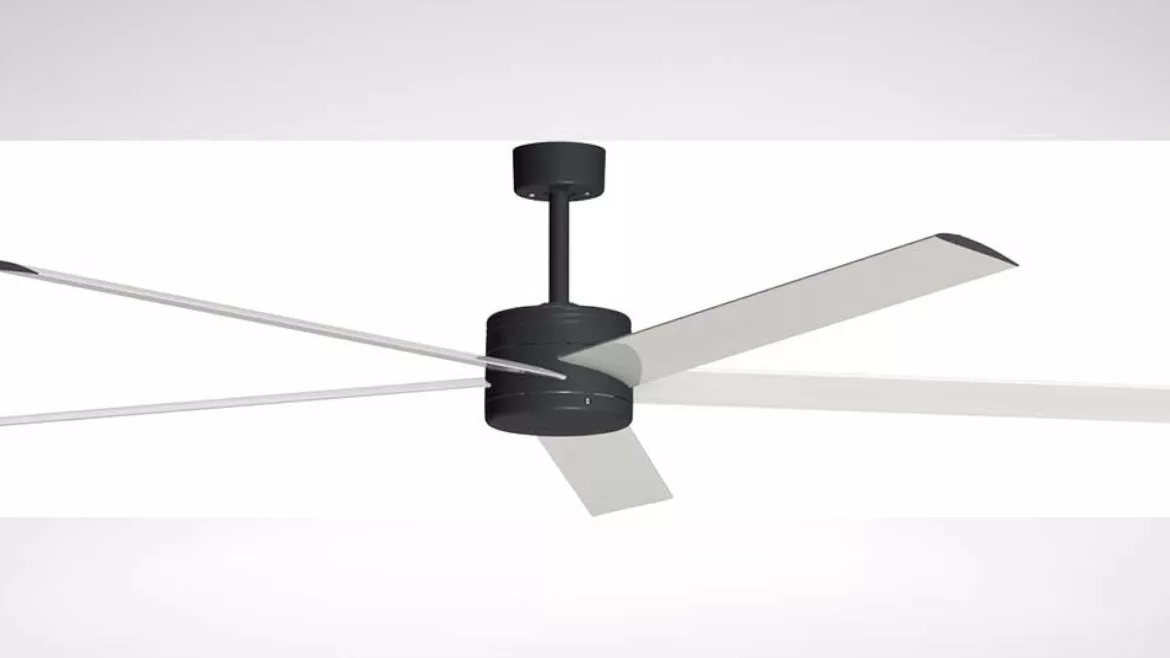
Air Movement and Control Association (AMCA) Intl., in collaboration with Concordia University and a team of engineers and scientists, has released the results of a year-long study of the impact of large-diameter (greater than 7 feet [2.1 m]) ceiling fans — also known as high-volume, low-speed (HVLS) fans — on coronavirus disease 2019 (COVID-19) exposure in a warehouse in the U.S.
Air Movement and Control Association (AMCA) Intl., in collaboration with Concordia University and a team of engineers and scientists, has released the results of a year-long study of the impact of large-diameter (greater than 7 feet [2.1 m]) ceiling fans — also known as high-volume, low-speed (HVLS) fans — on coronavirus disease 2019 (COVID-19) exposure in a warehouse in the U.S.
Applicable to large, open, indoor spaces with low occupancy as well as to warehouses, the findings are based on more than 220 parametric computational-fluid-dynamics (CFD) simulations varying worker and packing-line locations and fan speed (20%-100%) with and without racking.
“This well-constructed and executed study by Professor [Liangzhu (Leon)] Wang and his team … is a significant contribution to knowledge about the effects of HVAC systems on risk of infection transmission and will be helpful both to building operators and to organizations developing guidance for airborne-infection-risk mitigation,” said William P. Bahnfleth, PhD, P.E., professor of architectural engineering at Pennsylvania State University and chair of the ASHRAE Epidemic Task Force, who served as science-team leader for the project.
The origins of the study date to August 2020, when, “AMCA Intl. was made aware of COVID-19 guidance for the operation of circulating fans published by the Centers for Disease Control and Prevention, the National Institutes of Health, and other organizations,” said Michael Ivanovich, senior director, global affairs, AMCA Intl. “The guidance, which did not point to foundations stemming from research or prior practice, advised that circulating fans should be turned off. Later, that guidance advised that ceiling fans run in reverse (upward) direction.”
In response to that guidance, AMCA Intl. commissioned Concordia University to conduct numerical-simulation studies of airborne-particle and aerosol transmission in a warehouse with large-diameter ceiling fans. Because COVID-19 infection rates are poorly understood and varying with mutations, the study focused on particle concentrations as an indicator of exposure risk.
To promote integrity in the design and execution of the research and ensure the conclusions drawn from the study are valid and useful, AMCA Intl. assembled industry and science teams. Consisting of representatives of AMCA Intl. member companies and members of the AMCA Intl. staff, the industry team provided expertise in the application and performance of products, while the science team, made up of authorities on infectious diseases, indoor-air quality, fans, and computer modeling, advised on the project setup and reviewed the intermediate and final results.
Major conclusions of the study are being formulated into a guidance white paper AMCA Intl. will publish in the near future. Major conclusions that will contribute to the guidance include:
• Operating HVLS fans at maximum speed with downward airflow yields the best performance. When lower air speeds are preferred to avoid thermal discomfort, maximum speed with reverse flow is a good option; and
• Reversing HVLS fans at low fan speed may reduce whole-warehouse air speed and, thus, lower diluting effect, increasing the whole-warehouse concentration at the breathing zone.
“On behalf of its members and industry, AMCA Intl. initiated an in-depth research project on COVID-19 exposure risk to provide organizations with information on which to base guidance,” said Ivanovich, who served as project manager for the study. “The project was peer-reviewed from start to finish by an international team of scientists, and the complete, final report and the modeling input files have been made public for complete transparency. Although we believe the study has yielded useful guidance, it’s important for anyone wanting to apply the report to read the assumptions and limitations of the study. The guidance of the study is limited to the conditions that were modeled in the study.”
“AMCA wishes to thank member companies Big Ass Fans, Greenheck Fan Corp., Hunter Industrial, and MacroAir Technologies for partially funding the study,” said Mark Stevens, executive director, AMCA Intl. “We commend Dr. Wang and his team at Concordia University for the modeling and the science and industry teams for their contributions to the study design and the review of the results and guidance.”
For a high-level summary of the project’s findings and resultant guidance, see “AMCA COVID-19 Guidance for Large-Diameter Ceiling Fans,” the cover article of the just-published 2021 edition of AMCA inmotion magazine, at http://bit.ly/AMCA_inmotion.
For information on the simulation methodology, setups, assumptions, validations, and results, see the full final report, “AMCA COVID Guidance for UNDUCTED Fans – Modeling Ceiling Fans,” at https://bit.ly/COVID_LDCF.
Looking for a reprint of this article?
From high-res PDFs to custom plaques, order your copy today!