Today's Boiler
Boiler Forced Draft Fans – Low-Fire Operation

Figure 1. Damage is visible on one of the fan outlet damper linkages.

Figure 2. Fan inlet box vibration – before tuning.
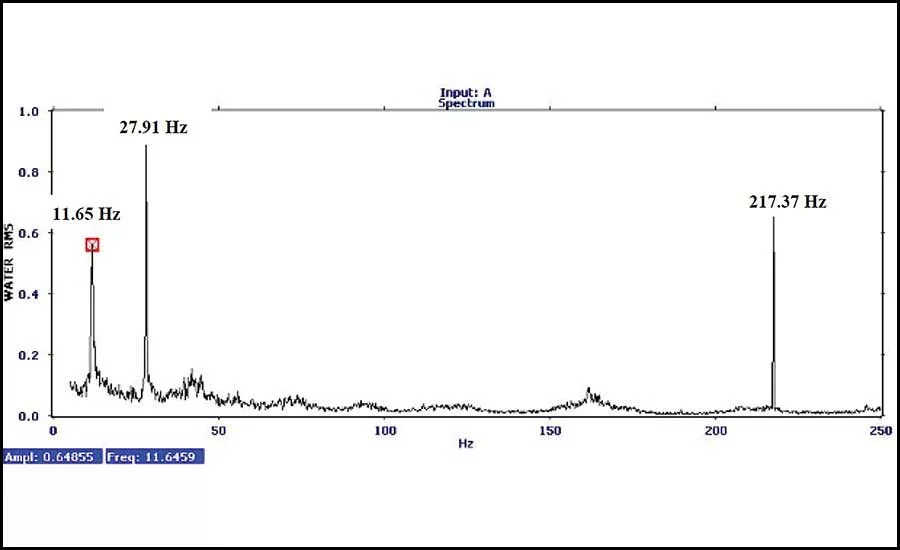
Figure 3. Pressure pulsations – before tuning.
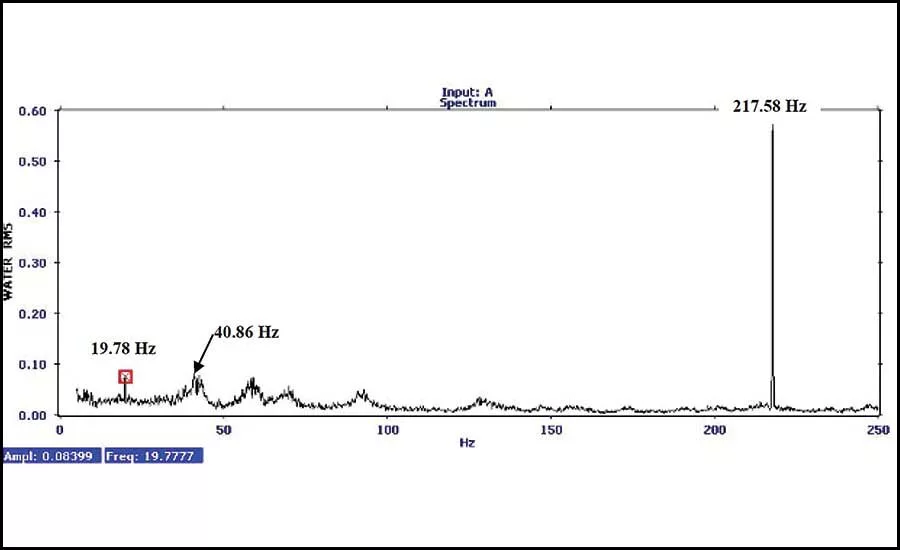
Figure 4. Pressure pulsations – after tuning.
A gas supply operation in North America commissioned three new steam boilers in a plant expansion project that included a Robinson forced draft (FD) fan on each boiler. During the boiler start-up in a low-fire condition, the operation was experiencing severe duct vibration due to aerodynamic instabilities. After some fan equipment and ducting was damaged, the plant decided to investigate the issue and brought in a team of suppliers to troubleshoot the problem. Over three facility visits, the team was able to identify the problem and make the necessary operational changes to mitigate the issue.
Background
Boiler FD fans tend to be complicated units with many components, including three or four control dampers, to regulate airflow at all firing conditions.
The three subject steam boilers have three identical FD fans, which utilize four dampers per fan. There is a louvered damper before and after the FGR mixing box, a variable inlet vane (VIV) damper at the fan inlet, and a louvered damper at the fan outlet.
During low-fire operation, the FD fans must be throttled significantly using the dampers to slowly bring up the steam generation process. Dampers are meant to modulate and limit airflow, but there are concerns when heavily throttling fans that are meant to supply large volumes of air are heavily throttled, because they can experience aerodynamic instabilities. Specifically, an instability known as rotating stall is a real concern. Fan components and ductwork can be damaged when operating in the stall condition for long periods. Figure 1 highlights some damage to one of the fan outlet damper linkages. Also, bronze bushings that were installed in these linkage holes were damaged or missing.
Rotating stall is an aerodynamic instability that typically occurs in high-efficiency, backward-inclined-type centrifugal fans. This also includes backward-curved and airfoil-blade designs. When the fan is throttled while operating at full speed and is “starved” for air, some of the channels of airflow in between the blades, known as “cells,” will stall. While most of the cells have normal forward airflow, one or two cells can reverse flow. The air in the stalled cells slips past the leading edge of the blade to the next cell behind it, opposite the rotation of the fan rotor. The interesting part is that these stalled cells move in a particular manner and create pressure pulsations and vibration that is measurable. This pulsation most often shows up at 2/3x or 4/3x the fan running speed and sometimes can show up at other harmonics like 6/3x or 8/3x running speed.
Solution approach
To try and get a handle on the duct vibration and damaged equipment, the gas supply operation brought in multiple suppliers, including the control solutions company; the burner supplier; the engineering, procurement, and construction project manager; the boiler supplier; and Robinson Fans.
During initial testing of the low-fire condition, Robinson Fans’ field services took pressure pulsation readings on the fan casing walls, outlet ducting walls, and the fan inlet box walls. For example, one of the boiler fans was running at 1,185 RPM (19.75 Hz). Frequencies of pulsation were found at or near 2/3x, 4/3x, 6/3x, and 8/3x running speed, indicating rotating stall. Dominate pressure pulsations were found near the 4/3 condition. Duct vibration peak amplitudes also showed the 6/3x and 8/3x running speed vibration phenomena.
After the problem was identified, the troubleshooting team formed a plan. Working together, they decided to try different control scenarios, throttling the dampers in different ways to get away from the rotating stall condition. The burner supplier and controls company focused on opening the outlet dampers more and using the fan inlet VIV dampers to throttle the FD fans. During these tests, Robinson Fans collected pressure pulsation and vibration data. The team repeated this at various firing rates, finding the corrective action was reducing the overall amplitude of the pressure pulsations, inlet box wall, and duct wall vibrations. On the example fan mentioned earlier, 13 tests were completed.
Figure 2 shows the fan inlet box wall vibrations during Test 1, before any corrective actions were taken. As mentioned earlier, this demonstrates the rotating stall frequencies. Figures 3 and 4 show the pressure pulsations before and after damper tuning, respectively. Note, the peak around 217 Hz is the blade pass frequency and is always present in centrifugal fans. This is the pulsation generated as each fan blade passes the fan “cut-off” near the fan discharge. After approximately seven tests, duct vibration readings were no longer taken, as it was found that taking only pressure pulsation data was sufficient to mitigate the stall problem.
Conclusion
Based on the pressure pulsation readings shown in Figures 2 and 3, vibration and pressure pulsation clearly show the symptoms of a rotating stall condition. Demonstrated in Figure 4, after damper tuning, the previously dominant frequencies at 2/3 and 4/3 running speed are gone, indicating the rotating stall condition was mitigated. All the new damper positions for each of the various firing rates were incorporated into the control logic so that the gas supply could operate the fans successfully without damaging the fan equipment and ductwork.
It took some tedious work and collaboration between multiple suppliers to figure out how to eliminate this aerodynamic instability. Testing individual fans as many as 13 times allowed the issue to be understood and mitigated. Ultimately, it was found that the corrective action was to get the outlet damper more open and use the inlet damper to throttle the fan. Although it sounds simple, specific airflows at certain firing rates needed to be met for the burners and steam boilers to operate correctly. Since the damper tuning was completed, the boilers and FD fans have run successfully for approximately four years, leaving the gas supply operation with more reliable boilers and boiler FD fans.
Looking for a reprint of this article?
From high-res PDFs to custom plaques, order your copy today!