search
Ask ACHR NEWS AI
cart
facebook twitter instagram linkedin youtube
  • Sign In
  • Subscribe
  • Sign Out
  • My Account
  • NEWS
  • TECHNOLOGY
    • Heating & Boilers
    • Cooling & Chillers
    • Pumps & Flow Controls
  • SECTORS
    • Commercial
    • Health Care
    • Data Center
    • Educational Facilities
  • DESIGN | CONSTRUCTION
  • OTHER TOPICS
    • High-Performance Buildings & Automation
    • Ventilation and IAQ
    • Commissioning
    • HVAC Retrofits
  • TODAY’S BOILER
    • Today’s Boiler Archives
    • Today’s Boiler Digital Edition
  • MORE
    • Case Studies
    • Podcasts
    • Videos
    • Directory
    • Webinars
    • ES NEWS Store
    • White Papers
  • SIGN UP
  • Back to The NEWS
Engineered Systems NEWSVentilation and IAQ

Batman Survives COVID-19
By Stephanie Taylor, M.D., M. Arch, CIC
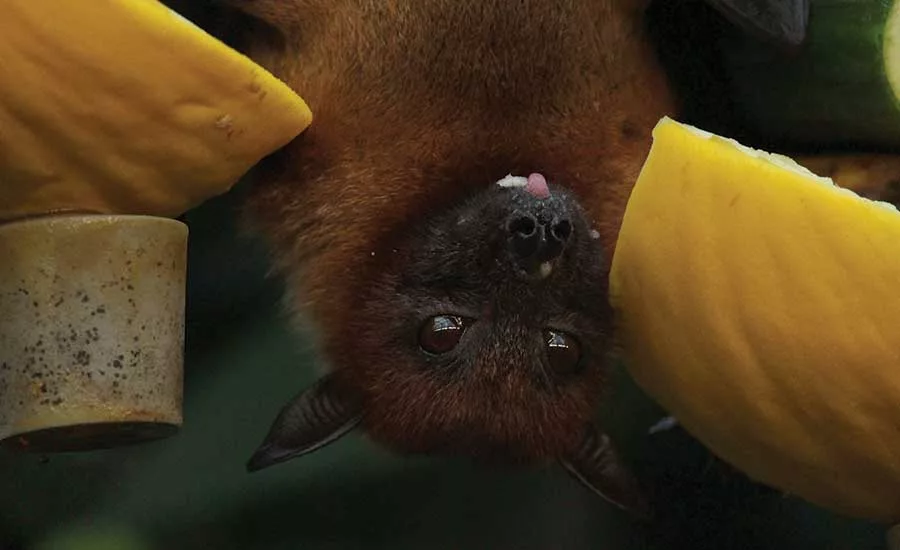
Bat

Why can bats, small mammals with many similarities to humans, live with coronavirus infections without appearing sick?

October 30, 2020

As we continue to work on curbing the COVID-19 illness, it is clarifying to understand the three steps in disease transmission where we can exert control. 

The first step, attempting to limit the amount of infectious virus introduced into our surroundings by a sick person, is done by wearing masks and social distancing. The second step, decreasing transmission in our buildings, is generally where HVAC engineers focus their efforts. The third step of increasing our own physical immune defenses and overall health is left up to our health care providers and to us individually. 

This column will focus on the third step, increasing the ability of our immune system to protect us from the COVID-19 disease if we are exposed to the SARS-CoV-2 virus. If you are an engineer or building manager who deals with HVAC systems, please do not stop reading because, surprisingly, this step involves you. Perhaps even more surprising is that bats are teaching us about the relationship between indoor air, immune responses to SARS-CoV-2, and the COVID-19 disease. 

Why can bats, small mammals with many similarities to humans, live with coronavirus infections without appearing sick? In fact, bats easily live with many different viruses that make humans extremely sick. Because of the similarities in physiology, yet differences in viral illness outcomes, bats are key to understanding the functioning of a protective, yet not overly active and damaging, immune system. 

An obvious first place to investigate is the different genetic makeup of bats and humans. Metagenomic comparisons of the chromosomes of both species, however, did not reveal any answers. Scientists finally found several powerful environmental, non-genetic factors that are key in modulating bat and human immune responses. The biggest difference discovered is in the “innate immune system,” the first line of defense against invading pathogens. In particular, bats exposed to SARS-CoV-2 immediately produce larger amounts of interferons, proteins that play a key role in the timing and extent of the overall immune response that prevents the viral disease.

Conversely, humans, especially those who develop severe COVID-19 disease, have both delayed and diminished interferon production. A delay in interferon production is often followed by an often-fatal hyper-inflammatory response known as a “cytokine storm.”

The next question is: What modulates interferon production, and could this be the difference between bats and humans? One known driver of human interferon production is seasonality with a decrease during winter months and an associated increase in viral infections and auto-immune diseases. Studies done in 2019 by Dr. Akiko Iwasiki with Yale University’s immunobiology department, showed that interferon production by airway cells of genetically engineered mice exposed to influenza was impaired when the ambient relative humidity levels were 20%. Conversely, mice in relative humidities of 50% had healthy interferon levels and significantly decreased influenza disease. 

Once again, we are reminded of the power of IAQ to promote health or cause harm. The relationships between ambient humidity, interferon levels, and COVID-19 disease reinforce the need for a holistic understanding of the role of the indoor environment in our health and in personalized medicine. 


Share This Story

Looking for a reprint of this article?
From high-res PDFs to custom plaques, order your copy today!


Dr. Stephanie Taylor is the president and founder of Building4Health Inc. After working as a physician for many decades, Dr. Taylor obtained a Masters in Architecture as well as Infection Control certification. Her lifelong commitment to patient care includes focusing on improving the healthcare physical environment and clinical work processes to help patients heal quickly and save hospitals valuable dollars. Dr. Taylor is a graduate of Harvard Medical School (MD), and Norwich University (Masters Architecture). She has numerous research publications in Nature, Science, and other peer-reviewed journals. She can be contacted at stephanie@b4hinc.com or (860) 501-8950.

Recommended Content

JOIN TODAY
To unlock your recommendations.

Already have an account? Sign In

  • HVAC-enrollment

    The Trades Are Back: HVACR Programs See Nearly 30% Enrollment Spike

    A new wave of future technicians is entering the pipeline.  
    News
    By: Matt Jachman
  • 2025 Top 40 Under 40

    2025 Top 40 Under 40 HVACR Professionals List

    The 11th annual Top 40 Under 40 list highlights those...
    News
    By: Hannah Belloli-Oster
  • LG Ductless Mini-Split Systems

    The 9 Types of Heat Pumps

    As the U.S. moves toward electrification, heat pumps are...
    Heat Pumps
    By: Joanna R. Turpin

More Videos

Today's Boiler

Spring 2026 Issue

Today's Boiler - Spring 2026 Cover

Read More from Today's Boiler

Case in Point Logo

Smarter Hydronic Design for Data Centers - Free Webinar - January 22, 2026

Related Articles

  • A Physical View IAQ

    Looking Inward to Guide Building Air Management in the Days of COVID-19

    See More
  • Good Building

    The Evolving Definition of a ‘Good Building’

    See More
  • IAQ Vaccine

    Some Strategies to Kill the SARS-CoV-2 Virus May Be Creating Mutations

    See More

Related Directories

  • Smith Cast Iron Boilers

    Smith Cast Iron Boilers are known throughout North America for their rugged reliability, operating efficiencies and longevity. Typical applications range from homes and apartments up to very large institutional buildings such as schools, universities and government buildings.
  • Conklin Metal Industries

    Serving the sheet metal industry for over 150 years, Conklin is committed to taking care of our customers from any of our 19 branches throughout the SE United States.
×

Sign Up. Stay Informed.

The #1 trusted source for the HVACR industry since 1926

SUBSCRIBE
  • RESOURCES
    • Advertise
    • Contact Us
    • Advisory Board
    • Classifieds
    • Submit a Letter
    • Directories
    • Store
  • ACCOUNT CENTER
    • Create an Account
    • Start a Subscription
    • Manage My Account
    • Sign Up for Newsletters
    • Visit Customer Service
    • Update Preferences
  • SERVICES
    • Marketing Services
    • Reprints
    • Market Research
    • List Rental
    • Survey/Respondent Access
  • STAY CONNECTED
    • LinkedIn
    • Facebook
    • Instagram
    • YouTube
    • X (Twitter)
  • PRIVACY
    • PRIVACY POLICY
    • TERMS & CONDITIONS
    • DO NOT SELL MY PERSONAL INFORMATION
    • PRIVACY REQUEST
    • ACCESSIBILITY

Copyright ©2026. All Rights Reserved BNP Media, Inc. and BNP Media II, LLC.

Design, CMS, Hosting & Web Development :: ePublishing