Defining the Importance of 40%-60% Relative Humidity on the Human Body
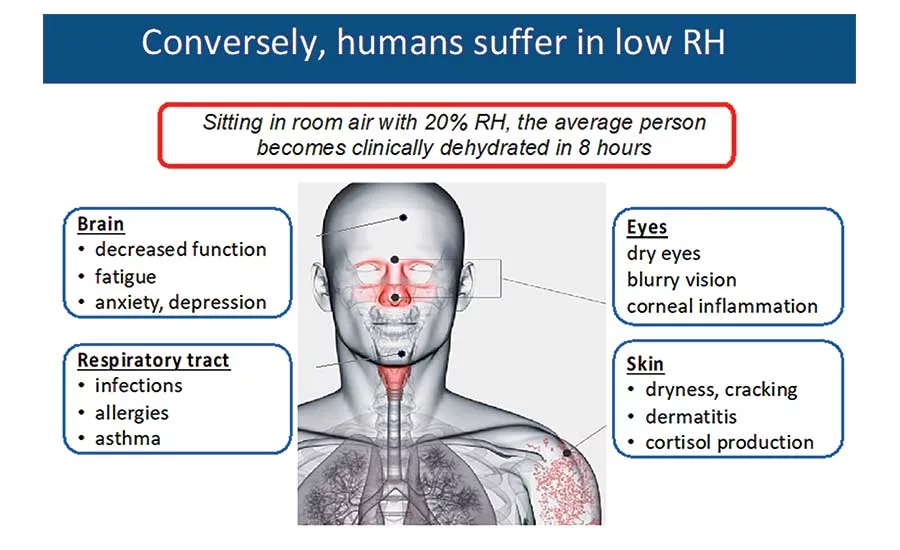
Humans, microbes (bacteria, viruses, fungi), and plants all react differently to dry ambient conditions. Microbes adapt quickly by shrinking down, forming thicker membranes, and becoming dormant. Plants simply wilt. Humans, however, are in a tough spot because our structure, the endoskeleton, buried inside our bodies, prevents us from shrinking into spores or wilting when we lose water. Instead, the surface layers of our body that are exposed to dryness dehydrate and develop micro-cracks. These exposed surfaces are our skin, airways, and eyes. Our internal organs also become dehydrated and lose some percentage of their function. None of this is good for us.
When water is sapped from our bodies and we do not keep up with replacing the fluid loss, our kidneys try to limit the imbalance by concentrating our urine. This definitely helps but does not protect us from the consequences of dry ambient air.
As you read this you might be envisioning the Sahara desert, but another much more common setting is the average building during the heating season. In cold winters, outside air is drawn indoors and heated, driving the relative humidity down unless active humidification systems are used. This is usually not the case unless the building houses valuable materials or electronic equipment. These low indoor humidity spaces cause slow but ongoing water loss from our bodies through processes we cannot stop: evaporation from skin and through breathing. (See Figure 1.)
Damage to our respiratory system
When the ambient humidity is low, or less than 40%, fluid losses through skin and breathing quickly result in mild but impactful dehydration of our respiratory tract and skin. Our natural respiratory defenses are quickly impaired at RH 20%, resulting in increased susceptibility to respiratory infections such as COVID-19.
An excellent study from Yale University1 clarified some of the underlying physical changes that make us more susceptible to the flu in the winter when indoor RH is low in heated buildings. The researchers housed genetically engineered mice with a human-like immune system in dry (20% RH) or comfortable (50% RH) conditions for five days. The two groups of mice were then exposed to influenza A, and the differences in their responses were studied. The researchers found the mice housed in RH 20% had an impaired ability to clear inhaled viral particles from their airways when compared to mice in RH 50%. Surprisingly, the harmful effects of dryness were more widespread than the airway surfaces simply losing water vapor during breathing. In addition to the predicted thickening of the surface mucus, the mice showed deficits in widespread immune system functions. For example, they were less able to repair airway inflammation, had decreased synthesize of protective interferon proteins, and were unable to recruit the second phase of the immune response to the influenza virus.
The respiratory immune response is not the only system harmed by low ambient humidity.
Damage to our skin
The protective barriers in our skin are also breached in dry air. Micro-cracks develop in the outermost epidermal layer, resulting in penetration of foreign particles and microbes and subsequent inflammation. Disruptions of the epidermal barrier are well documented in skin diseases such as atopic dermatitis, psoriasis, and rosacea. Loss of our normal skin structure and function also hastens the skin-aging process. Paradoxically, skin inflamed from dry conditions allows further fluid loss through the skin.
A surprising and very powerful discovery in the last decade is that our skin actually synthesizes the stress hormone hydrocortisol when exposed to low RH2. Over time, higher circulating levels of this immunosuppressant hormone reduces our natural ability to combat all infections, inflammatory disorders, and even malignancies.
And, finally, tissues not even directly exposed to air are harmed when evaporative fluid losses cause an overall water loss of only 1% of our body weight. We think less clearly, get tired and anxious, and have dangerously increased blood clotting.
Unfortunately, the evaporative fluid losses through skin and breathing cannot be immediately replenished by drinking water because of differences in tissue compartments. Clearly, there are serious and body-wide health hazards that result from exposure to overly dry air. Some of these, such as respiratory infections, appear quickly. Other diseases develop over longer time frames, making their correlation with low humidity less obvious. Nevertheless, the large body of research associating lack of properly hydrated air with increased illnesses cannot be denied.
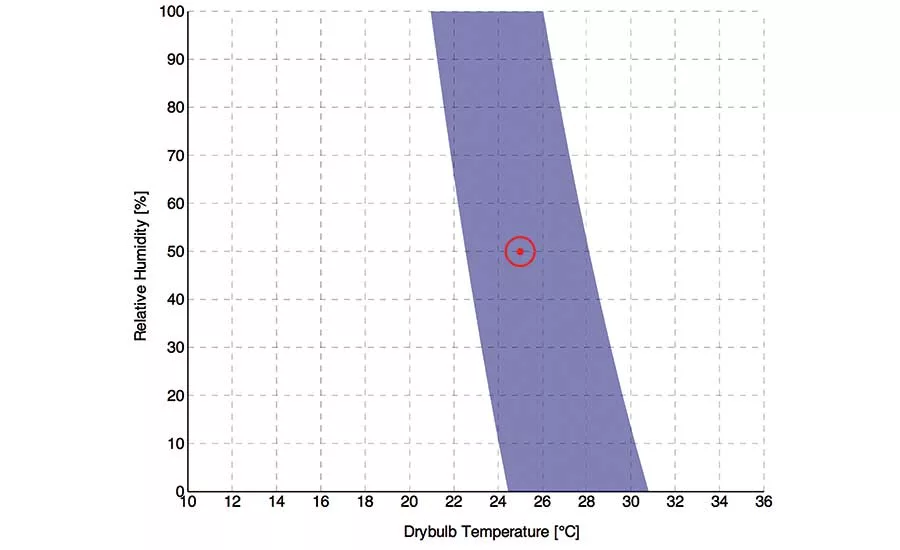
Especially during this COVID-19 pandemic, there is no good reason to avoid proper indoor humidity levels of RH 40–60%.
References
1. Kudo E, et al. PNAS, May 2019
2. Vukelic S, et al. JBC, March 2011
Looking for a reprint of this article?
From high-res PDFs to custom plaques, order your copy today!