Going Hybrid for Maximum Boiler Heating Efficiencies
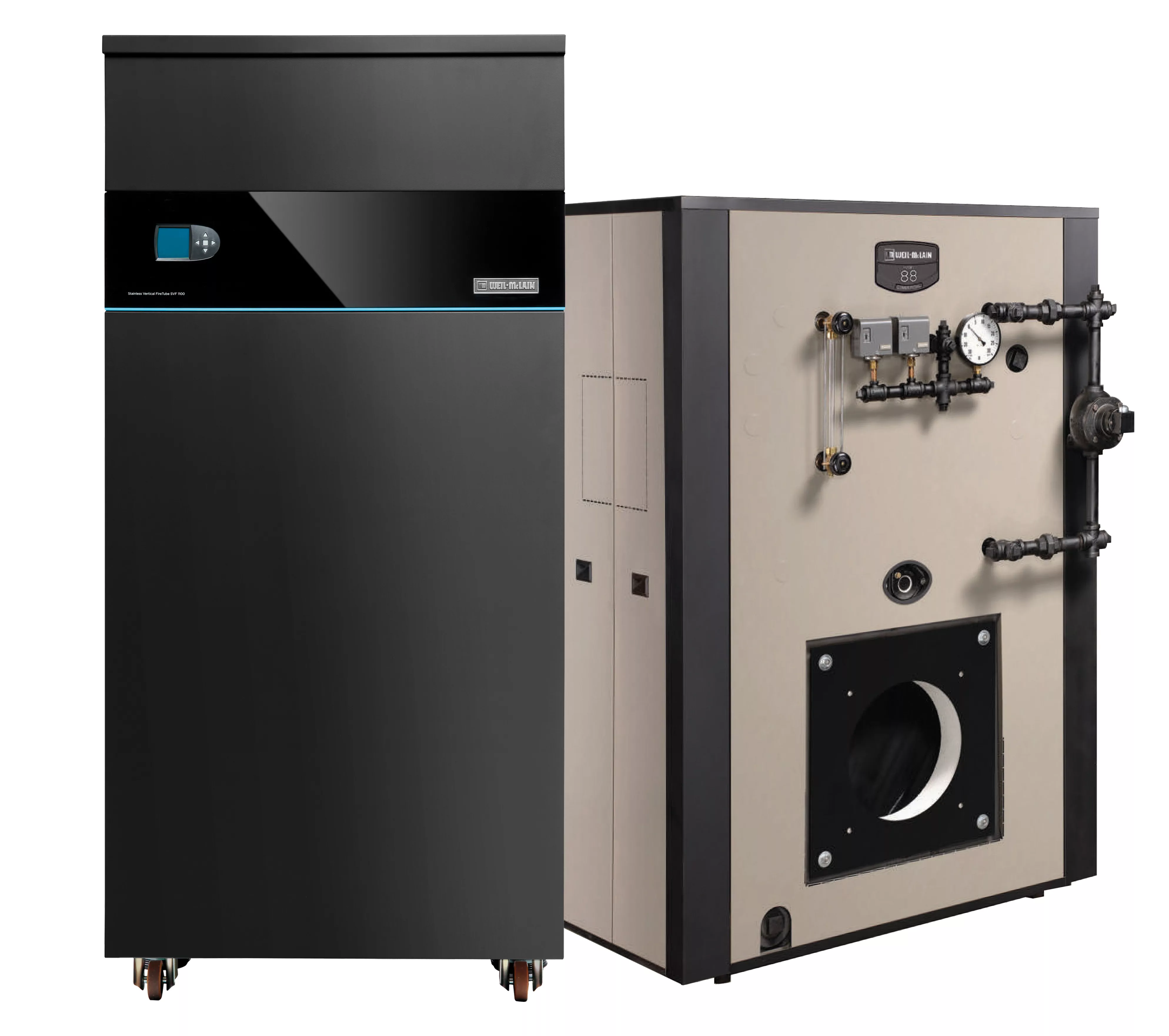
Two types of boilers can be better than one – especially when trying to minimize operating costs over the course of a heating season. By combining a large mass, noncondensing boiler with a high-efficiency condensing boiler — or “hybrid system” — you will ensure that your heating system is running at optimum efficiency.
Noncondensing boilers are designed to run at higher return water temperatures above 130°F to maximize longevity. The average efficiencies of noncondensing boilers range from 80-85% thermal efficiency. High-temperature applications typically occur over the core heating season months of December through February.
Condensing boilers reach their maximum efficiency (upwards of 95%) when the return water temperature is below dew point and are more aligned with the milder heating season shoulder months of October, November, March, and April. Running condensing boilers in high return temperature applications reduces their operating efficiency to marginally higher than noncondensing boiler designs.
By combining noncondensing and condensing boilers in a hybrid system boiler plant, users can reset building set points; reduce fuel consumption to lower operating costs; and create comfortable, consistent building temperatures.
So why not just use an all high efficiency boiler plant? Consider the following benefits of a hybrid boiler system:
Boiler Replacement Applications: Installing a hybrid system makes sense in existing, noncondensing replacement boiler applications. Most often, there are at least two high-mass, noncondensing boilers in older boiler plants. Installing a high efficiency, condensing boiler in place of one of the failing high mass boilers now enables the efficiency benefits of the hybrid system. Further, this approach enables an incremental step in financing the overall boiler replacement capital outlay over time.
New Build Applications: In short, condensing boilers cost more — upwards of 30-40% more than noncondensing boiler systems because of the noncorrosive heat exchanger materials required. Installing a hybrid system is more cost-effective to purchase upfront and often achieves the greater portion of the energy savings of replacing an entire boiler plant with high-efficiency condensing boilers.
Product Life/Longevity: Inherent to their design, noncondensing boilers have a longer product life, up to two-times that of condensing boiler designs because of their thicker cast-iron design and wider water pathways. Installing a hybrid system ensures a longer life of the boiler plant dedicated to the coldest heating season months.
For example, a hybrid system could be utilized in an elementary school with two large cast iron boilers – one of which needs to be replaced after many years of dependable operation. The cast-iron boiler is replaced with a Weil-McLain Evergreen™, SlimFit™, or new SVF™ high-efficiency condensing boiler to match the heating requirement. The advanced Weil-McLain Unity™ control allows the assignment of an alternating, lead/lag boiler plant utilizing the new condensing boiler as the primary boiler over the heating season shoulder months and the existing noncondensing boiler for colder days.
In conclusion, combining a durable Weil-McLain cast-iron boiler with a high-efficiency Evergreen, SlimFit or SVF condensing boiler can reduce wasted energy, lower utility costs, and protect the environment with a smaller carbon footprint, while extending the life of the existing heating system at a lower acquisition cost.
The use of hybrid systems is becoming more common with engineers and building owners evaluating the heating efficiencies and other benefits of “going hybrid” in their current and new-build heating systems. More frequently, commercial buildings, such as medical facilities, apartment complexes, churches, schools, colleges, nursing homes, and corporate campuses, are standardizing on hybrid system boiler designs.
Looking for a reprint of this article?
From high-res PDFs to custom plaques, order your copy today!