20 to Watch: Women in HVAC - Rae Anne Rushing
CEO/co-founder, Rushing Company
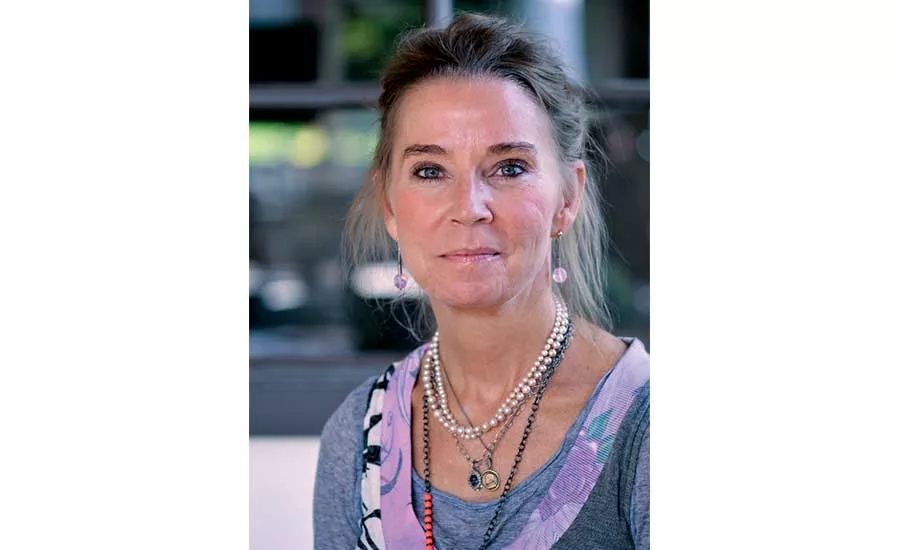
Name: Rae Anne Rushing
Age: 54
Title: CEO/co-founder, Rushing Company
Educational Experience: B.S. mechanical engineering, University of Washington 1988.
Professional Credentials/Accreditations: WA Professional Engineer (Mechanical) #30833 and LEED AP BD+C since 2001.
Organizational Affiliations/Achievements/Awards: ASHRAE member since 1986; NAIOP member since 1998; King County Sexual Assault Center Volunteer, 2018; Operation Sack Lunch board member since 2017; Crisis Line volunteer 2003-2005; 2011 Nellie Cashman Award; ASHRAE Puget Sound Chapter president, 2002; ASHRAE 2002 Best National Chapter; ASHRAE Technical, Energy, and Government Affairs Best Chapter, finalist, 2002; University of Washington Student Recognition Award, 1988; Puget Sound ASHRAE Scholarship, 1987; and Society of Women Engineers (SWE) Outstanding Student, 1987.
When did you fall in love with engineering?
I decided to become an engineer during my second year of college. At that time I did not know what an engineer truly was but soon realized the match with my natural skills of science and math, and, frankly, I was also attracted to the published earning potential. I remembered taking an aptitude test in the fourth grade and being told that engineering was an ideal career for me. In college, I was a mother of two and waited tables to pay for my schooling. I’ve continued my growth into and my love for this profession and industry every year over the last 30 years of my engineering career. I continue to be excited with where we are headed technologically and the opportunities ahead. Very exciting times!
What has been the most rewarding aspect of working in the skilled trades?
I was fortunate to have had exceptional mentoring. The P.E.’s who mentored me were the best I’ve ever had the opportunity to work with over the last 30 years. That mentoring allowed me to optimize my own capabilities and excel as a mechanical engineer. Mentoring in our profession is extremely important and required for success. This all led to my eventual decision to start my own business with my partner 12 years ago.
What challenges do women face in this profession? Why aren’t there more women in engineering?
I struggle to answer these questions with a positive spin. The facts are real. Currently female engineers in the U.S. make up 14 percent of the workforce, up from 5.8 percent 30 years ago. This breakdown, according to the National Girls Collaborative Project, tracks the percentage of workers in each profession whom are women: chemists, 35.2 percent; physicists and astronomers, 11.1 percent; environmental engineers, 33.8 percent; chemical engineers, 22.7 percent; civil, architectural, and sanitary engineers, 17.5 percent; industrial engineers, 17.1 percent; electrical or computer hardware engineers, 10.7 percent; and mechanical engineers, 7.9 percent.
When I graduated in 1988, female mechanical engineering graduates made up 7 percent of the population. As you can see, in our specific field of HVAC design (mechanical engineering), our profession has gained 0.9 percent in gender diversity over the last 30 years.
To answer your questions, I can only draw from my own personal experiences in an industry I love, some very recent, regarding the reasons why this change is and has been relatively slow compared to professions such as software, medical, legal, accounting, and business.
The design and construction industry is still very male dominated with only 7.9 percent of the workforce being female engineers. The negative impacts of gender dominance is still an unknown to many companies in our industry. Many companies are not aware of training needs for existing employees on appropriate language, behavior, nor is there implementation of fair and equitable compensation practices. What is professional behavior, language, and compensation practices? The first step is to become aware and realize we have a serious problem. We are grossly behind in integrating gender diversity. Start with how we communicate with one another — the verbal and body language we use. Lack of awareness of the diversity deficit is a challenge.
Women must realize that creating social capital (trusting relationships) will require their best skills and opportunities will come from creating trusted solutions and results. “Boys night out” opportunities are not available to women and may, in some cases, create lost opportunity to form trusting relationships (social capital). All is not equal when forming a network of professional advocates. This is a challenge for women.
For myself, I quickly understood that professional behavior did not have to mean “act like a man.” While I was tempted to lose my femininity to my career, I chose to use my natural talents and practice professional behavior to set myself apart in the city of Seattle. My mentors were not women, and I needed to learn what this “looked like” on my own and as a unique individual. Today, I’m very aware of my role as a female mentor and work hard to model professional behavior. The lack of female mentoring is one reason there aren’t more women in engineering.
Women have unique circumstances that our industry, workplace culture, and office facilities typically do not support, such as pregnancy leave of absence and schedule challenges. Family friendly human resource policies, fair and equitable compensation, as well as flexible working hours go a long way toward attracting and retaining female engineers.
The business model payoff is sustainable, loyal, and profitable.
Sustainable — Because we have an overall shortage of graduating engineers, attracting and retaining engineers is good business regardless of gender.
Loyal — Work-life balance has value, and family friendly workplaces create inherent social capital.
Profitable — Because innovation requires diverse thinking to get “out-of-the-box” solutions. Businesses can set themselves apart by training and practicing professional behavior that is inclusive of all gender and ethnicities. We need the industry to wake up. The lack of women in the industry is inhibiting the industry to innovate to its full potential. The lack of appreciation for the benefits of a diverse team is another reason for low female participation.
Describe what your job entails on a day-to-day basis.
I am CEO of Rushing Company. My partner and I started this company in 2006. Our vision was to provide integrated design to Seattle and the Puget Sound Area. Today we have 65 employees and offer mechanical, electrical, plumbing, fire protection, lighting, commissioning, and sustainability design and management. My role is principal in charge of approximately 40 percent of our total business revenue of more than $10 million dollars a year. I provide vision, corporate leadership, brand management, and engineer of record quality control and design management on a day-to-day basis. I have enjoyed watching our business and client base grow and change. I look forward to our next evolution of integrated design and smart collaboration.
What drives/motivates you every day?
I am fortunate to be CEO of a multi-discipline engineering firm that provides integrated design on commercial projects in the city of Seattle and the Puget Sound region. Our energy code in Washington, and specifically Seattle, is possibly the most stringent in the U.S. This trend toward sustainable design practices had just begun when I graduated in 1988. I continue to be excited and motivated to lead the U.S. in solving one of the most important issues of our time, climate change. According to the U.S. Department of Energy in 2008, the nation’s 114 million households and more than 4.7 million commercial buildings consume more energy than the transportation or industry sectors, accounting for nearly 40 percent of total U.S. energy use.
Describe the proudest moment in your career.
In 2014 Rushing Company achieved 40 percent female technical staff diversity. “This was not by design, rather we were only hiring the most qualified professionals. Our company was fortunate to attract a high ratio of qualified female engineers because of my presence. I’m very proud to provide mentoring and leadership for women in the industry. Today, Rushing Company still enjoys this overall diversity and has evolved to include those same or higher percentages in our management and ownership.
What remains on your engineering bucket list — what do you aspire to do that you haven’t done yet?
I want to be a part of a net-zero-energy high-rise (over seven stories) project in the city of Seattle.
What’s one thing no one knows about you?
I started at the University of Washington in 1982 with a Washington State general education degree (GED) at age 17. I was admitted without a high school diploma under a program called Economically Disadvantaged Student Division (EDSD). I had a nine-month old son at the time.
List any mentors who’ve helped you succeed and describe exactly how they’ve shaped your success.
-
R. Scott Rushing: I met him 27 years ago, and he was truly my first mentor in engineering. Today, he is my business partner, friend, and ex-husband. His commitment to quality, thoroughness, and problem-solving standards created a framework for me to optimize my own skills and abilities. He continues to be the most skilled mechanical engineer I have ever worked with.
-
Rick Fria: I met him 25 years ago. He was a general superintendent who gave me a shot at showing my stuff. For him, it paid off in one of the most lucrative endeavors of his career. For me, I was given a door and an opportunity to excel.
-
Doug Howe: I met him 23 years ago. He was an eccentric developer who showed me that being different, doing what I love, and staying true to myself will equal success.
-
Dean Allen: I met him 16 years ago as the CEO of McKinstry Company. He gave me the confidence to break though the “ceiling” and start my own business.
I am eternally grateful to these men. I am fortunate to have them all in my life today as friends, advocates, and eternal mentors.
What does the future hold for you?
Currently Rushing Company’s revenues exceed $10 million per year. I’m committed to continuing our responsible rate of growth for the next 10 years and beyond. My commitment to a business model expanding integrated design and smart collaboration is the future of Rushing Company.
What advice do you have for prospective female engineers considering entering the field?
Find a company that values professional behavior. Be sure to see this in action and not just written in a mission statement.
Do not be surprised when professional behavior is compromised in our industry. In fact, expect it and see this as a puzzle to solve in lieu of a reason to quit.
Women must realize that creating social capital (trusting relationships) will require their best skills, and opportunities will come from creating trusted solutions and results.
Looking for a reprint of this article?
From high-res PDFs to custom plaques, order your copy today!