20 to Watch: Women in HVAC - Rachael Mascolino
Senior Engineer, HVAC, VEIC
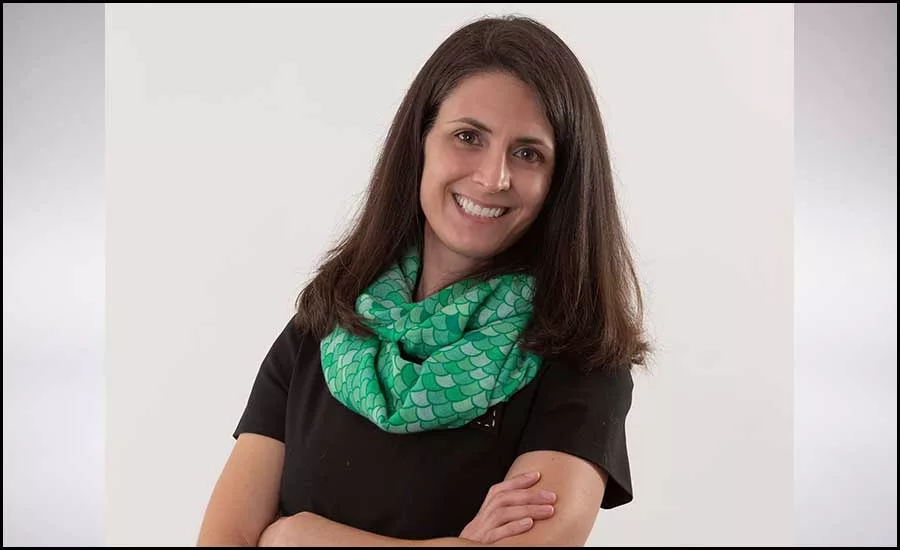
Name:Rachael Mascolino
Title: Senior Engineer, HVAC, VEIC
Age: 40
Educational Experience: Bachelor’s degree in engineering from the University of Vermont, College of Engineering and Mathematical Sciences
Organizational Affiliations/Achievements/Awards: Champlain Valley Chapter of ASHRAE, Vermont State Wood Energy Team, HVAC Technical Solution Group, VEIC Rising Star Award, and ASHRAE Black Ink Award
What caused you to/when did you fall in love with engineering?
I was incredibly lucky to be exposed to some wonderful science, technology, engineering, and mathematics (STEM) programs through my public education, which helped me understand the application of the math and science I was learning. One program that stands out was a Girls Exploring Math and Science (GEMS) weekend I attended at Rensselaer Polytechnic Institute (RPI). It was organized and run by female collegiate engineering students and was a wonderful age-appropriate showcase of how math and science can be applied. In high school, I had access to an AutoCAD and robotics class and was generally interested in the challenge of math and science. I applied to the engineering college at UVM, knowing a degree in engineering would build on the academics I already enjoyed and provide a variety of career options.
What has been the most rewarding aspect of working in the skilled trades?
My most rewarding days are when I can partner with customers, contractors, and technicians to demystify building mechanical systems and provide achievable solutions for keeping occupants comfortable, reducing maintenance headaches, and decreasing the energy intensity of the HVAC system overall. The collective knowledge of the teams I get to work on is impressive and represents a diverse range of subject matter expertise. When there is a clear and common goal and a strong value proposition for everyone involved, the customer wins, and I always walk away with more knowledge than I started with.
Describe the proudest moment in your career.
I was an interim engineering manager for the startup of a new energy efficiency utility serving Washington, D.C. The energy and excitement of a start-up opportunity is unique. I am proud to continue to work with these engineers, many years later, who I invested so much time with at the start of their careers as energy consultants.
What challenges do women face in this profession? Can you give a personal example?Why aren’t there more women in engineering? How can we increase the number of women in engineering?
A personal challenge I experienced early in my career was the combination of being young, new, and female, working with a team of men who had children my age. There was an overarching sense of awkwardness — more so than non-acceptance. There were a few clearly sexist individuals, and I quickly realized it would be a waste of time and energy to try and change them. I was lucky to have the balance of other co-workers interested in helping me succeed as part of the team. Eighteen years later, the personal challenges are different. A challenge I continue to face is trying to balance the drive to continuously expand into my career with the social and personal pressure to have a perfect work-life balance. I have been involved in many different mentoring programs over the course of my career. The girls and young women who show a genuine interest in pursuing engineering as a career seem to be the ones who know an engineer, either a parent or a close family friend. They had a vision of what being an engineer meant. I think we need to help young women and all children have a relevant example of what being an engineer means. It’s hard to strive for a career when you don’t know what it is you are going to be doing. Many children are aware of the professional roles founded on math and science, like doctors, nurses, and teachers, through their experiences. Even an architect is more tangible than an engineer because you can point to a building and say an architect designed that. Engineering is incredibly broad, and those of us in the field know how impactful our work is to society on a daily basis. We need to highlight the tangible work and have something to point to other than sitting in meetings with other engineers. On a small scale, we can all make a difference by being that engineer a female student knows.
What does your day-to-day job entail?
All of the work I do shares the common theme of reducing the economic and environmental impacts of energy use. I draw on my knowledge of building mechanical systems every day to help my customers solve problems. My customers could be divisions within my company that need engineering support, a building owner or an institution here in Vermont, an efficiency utility, or regional efficiency organizations across the U.S. That diversity of customers keeps my work fresh and interesting. On a typical day, I might work with a hospital or school to help them evaluate their HVAC systems and identify operational improvements, strategic planning for capital investments, or develop a plan to meet their sustainability goals. I calculate and quantify energy savings associated with HVAC modifications. I also work on program design teams as the technical voice — these could be state programs or regional programs that have energy reduction or decarbonization goals. In a typical week, I have the pleasure of partnering and collaborating with program managers; facilities directors; mechanical, electrical, and plumbing (MEP) engineers; other energy consultants; and HVAC contractors.
What drives/motivates you every day?
For the last five months I have been working almost exclusively with schools to make HVAC system modifications for improved IAQ and to reduce viral transmission risk. Working with facilities managers and contractors to capitalize on the potential of the existing systems to achieve this is incredibly motivating. The projects are happening quickly, and the results of the improvements mean that more children are able to attend classes in person for more time. I can’t think of a more meaningful use of my HVAC knowledge.
How has the COVID-19 pandemic impacted you personally and professionally?
Personally, I have not set foot in our office building since mid-March. Home offices were set up quickly, along with remote schooling space for my son, and the possibly of seeing family who live out of state evaporated before we could make plans for one more visit. Professionally, after the initial wave of canceled work trips, meetings, and on-site evaluations of buildings, I got very busy. The Vermont general assembly allocated more than $16 million of the federal COVID relief funds to be used solely on HVAC measures that would improve IAQ in schools. VEIC was hired to administer that grant money, and I am serving as the technical lead. A year ago, school boards and supervisory unions weren’t thinking about ventilation strategies, and they certainly weren’t funding them. The silver lining is the incredible focus that this has brought to a long-ignored budget line item of HVAC maintenance and upgrades. It has led to discussions with principals, communities, school boards, and superintendents about how HVAC systems can be designed and improved to help keep students and teachers healthy in buildings. This is a great initiative to be a part of because there is so much work to be done, and it really comes down to fundamental engineering and building science.
What remains on your engineering bucket list — what do you aspire to do that you haven’t accomplished yet?
I aspire to position myself as an engineer who can provide more than subject matter expertise to VEIC and all of the contracts, programs, and customers I support. In a rapidly changing world, this is what will keep me relevant and valuable in my current career path. Along those lines, I aspire to achieve the ASHRAE Building Energy Assessment Professional (BEAP) certification.
For access to more podcast episodes, click here.
What’s one thing no one knows about you?
My “career” as an SAE Mini Baja driver in college almost led me to an automotive engineer job after college.
List any mentors who’ve helped you succeed and describe exactly how they’ve shaped your success.
When I started my career as a facilities project engineer, there were technicians and engineers who had been working on the campus in facilities longer than I had been alive. I remember a select few who were patient, encouraging, and had a sincere interest in seeing me expand into an HVAC career. I draw from the collective experience and knowledge that I received from them in my work almost every day.
What advice do you have for prospective female engineers considering entering the field?
Do it! There is absolutely no reason not to. I didn’t know exactly what I wanted to do other than spend a few years in Vermont for college but I knew if I had an engineering degree, I would have options and opportunities. Whatever market or cause you’re interested in, there is an engineer involved. You don’t need to have a naturally confident personality, only the confidence that you can learn.
Looking for a reprint of this article?
From high-res PDFs to custom plaques, order your copy today!