Back 2 Basics
Energy Retro-Cx
Based on Cx-3 ATC/FPT and TAB-3 software
MONTH 3- The Energy Conservation Opportunity: Water-Source Heat Pump System Application - Solution Implementation and Monitor, Measure, and Benchmarking
We are at month three of this B2B energy retrocommissioning test series. Month one and two were devoted to data collection, data analysis, and solution planning. We are now at the solution implementation phase.
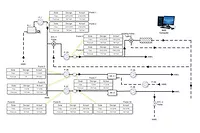
Using the existing system ATC/FPT system flow diagram for this test, we have incorporated the following energy conservation features from the completed energy retrocommissioning solution plan (full report not included in this test):
ECM-1: Add a thermostatically programmed occupied-unoccupied cycle to the heat pump system controls.
ECM-2: Add an occupied-unoccupied cycle outdoor air ventilation damper (2-position) to each heat pump to reduce outdoor air when room is not occupied.
ECM-3: Add a VFD to the outdoor air ventilation system with downstream duct static pressure control to respond to occupied-unoccupied outdoor air damper performance.
ECM-4: Add seasonal diverting valve to eliminate existing boiler in series with cooling tower.
ECM-5: Replace oversized pump P-1 and circulator P-2 with single correctly sized pump, eliminating the pump discharge balancing valve restrictions (65% open and 50% open balancing valves).
ECM-6: With new pump comes new, more efficient pump motors.
ECM-7: Add VFD to cooling tower fan.
ECM-8: Add condensing boiler to optimize boiler performance at reduced condenser water temperature.
With the energy conservation initiatives agreed upon above, the energy retrocommissioning team will implement these en-hancements and all the controls linked together into a BAS computer located in the facility engineer’s office to manage this retrocommissioning heat pump system. In addition, it is essential that a plan is in place to monitor, measure, and benchmark the past utility bills/energy performance versus this energy retrocommissioned project.
Leading up to the energy retrocommissioning test, the TAB engineer will have balanced both the primary condenser water sys-tem, building heat pump condenser water system, 100% outdoor air ventilation system, and each water-source heat pump (air and water), and then document the results in the TAB system flow diagram for each system sequence of operation.
Note: Under each mode of operation, the TAB professional shall document the appropriate flows, velocities, and pressure drops (refer to B2B Month 2 TAB System Flow Diagram for format example). Each of these flow diagrams, along with the other standard TAB forms used, will be included in an ATC/FPT/TAB Operator Handbook that will be put in a three-ring binder and placed in the facility manager’s office for quick reference in the future.
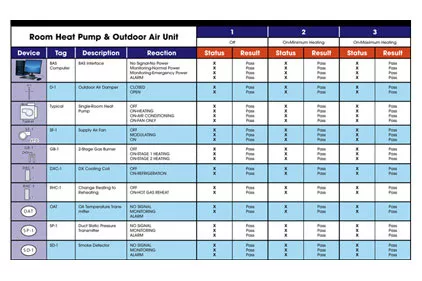
This month’s test requires you to refer to the new sequence of operation based on the energy conservation measures noted above and as shown in the ATC/FPT System Flow Diagram on page 2 of this B2B test. This new ATC sequence has been inputted into the functional performance test (FPT) retrocommissioning software, with the “reaction” device-by-device imbedded into the checklist below the flow diagram. It is your task to check off the “pass” activities as you verify this energy retrocommissioned system ATC/FPT. The answers can be found at www.esmagazine.com.
The sequences selected are Sequence 1 Off-Fail Safe Condition, Sequence 2 On-Minimum Heating, and Sequence 3 On-Maximum Heating for the occupied cycle. Other sequences of operation (both occupied and unoccupied mode), safeties, and alarms will be retrocommissioned, too, but are not part of this test.
The commissioning engineer’s ATC/FPT system flow diagrams, sequence-by-sequence of operation results shall be included in this operator handbook with the TAB design-to-actual results. Operating instructions will have occurred prior to the energy retrocommissioning implementation project and during the retrocommissioning of the entire heating system. Here again, the op-erator handbook being provided from this energy retrocommissioning initiative will include the new basis of design document to assure future reference data is available for any new operating personnel and to recommission this system.
The CMMS system operator should update her asset database and preventive maintenance work order to assure this unit will receive the required care based on new system components. See The Facility Files column for a sample preventive maintenance work order for a water-source heat pump.
As part of the project closeout, the team should also submit the necessary paper-work for third-party finance requirements as well as any available utility company rebate(s), having received early approval of the utility rebate incentive in the solution plan phase of this project.
At the project closeout meeting, the monitor, measure, and benchmarking assignment should be made and a monthly reporting system mutually agreed upon by the energy retrocommissioning team so that there is a method to assess the work and also look for new ways to improve the water-source heat pump system and outdoor air ventilation system performance. The team should also have on their meeting agenda a lessons-learned discussion to make sure all documentation is completed, an electronic copy of the entire energy retrocommissioning report is on file, system training is completed, and the PM work order system is current. In addition, these lessons-learned sessions should assess how to do this better next time, what worked and didn’t work relative to the solution implementation phase, and should consider new energy retrocommissioning project opportunities.
Looking for a reprint of this article?
From high-res PDFs to custom plaques, order your copy today!