search
Ask ACHR NEWS AI
cart
facebook twitter instagram linkedin youtube
  • Sign In
  • Subscribe
  • Sign Out
  • My Account
  • NEWS
  • TECHNOLOGY
    • Heating & Boilers
    • Cooling & Chillers
    • Pumps & Flow Controls
  • SECTORS
    • Commercial
    • Health Care
    • Data Center
    • Educational Facilities
  • DESIGN | CONSTRUCTION
  • OTHER TOPICS
    • High-Performance Buildings & Automation
    • Ventilation and IAQ
    • Commissioning
    • HVAC Retrofits
  • TODAY’S BOILER
    • Today’s Boiler Archives
    • Today’s Boiler Digital Edition
  • MORE
    • Case Studies
    • Podcasts
    • Videos
    • Directory
    • Webinars
    • ES NEWS Store
    • White Papers
  • SIGN UP
  • Back to The NEWS
Engineered Systems NEWSHigh-Performance Buildings & AutomationVentilation and IAQ

Art StorageVault AHU Trend Analysis
By Rebecca T. Ellis, P.E.
Commissioning Logo
December 2, 2011
This is the third in a series of columns in which I demonstrate examples of systems performance information that can be gleaned from trend log analysis. In these columns, I introduce a system or subsystem, show a trend graph, and then leave it up to the reader to discover the operational “issue” illustrated in the graph. The answer will be given at the start of the subsequent month’s column.

NOVEMBER 2011 TREND LOG ANALYSIS

Commissioning Logo
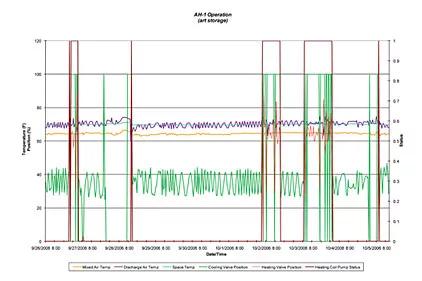
Figure 1 covers about 10 days in the fall of 2006

Last month’s trend graph was for an AHU serving a space with extremely tight temperature and relative humidity requirements. The first thing that was clear from the trend graph was that the space conditions were very steady. The return air temperature appeared to be a constant 71°F with less than a ±1°F variance. Similarly, the return air rh was a steady 50% rh with less than a ±2% rh variance.

The next most noticeable thing about the graph is how solid the colors are, indicating continuous movement of the control devices (chilled water valve, hot water valve, and humidifier). This meant that there was essentially simultaneous cooling/dehumidification, heating, and humidification.

Although we might expect simultaneous cooling/dehumidification and reheating for summertime space humidity control, it was surprising to see the humidifier continuously modulating between 0% to 30% open. There should have been no need to mechanically humidify during the month of August. We believe that the humidification control loop (controlling the humidifier) and the dehumidification control loop (controlling the chilled water valve) were both controlling to a 50% rh setpoint and both loops were not tuned very well. As the return air rh rose slightly above 50%, the humidifier valve closed while the chilled water valve opened nearly fully. This resulted in the return air rh quickly dropping below 50%, causing the chilled water valve to back off and the humidifier to modulate open. This cycle repeated itself multiple times each hour.

The fact that the chilled water valve was swinging back and forth between simple discharge air temperature control (approximately 20% open) and dehumidification control (80% to 100% open), caused the hot water valve to continuously modulate between 20% to 60% open in an attempt to maintain the return air temperature setpoint.

This wild modulation of control devices was not only hard on the physical devices; it used more energy than necessary. Programming a slight deadband between humidification and dehumidification (e.g., control humidification for 49% rh and dehumidification for 51% rh) and fine tuning the control loops could have eliminated the need for any steam in the summertime. It could have also eliminated the overcooling of the supply air and the associated need for more reheat than necessary.

NEW SYSTEM

Figure 1 illustrates an AHU serving a museum’s art storage vault in a northern climate. The vault is located below grade and is typically unoccupied and dark. The environmental control criteria are tight, with art conservators expecting 70° and 40% to 50% rh year round. This is a constant volume, single-zone system with a mixing box, chilled water coil, heating hot water reheat coil, humidifier, and supply fan. There is no airside economizer but only a constant minimum outside air damper to maintain a slightly positive space pressure. This trend analysis was conducted as part of a facility-wide retrocommissioning program, not because there were any known problems with this system.

TRENDS

The BAS was used to trend the following sensor and device data at fifteen-minute intervals:


• Mixed air temperature (yellow)

• Discharge air temperature (purple)

• Space temperature (blue)

• Chilled water valve signal (green)

• Heating hot water valve signal (orange)

• Heating coil pump status (red)

Share This Story

Looking for a reprint of this article?
From high-res PDFs to custom plaques, order your copy today!


Rebecca is president of Questions & Solutions Engineering, Inc. She can be reached at rteesmag@qseng.com

Recommended Content

JOIN TODAY
To unlock your recommendations.

Already have an account? Sign In

  • HVAC-enrollment

    The Trades Are Back: HVACR Programs See Nearly 30% Enrollment Spike

    A new wave of future technicians is entering the pipeline.  
    News
    By: Matt Jachman
  • 2025 Top 40 Under 40

    2025 Top 40 Under 40 HVACR Professionals List

    The 11th annual Top 40 Under 40 list highlights those...
    HVAC Commercial Market
    By: Hannah Belloli-Oster
  • LG Ductless Mini-Split Systems

    The 9 Types of Heat Pumps

    As the U.S. moves toward electrification, heat pumps are...
    Ground Source Heat Pumps
    By: Joanna R. Turpin

More Videos

Today's Boiler

Spring 2026 Issue

Today's Boiler - Spring 2026 Cover

Read More from Today's Boiler

Case in Point Logo

Smarter Hydronic Design for Data Centers - Free Webinar - January 22, 2026

Related Articles

  • Air Handling Unit

    Public Art Gallery AHU Trend Analysis

    See More
  • Building Automations

    Single-Zone AHU Trend Analysis – Cooling

    See More
  • Commissioning

    Single-Zone AHU Trend Analysis

    See More

Related Products

See More Products
  • The ACHR News - December 15 2025

    ACHR NEWS December 15, 2025, Issue

See More Products

Events

View AllSubmit An Event
  • September 9, 2025

    How Maintenance Plays into the HVAC Decarbonization Trend

    On Demand This webinar will explore maintenance strategies for advanced HVAC systems, including VAVs and demand-controlled ventilation.
View AllSubmit An Event
×

Sign Up. Stay Informed.

The #1 trusted source for the HVACR industry since 1926

SUBSCRIBE
  • RESOURCES
    • Advertise
    • Contact Us
    • Advisory Board
    • Classifieds
    • Submit a Letter
    • Directories
    • Store
  • ACCOUNT CENTER
    • Create an Account
    • Start a Subscription
    • Manage My Account
    • Sign Up for Newsletters
    • Visit Customer Service
    • Update Preferences
  • SERVICES
    • Marketing Services
    • Reprints
    • Market Research
    • List Rental
    • Survey/Respondent Access
  • STAY CONNECTED
    • LinkedIn
    • Facebook
    • Instagram
    • YouTube
    • X (Twitter)
  • PRIVACY
    • PRIVACY POLICY
    • TERMS & CONDITIONS
    • DO NOT SELL MY PERSONAL INFORMATION
    • PRIVACY REQUEST
    • ACCESSIBILITY

Copyright ©2026. All Rights Reserved BNP Media, Inc. and BNP Media II, LLC.

Design, CMS, Hosting & Web Development :: ePublishing