SHOP TALK
The role of copper in architectural sheet metal
An interview with Thom Passek, president of the Copper Development Association
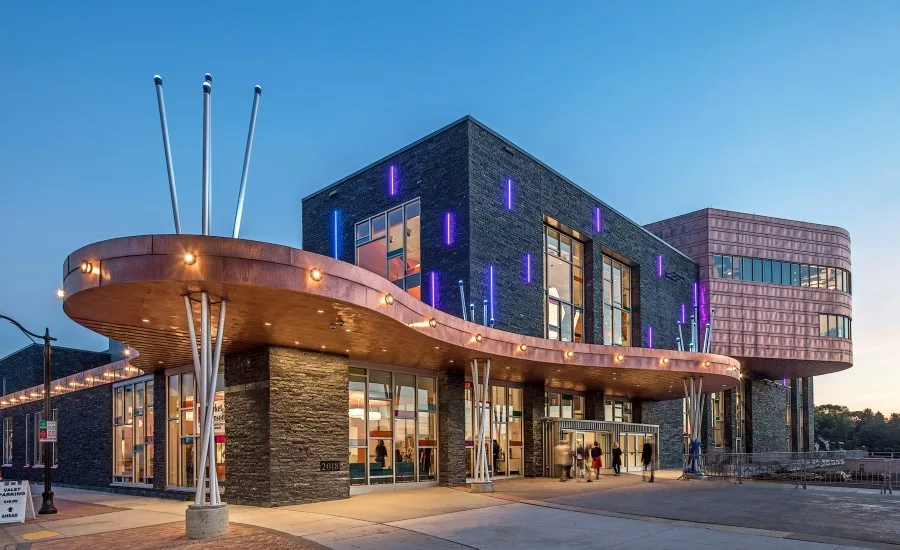

Copper is the most valuable of building materials owing to it being the most versatile. In HVAC systems (as rigid or flex duct), its natural antimicrobial properties improve indoor air quality and stop the spread of bacteria like Legionnaires’ disease. In water systems, its corrosion resistance and low reactivity properties can last 100 years. Then, on top of everything else, it shines as cornices, cladding, paneling and other forms of architectural sheet metal applications.
“Designing today isn’t just about structural integrity. It’s about a building’s impact on the environment, and what type of visual style it can express,” says Thomas Passek, president of the Copper Development Association Inc. (CDA). “As this architectural trend continues to flourish, it’s having a significant impact on material choice.”
A US-based, global not-for-profit association, the CDA advocates and advises on the use of copper and copper alloys through research development and education, as well as technical and end-user support. The CDA’s annual North American Copper in Architecture Awards promotes the use of architectural copper and copper alloys in building projects and is one of some 140 programs the association offers to the building construction community.
“Over the last decade, CDA has been tracking the building construction and renovation market. During this time, copper has gone from predominately roofing to a 50/50 split between roofing and wall cladding,” says Passek. “Our North American Copper in Architecture awards program has allowed us to follow this trend closely and to recognize the craftsmanship of design teams across the U.S. and Canada.”
When it comes to sustainability and green construction, copper is worth its weight in gold. Here, Passek explains how sheet metal contractors can cash in.
What is the difference in environmental impact when it comes to producing copper over other metals?
The copper industry is committed to the responsible production of copper whether it be from mines or a factory. The fact that copper can be recycled ad infinitum and retain 100 percent of its properties sets copper apart. Did you know that over 9 million tons of copper are recycled each year? Three-quarters of the copper produced since 1900 is still in use today. Using copper seems like a no-brainer when it comes eliminating building waste.
Is the main barrier of use for contractors price?
Copper may not win the initial cost battles, but, its low-maintenance, long-lifespan, sustainability, and malleability characteristics make it a cost-effective investment. The benefits of installing copper far outweigh initial installation costs. In your more than three decades of experience with engineered materials, tell me how your relationship with metals and metallurgy evolved. Over the years, I’ve worked for several different professional associations, all of them related to materials or engineering. At ASM International, the world’s largest association of metallurgists, materials scientists and engineers, I was exposed to all types of engineered materials from basic metals, to high-performance steels, to niche materials such as Nitinol (Ni Ti). I also learned a lot about materials used in general manufacturing, aerospace and medical applications, and processes such as heat-treating and thermal spray, which either made the materials better or applied them in a manner that provided increased performance for their application. My educational background was in business administration with a focus on organizational development. I did not think my studies would lead me to running materials and engineering associations, but that management background has helped in operating these organizations like a business while still being sensitive to the needs of its membership.
How has your relationship and or view of copper as a material changed since joining CDA? Or, how has it not changed?
I was always aware of copper and its alloys, but to be able to focus on one specific material and the complete value chain of working with producers to fabricators and end users, is a very different and rewarding experience. Copper is a tremendous material with a history that spans centuries. It continues to contribute to a better life — whether it be delivering safe water, efficiently powering our homes and businesses or enabling renewable energy and electric mobility. I find it fascinating to represent a material that is tried and true, yet so innovative at the same time.
Tell me about the makeup of CDA’s members. Are they mostly in the building trades? Scientists?
Our membership is primarily copper fabricators but copper producers as well. These companies are responsible for extracting the raw materials from the ground, and then, in turn, manufacturing bulk products for the building construction market, such as copper sheet, tubes, and wires.
As more building owners employ contractors to help them meet LEED standards, what will be CDA’s focus and goals over the few years?
Copper allows the sustainable building community to create structures with features that not only preserve the integrity of the environment, but also promote occupant health and well-being. We recently released a guide that highlights several building features that can contribute to green building standards such as LEED and WELL. Over the next few years, CDA will continue to work with the building construction community to identify ways copper can be used to support smarter, greener and healthier buildings.
This story originally appeared in the November 2019 issue of SNIPS magazine.
Looking for a reprint of this article?
From high-res PDFs to custom plaques, order your copy today!