Aluminum
Coil anodizing aluminum can solve quality control issues
In architectural sheet metal uses, the anodized material achieves greater strength, durability and consistency than paint.
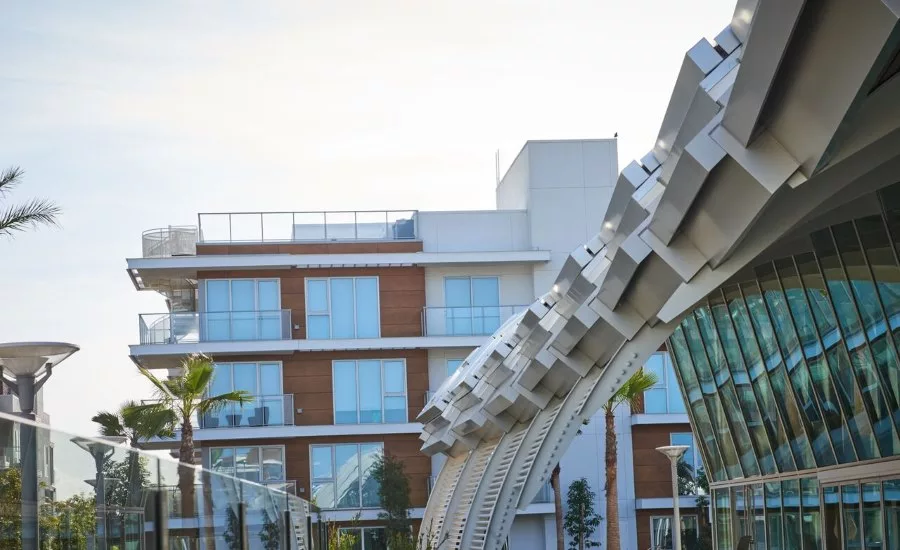
Architectural sheet metal applications often require a material that is durable, can be colored or finished, remains clean and beautiful over time. With its natural, brilliant look, hard anodic structure, environmentally responsible production, and great ROI, anodized aluminum is an excellent choice for architectural exterior applications when quality control is desired.
Strength and durability
Continuous coil anodizing delivers excellent quality control benefits in terms of the strength and durability of final products. Anodizing is an electrochemical process that grows the aluminum oxide layer from the base aluminum, bonding at the molecular level, so it cannot chalk, chip, flake or peel like coatings or paint. It is actually part of the aluminum, while coatings are a separate material either sprayed or roll coated onto the aluminum. Additionally, coatings often require a separate primer or adhesion promoter to help the material stick to the aluminum.
As a result, anodized aluminum is more durable and lasts longer than most coatings.
Aluminum Oxide is part of the Corundum family of gemstones, like a sapphire, and is second only to diamonds in terms of hardness. The hardness of the anodic layer formed in the anodizing process described above makes it very abrasion resistant, outperforming paint in Tabor abrasion and pencil hardness tests. This superior hardness and abrasion-resistance leads to a more durable product.
Paint is not added protection
Paint, on the other hand, does not improve the abrasion resistance of aluminum, but instead hinders it. Because paint is a coating that is either rolled or sprayed onto the base aluminum, it relies on the surface tension it creates with the metal, or a primer, for adhesion. This surface tension can break down over time, causing the paint to lose adhesion, leading to chalking, chipping, flaking and peeling. This loss of adhesion can creep over time, causing more and more of the surface area to lose its paint. Once such paint loss occurs in architectural exterior applications, replacement of the material may be required instead of repainting due to the high costs of labor to sand blast and repaint the original surface.
With anodized aluminum, if the anodic layer is somehow breached all the way to the raw aluminum underneath, the aluminum will self-heal by creating its own protective oxide layer. This self-healing ensures that any damage will not creep beyond the initial damage point, thus mitigating the need for costly repairs. The anodic layer also resists graffiti and is easy and safe to clean.
Anodized aluminum against extreme weather
The strength and durability of anodized aluminum means that it is a superior product for use in coastal applications. The sapphire hardness of aluminum oxide protects and preserves the aluminum surface from corrosion in harsh weather environments, including coastal areas. Salt spray is pH neutral, so it has little impact on the anodic layer, and the anodic layer’s hardness helps keep the aluminum beneath from being damaged. In comparison, paint can be affected by weather in coastal areas, and paint manufacturers charge extra for a warranty for material used in coastal areas without always changing the formulation of their product.
Finally, even in formed aluminum applications, coil anodized aluminum can be utilized with great success. Any material that is bent or stretched will have micro-fractures along the bend, also known as crazing, because nothing is infinitely flexible. Whether on painted, coated, or anodized aluminum, crazing occurs because the outer side of the bend is stretched more than the inner side. This crazing appears as a frosted effect. While a bent anodized surface may exhibit visible crazing, it is often naturally obscured because of the way light reflects off a bend to create a brighter, frosted look. In the hands of a skilled former, formed anodized parts can be made to look great, and don’t risk cracking and peeling that can spread or creep the way painted formed parts do.
Consistency and coloration
Unlike in other coloration processes, including batch anodizing, the continuous coil anodizing process is able to achieve excellent color consistency. With batch anodizing, individual pieces or panels are lowered into a tank in each part of the process. Inconsistencies in look and color are created because the top of each piece spends less time than the bottom in each step of the process.
With the continuous coil anodizing process, every square inch or millimeter of the entire coil spends the same amount of time in each part of the process. This allows for an unmatched level of consistency, assuring that the colors and finishes look the same throughout all of the coils produced. In addition, the color can be carefully controlled, measured, and recorded so it can be repeated on subsequent orders.
Beauty and cleanliness over time
As discussed above, the anodic layer of aluminum oxide is a translucent crystalline structure, and this structure enhances the natural metallic beauty of the aluminum beneath. This three-dimensional sapphire crystalline structure reflects and refracts light in unique ways, helping the material come alive in a way that paint cannot match. Paint, as a coating applied to metal, is more one dimensional and flat in appearance. It simply cannot reproduce the natural metallic look of real aluminum, and covers up the natural metal below. Painted aluminum is not metallic to the touch, and cannot be distinguished from any other painted material, resulting in a lack of natural metal feel and visual effect.
Additionally, when each surface is viewed under an electron microscope, the surface of paint appears rough and sloppy compared to the anodic layer of anodized aluminum. The smoother surface of anodized aluminum helps it stay cleaner over time, because dirt, dust and other pollutant materials cannot get trapped on its surface to the same extent as paint.
Unlike the dielectric surface of anodized aluminum, paint does nothing to inhibit the natural static electricity build up on the surface of metals. This can increase the attraction of dust and dirt particles, as well as shock those who touch the surface. As a result, typical paint warranties for architectural building products require a cleaning of the panels on the building every year. Our anodized aluminum warranties at Lorin, meanwhile, recommend cleaning only every other year, providing significant savings on cleaning costs over the life of the building.
Overall, anodized aluminum can be cost-effective compared to other material choices. The cost of clear anodized, per square foot or meter, is comparable to a high quality PVDF paint. For a true bronze, copper, or zinc look, anodized aluminum may be slightly more expensive than paint, but it does not appear flat like paint, and is much more affordable than the natural metals it is replacing. In addition, it lowers cleaning costs over the lifetime of a building, and may provide savings by not requiring re-application like paint.
Anodized aluminum remains pure aluminum, with nothing that can create VOCs or off-gassing. There are no red list items in anodized aluminum, and it meets ROHS standards.
Lorin Industries, Inc. offers anodized aluminum in a vast array of colors, with an added ability to custom color match. We also offers a wide variety of UV-stable colors that can mirror or match natural metal looks, including stainless steel, brass, gold, zinc, pewter, bronze, copper, and muntz. And when put into architectural use, it can make for visually brilliant results.
Lorin Industries, Inc. provides continuous-coil anodized aluminum products and services for architecture and hardware, appliance and food service, automotive and transportation, electronics, lighting, and specialty applications in the United States and internationally.
Looking for a reprint of this article?
From high-res PDFs to custom plaques, order your copy today!