What you should know about air filter gages
Particle sizes vary from less than 1 micron, up to the size of insects and leaves. The concentration varies hourly, daily, and seasonally.
These variables, combined with filtering requirements that range from the simple needs of a household furnace to the absolute filtration required for a cleanroom, make air cleaning a complex science.
These same variables contribute to the problem of determining when a filter has reached the limit of its effective lifespan; in other words, determining exactly when it has accumulated as many contaminants as it can hold and still do a tolerable job of filtering the air.
Because of the wide variations in contaminant loading, time is an uncertain measurement; even visual inspection can tell little or nothing.
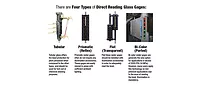
For technicians who need to keep close tabs on their clients’ filter conditions, the most widely used method is to measure pressure drop across the filter by means of an air filter gage.
Function of the filter gage
An air filter gage measures pressure drop across the filter for the purpose of determining whether or not the filter is operating within its design range of effective utilization.It does not measure filter efficiency.
An air filter gage, sensing the differential in static pressure across an air filter, permits the air filter to be used to its maximum dust-holding capacity as determined by the filter manufacturer and specified in terms of maximum filter resistance.
Looking for quick answers on air conditioning, heating and refrigeration topics? Try Ask ACHR NEWS, our new smart AI search tool. Ask ACHR NEWS
There’s more than IAQ at stake. Filters must be serviced when they reach their point of specified maximum resistance. The results of not servicing a loaded filter can include:
- Affecting the balance of the system;
- Increasing air leakage; and
- For some types of filters, beginning to pass contaminants.
Troubleshooting from resistance readings
Due to the many variables inherent in an air distribution system, the initial pressure drop in some systems may be found to be below that specified by the filter manufacturer.If the system has been carefully checked over and found to be in order, this need not be a source of concern, as it simply indicates that less-than-rated air volume is passing through the filter. Generally, this will mean increased filter life before the filter requires servicing.
However, if initial pressure drop exceeds the filter manufacturer’s rating, it indicates that a greater volume of air is being handled than the filter is rated for and filter life will be shortened.
Excessive variation from the filter manufacturer’s published initial resistance figure will probably indicate one or more of the following problems.
Low pressure drop:
- Less-than-rated air volume is being handled due to over-design of the filter area, improper air balancing of system, open bypasses, etc.
- The incorrect filter was installed.
- There is a velocity influence.
- Air is leaking around the filters, past frames, and possibly through a damaged filter.
Important: An initial pressure drop that’s 30% to 40% or more below the rated value for the filter means that approach velocities may be sufficiently low to impair the efficiency of some types of filters.
High pressure drop:
- The incorrect filter was installed.
- The system is handling more than the rated air volume. Suggest a thorough check of the system to be certain all controls are properly set and operating. If you’re unable to reduce the pressure drop to less than 10% or 15% above the rated value, additional filter area should be provided or air volume reduced.
Important: An initial pressure drop of 10% to 15% or more above the rated value for the filter, means that approach velocities may be sufficiently high to impair the efficiency of some types of filters.
The gage: installation and troubleshooting
Before putting your air filter gage into service, or in the event of initial pressure drop readings that don’t agree with the filter manufacturer’s specified pressure drop, make the following checks:1. Check the zero adjustment of the gage, including both tubing leads, or open vent valves to the atmosphere.
2. Check all tubing connections for tightness from gage to the static tip or fitting connection.
3. Check static pressure tips or fittings to be sure they are plugged in and correctly connected.
4. Check installation of static tips or fittings.
- Angle-type static pressure tips must point directly into the airstream.
- Flange-type static pressure fittings should be mounted on a duct wall in such a location that the opening is at a right angle to the moving airstream.
- A velocity pressure error can be created if the air blows directly into the opening.
More installation tips on gages
Manufacturers such as Dwyer Instruments offer air filter gages and switches for a variety of systems, and are customarily mounted on the outside of the air-handling duct or plenum near the filter bank.The type of static pressure tips used and their location is of primary importance in securing reliable readings. For maximum accuracy, it is essential that the influence of the velocity of the air be eliminated to permit sensing the true static pressure.
Note that some filter installations do not provide a straight duct approach to the filter bank, which may cause air to swirl and eddy.
Right-angle static pressure tips give the most accurate sensing. Flush static pressure fittings inserted at right angles to the flow are lower in cost and less likely to plug up, but are more susceptible to velocity and turbulence influence.
Tips should be located as recommended by the specifying engineer or by the filter manufacturer. In the absence of such recommendations, locate the tips at least 12 in. upstream and downstream from the filters in a zone of minimum turbulence.
Sidebar: Filter types, servicing resistance
All filter manufacturers supply technical data that include initial resistance in inches of water column (in. wc) for the filter at its rated airflow, and a recommended resistance at which point the filter should be replaced or serviced.The following describes the broad classifications or air filters:
- Viscous impingement filters have the filter element treated with an oil or adhesive that holds dust particles with which it comes in contact.
The initial resistance of a typical filter will usually run from 0.08 to 0.15 in. wc; servicing will be called for at 0.50 in. wc by means of a pressure-actuated switch, or a timer with an overriding pressure switch operating an electrical drive.
- Dry-type filters are available in a multiplicity of materials, in varying thicknesses, in batts, woven or bonded materials, natural or synthetic, and in pleated form or in tubes or bags to obtain greater filter area.
Efficiencies are usually at least equivalent to the viscous impingement type and may run to virtually 100%. Dust-holding capacity is high, and resistance values vary so widely that no rule-of-thumb figures are possible. The manufacturer should always be consulted for proper initial and final pressure drop figures for these filters.
- Electronic air cleaners using the electrostatic precipitation principle have no characteristic increase in pressure drop as they accumulate dust, and must therefore be serviced on a preset schedule.
The mechanical filter normally used with such equipment should, however, be serviced on the basis of increased pressure drop.
Looking for a reprint of this article?
From high-res PDFs to custom plaques, order your copy today!