Troubleshooting System Refrigeration Components
Ice machines differ markedly from other commercial refrigeration units and require their own service approach. Ice machine refrigeration tuning is precise, with very close tolerances required. Because of the precision required, components like head pressure regulating valves and thermostatic expansion valves (TXVs) in most ice machines have factory-fixed settings, and faulty parts require replacement rather than adjustment. Consequently, a technician’s troubleshooting must be especially methodical in order to avoid unnecessary charges to the customer and to eliminate callbacks.
These machines are, in most cases, critically charged. For example, a self-contained air-cooled machine, with a capacity of 400 pounds of ice production per day, will have a charge as small as 20 ounces. It is all too easy to introduce new problems into a unit just by connecting pressure gauge hoses to it rather than using a stub gauge, because enough refrigerant will be lost from the system into the hoses to radically affect operation.
The complexity of ice machines with their large number of components and controls adds to the challenge. Systematic fault identification becomes a powerful tool for the service technician, one that saves time and cost for the customer.
Consider the most common refrigeration-related symptoms that present themselves, how to identify and isolate them, and the “therapy” required. As a first step in the service visit, question the staff that uses the machine on a daily basis. Ask about the machine’s performance history, inquiring about each of the symptoms named below. Observe the machine for at least three cycles.
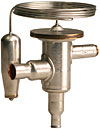
One type of TXV for such an application is a Danfoss TU valve that has design considerations in the composition of the bulb charge and in the orifice design and settings. Both are specifically suited to ice machine applications.
The principal objective in design of an ice machine TXV is to ensure a low and stable superheat over a typical evaporating temperature range of 32° to -4°F. It is also desirable to provide a non-adjustable valve with the greatest possible trouble-free service life. In the case of the Danfoss valve, this challenge is met by laser welding the power element that is designed to extend diaphragm life. The valve also has a stainless steel capillary tube that is resistant to fatigue from bending and vibration.
Before starting to work on the ice machine, verify that there is sufficient subcooling ahead of the TXV (a minimum of 4°F). Also, ensure that the sensing bulb is properly mounted, in the correct location, and well-insulated. Check to see that the external equalization tubing is not pinched. If all of these are correct, look for the following symptoms related to the TXV.
Symptom #1: Ice thick or normal at the bottom but thin or no ice at the top of the evaporator. This symptom, resulting from superheat being too high, is accompanied by a very long freeze time before the harvest cycle is initiated, or no harvest cycle at all. High superheat means that the refrigerant does not have enough cooling capacity as it passes through the evaporator.
The cause can be either a starving faulty TXV or low refrigerant charge resulting from a leak or from careless service. Since the ice thickness-measuring probe is typically located towards the top of the evaporator, it may never detect ice if superheat is too high, and the harvest cycle may never be initiated.
To determine the cause of high superheat, check system pressures. Expected operating pressures are typically listed in the factory service manual, and components are factory fine-tuned, pressures are very accurate, and deviation should be obvious.
If the TXV is starving, the suction pressure will be low and the discharge pressure normal. If the TXV is faulty, it must be replaced.
When there is low refrigerant charge, performance will be similar to that when there is a starving TXV. There may be some ice formation or none, depending on just how low the charge actually is. If there were ice formation, it typically would be thick on the bottom of the evaporator grid and thin at the top. Systems that are low on refrigerant have both low suction and low discharge pressures. Locate the leak, recover the refrigerant, fix the leak, evacuate, and re-charge the system.
Symptom #2: Ice thin over the entire evaporator, or no ice formation. This symptom appears, typically, if the expansion valve is overfeeding. An overfeeding TXV keeps the suction pressure (and hence the evaporating temperature) high. This can result in thin ice formation or none at all. Another indicator of an overfeeding or “flooding” TXV is a compressor that frosts and perhaps becomes covered with ice. The compressor in this case will also run noisier than is normal, because lubrication is reduced by oil dilution. When the TXV is overfeeding, discharge pressure could be normal.
Proper diagnosis makes it imperative to inspect for proper bulb mounting and insulation as recommended earlier, so that the bulb will not react to external heat sources and cause the expansion valve to throttle open, overfeeding the evaporator.
If all is well with the bulb and the problem persists, replace the expansion valve.
Symptom #3: Ice does not drop. In situations where the freeze cycle is normal and there is good ice formation, but ice does not drop during the harvest cycle, the hot gas solenoid valve could be restricted. Other causes of ice sticking to the evaporator could be a dirty evaporator or fan evaporator that has lost its plating.
Using a spot thermometer, check for the possibility of a restricted valve by ensuring that the temperature is the same on both sides of the hot gas solenoid valve during the harvest cycle. If there is no difference, the valve is operating properly. If there is a difference of more than a few degrees, and there is current to the coil, the valve should be replaced.
If the problem persists, check the condenser fan cycling switch on air-cooled units, or the condenser water-regulating valve on water-cooled units. If the condenser fans are running during harvest cycle, they will cool and condense the discharge gas, thereby reducing the amount of gas to harvest the ice. Similar logic can be applied to diagnose a bad condenser water-regulating valve. If either the pressure switch or the regulating valve is faulty, replace it.
Symptom #4: Long freeze cycle time but normal harvest cycle time. One would observe this symptom if the harvest solenoid valve is leaking hot gas into the evaporator. Depending on how bad the leak is, there may be very slow ice formation or none at all. This problem can be isolated from other problems by checking the refrigerant line temperature before and after the solenoid valve during the freeze cycle. If the line is too hot downstream of the valve, it is a clear indication that the valve is leaking hot gas. At the same time, both suction pressure and discharge pressure would be high.
Compressor-related issues are relatively easy to identify. A bad compressor may fail to run. Bad start components can result in failure to start or in short cycling. The result will be no ice production.
Check to see if the compressor is running. If it is not, unplug the unit and make sure all the wiring is correct and has not come loose. Check for shorts to ground and internal shorts by applying a multimeter to the power cord plug. Use the multimeter to check that compressor winding resistance is correct and that the windings are not shorted. Also check the user manual to make sure that the compressor is correct and that it has the right start components for the particular ice machine model. The compressor will not start if incorrect start components are used.
If the compressor is running, check and see if it is overheating. Overheating can result from either low refrigerant charge or from overloading the compressor. The compressors used in ice machines are typically hermetic and depend on suction gas for motor cooling. Low refrigerant charge will reduce cooling.
Refer to symptom #1 in the TXV section above about identifying low refrigerant charge and differentiating it from a starving TXV. The compressor motor is overloaded if the compressor is operated consistently outside of its operating envelope. If the compressor’s thermal overload is open because of overheating, give it time to reset. The thermal overload can trip in cases where the condenser coil is clogged or dirty and if it is installed too close to a wall, preventing good air circulation.
If the ice machine has a remote condensing unit, ensure that all the proper piping practices, as recommended by the manufacturer, are followed during installation of the refrigerant lines. Improper bends or traps can trap oil and prevent it from returning to the compressor.
For more information, go to www.danfoss.com.
Publication date: 07/07/2008
These machines are, in most cases, critically charged. For example, a self-contained air-cooled machine, with a capacity of 400 pounds of ice production per day, will have a charge as small as 20 ounces. It is all too easy to introduce new problems into a unit just by connecting pressure gauge hoses to it rather than using a stub gauge, because enough refrigerant will be lost from the system into the hoses to radically affect operation.
The complexity of ice machines with their large number of components and controls adds to the challenge. Systematic fault identification becomes a powerful tool for the service technician, one that saves time and cost for the customer.
Consider the most common refrigeration-related symptoms that present themselves, how to identify and isolate them, and the “therapy” required. As a first step in the service visit, question the staff that uses the machine on a daily basis. Ask about the machine’s performance history, inquiring about each of the symptoms named below. Observe the machine for at least three cycles.
This expansion valve has a sensing bulb charge formulated specifically for ice machines. The power element is laser welded and there is a stainless steel capillary tube.
THERMOSTATIC EXPANSION VALVE
In an ice machine, the TXV is expected to maintain constant superheat across the complete range of operating evaporating temperatures and maintain a uniform temperature across the entire evaporator. In other words, temperature of the evaporator coil at the outlet should be almost the same as that at the inlet, which in turn implies that the superheat should be very low. Low superheat helps in uniform ice formation and improves system efficiency since the evaporator coil surface is now completely utilized in two-phase heat transfer.One type of TXV for such an application is a Danfoss TU valve that has design considerations in the composition of the bulb charge and in the orifice design and settings. Both are specifically suited to ice machine applications.
The principal objective in design of an ice machine TXV is to ensure a low and stable superheat over a typical evaporating temperature range of 32° to -4°F. It is also desirable to provide a non-adjustable valve with the greatest possible trouble-free service life. In the case of the Danfoss valve, this challenge is met by laser welding the power element that is designed to extend diaphragm life. The valve also has a stainless steel capillary tube that is resistant to fatigue from bending and vibration.
Before starting to work on the ice machine, verify that there is sufficient subcooling ahead of the TXV (a minimum of 4°F). Also, ensure that the sensing bulb is properly mounted, in the correct location, and well-insulated. Check to see that the external equalization tubing is not pinched. If all of these are correct, look for the following symptoms related to the TXV.
Symptom #1: Ice thick or normal at the bottom but thin or no ice at the top of the evaporator. This symptom, resulting from superheat being too high, is accompanied by a very long freeze time before the harvest cycle is initiated, or no harvest cycle at all. High superheat means that the refrigerant does not have enough cooling capacity as it passes through the evaporator.
The cause can be either a starving faulty TXV or low refrigerant charge resulting from a leak or from careless service. Since the ice thickness-measuring probe is typically located towards the top of the evaporator, it may never detect ice if superheat is too high, and the harvest cycle may never be initiated.
To determine the cause of high superheat, check system pressures. Expected operating pressures are typically listed in the factory service manual, and components are factory fine-tuned, pressures are very accurate, and deviation should be obvious.
If the TXV is starving, the suction pressure will be low and the discharge pressure normal. If the TXV is faulty, it must be replaced.
When there is low refrigerant charge, performance will be similar to that when there is a starving TXV. There may be some ice formation or none, depending on just how low the charge actually is. If there were ice formation, it typically would be thick on the bottom of the evaporator grid and thin at the top. Systems that are low on refrigerant have both low suction and low discharge pressures. Locate the leak, recover the refrigerant, fix the leak, evacuate, and re-charge the system.
Symptom #2: Ice thin over the entire evaporator, or no ice formation. This symptom appears, typically, if the expansion valve is overfeeding. An overfeeding TXV keeps the suction pressure (and hence the evaporating temperature) high. This can result in thin ice formation or none at all. Another indicator of an overfeeding or “flooding” TXV is a compressor that frosts and perhaps becomes covered with ice. The compressor in this case will also run noisier than is normal, because lubrication is reduced by oil dilution. When the TXV is overfeeding, discharge pressure could be normal.
Proper diagnosis makes it imperative to inspect for proper bulb mounting and insulation as recommended earlier, so that the bulb will not react to external heat sources and cause the expansion valve to throttle open, overfeeding the evaporator.
If all is well with the bulb and the problem persists, replace the expansion valve.
Symptom #3: Ice does not drop. In situations where the freeze cycle is normal and there is good ice formation, but ice does not drop during the harvest cycle, the hot gas solenoid valve could be restricted. Other causes of ice sticking to the evaporator could be a dirty evaporator or fan evaporator that has lost its plating.
Using a spot thermometer, check for the possibility of a restricted valve by ensuring that the temperature is the same on both sides of the hot gas solenoid valve during the harvest cycle. If there is no difference, the valve is operating properly. If there is a difference of more than a few degrees, and there is current to the coil, the valve should be replaced.
If the problem persists, check the condenser fan cycling switch on air-cooled units, or the condenser water-regulating valve on water-cooled units. If the condenser fans are running during harvest cycle, they will cool and condense the discharge gas, thereby reducing the amount of gas to harvest the ice. Similar logic can be applied to diagnose a bad condenser water-regulating valve. If either the pressure switch or the regulating valve is faulty, replace it.
Symptom #4: Long freeze cycle time but normal harvest cycle time. One would observe this symptom if the harvest solenoid valve is leaking hot gas into the evaporator. Depending on how bad the leak is, there may be very slow ice formation or none at all. This problem can be isolated from other problems by checking the refrigerant line temperature before and after the solenoid valve during the freeze cycle. If the line is too hot downstream of the valve, it is a clear indication that the valve is leaking hot gas. At the same time, both suction pressure and discharge pressure would be high.
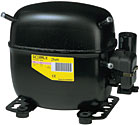
This compressor has been optimized for ice machine operating conditions and have strengthened bearings to allow more frequent cycling and improved valve timing.
COMPRESSOR ISSUES
An ice machine compressor is subject to several cycles of freezing and harvest per hour. During cycle changeover, there is a high possibility of liquid refrigerant flooding back to the compressor, and the compressor is very vulnerable to damage. In addition, the compressor is typically the component that consumes the most energy. With ever-tightening energy regulations from the Federal Energy Management Program (FEMP), ice machine manufacturers seek optimized and robust compressors.Compressor-related issues are relatively easy to identify. A bad compressor may fail to run. Bad start components can result in failure to start or in short cycling. The result will be no ice production.
Check to see if the compressor is running. If it is not, unplug the unit and make sure all the wiring is correct and has not come loose. Check for shorts to ground and internal shorts by applying a multimeter to the power cord plug. Use the multimeter to check that compressor winding resistance is correct and that the windings are not shorted. Also check the user manual to make sure that the compressor is correct and that it has the right start components for the particular ice machine model. The compressor will not start if incorrect start components are used.
If the compressor is running, check and see if it is overheating. Overheating can result from either low refrigerant charge or from overloading the compressor. The compressors used in ice machines are typically hermetic and depend on suction gas for motor cooling. Low refrigerant charge will reduce cooling.
Refer to symptom #1 in the TXV section above about identifying low refrigerant charge and differentiating it from a starving TXV. The compressor motor is overloaded if the compressor is operated consistently outside of its operating envelope. If the compressor’s thermal overload is open because of overheating, give it time to reset. The thermal overload can trip in cases where the condenser coil is clogged or dirty and if it is installed too close to a wall, preventing good air circulation.
If the ice machine has a remote condensing unit, ensure that all the proper piping practices, as recommended by the manufacturer, are followed during installation of the refrigerant lines. Improper bends or traps can trap oil and prevent it from returning to the compressor.
For more information, go to www.danfoss.com.
Publication date: 07/07/2008
Looking for a reprint of this article?
From high-res PDFs to custom plaques, order your copy today!