ACHR News
search
Ask ACHR NEWS AI
cart
facebook twitter instagram linkedin youtube
  • Sign In
  • Subscribe
  • Sign Out
  • My Account
ACHR News
  • NEWS
    • Breaking News
    • New HVAC Products
    • Featured Products
    • Manufacturer Reports
    • HVAC Data
    • Legislation
    • ACHR NEWS Centennial
  • RESIDENTIAL
    • Air Conditioners
    • Furnaces
    • Residential Heat Pumps
    • Ductless
    • Residential IAQ
    • Testing, Monitoring, Tools
    • Components & Accessories
  • COMMERCIAL
    • Air Handlers
    • Rooftop Units
    • Chillers and Cooling Towers
    • Commercial Heat Pumps
    • Boilers and Hydronics
    • VRF/Ductless
    • Commercial IAQ
  • REFRIGERATION
    • Refrigerants
    • Refrigerant Regulations
    • Leak Management
  • CONTRACTOR PRO
    • Geothermal
    • Homeowner Study
    • VRF and VRV Ductless
    • Unitary Trends
  • EDUCATION
    • Training and Education
    • Business Management
    • Service and Maintenance
    • Continuing Education
    • Market Research >
      • HVAC Brand Awareness Report
      • VRV, VRF, VRVZ Report
      • Unitary Trends Report
      • Water Heat Professionals Report
    • Webinars
    • Sponsor Insights
    • eProducts Info
    • White Papers
  • EVENTS
    • HVAC Contractor Forum
    • Industry Events and Webinars
  • MEDIA
    • Videos
    • AHR Expo 2025 Videos
    • Podcasts >
      • ACHR News Podcast
      • HARDI Podcasts
      • AHR Expo Podcasts
      • ACCA Podcasts
    • Interactive Spotlights
    • Quizzes
    • eBooks
    • HVAC Talkback
  • HVAC GROUP
    • ACHR NEWS >
      • Current Issue
      • Digital Edition
      • Subscribe
    • Distribution Trends
    • SNIPS NEWS >
      • Join SNIPS NEWS
    • Engineered Systems News >
      • Join ES News
    • HVACR Directory
    • Contests
    • Newsletters
    • Contact
    • Advertise
    • My Account

Troubleshooting A Refrigerant Undercharge

January 9, 2006
Troubleshooting modern refrigeration and/or air conditioning systems require a thorough knowledge of the systems and its functions.

However, to be a good troubleshooter, a technician must use the proper instrumentation and, more importantly, have certain organizational skills. Organizational skills will help the technician more quickly solve even the toughest problems he may encounter in the field. One of the best-known ways for a service technician to organize thoughts is through the use of a service checklist, a sample of which is shown in Table 1.

By simply measuring and recording those temperatures required in Table 1 using thermistors or thermocouples, getting the low- and high-side pressure readings using a gauge manifold set, and reading the compressor's voltage and amperage, a technician will be able to troubleshoot any refrigeration system, thoroughly and quickly. These six temperatures and two pressures give the technician evaporator superheat, compressor superheat, condenser subcooling, and the condenser split for the system.

Take a look at the system checklist in Table 2. With those figures in hand, a technician could analyze the system for faster systematic troubleshooting.

Table 1. Service checklist.
Let's take the categories of the service checklist one by one for an undercharged system. The system is a low-temperature refrigeration system with R-134a refrigerant. The system incorporates a liquid receiver and TXV for a metering device. Let's assume that this system has components that were sized properly and are still on the system.

Symptoms include:

  • Medium to high compressor discharge temperature.

  • High evaporator superheat.

  • High compressor superheat.

  • Low condenser subcooling.

  • Low compressor amps.

  • Low evaporator pressure.

  • Low condensing temperature.

    Medium to high compressor discharge temperature: This temperature is very high compared to normal system operations. The 220°F discharge temperature is caused by the evaporator and compressor running high superheat along with high compression ratios.

    When undercharged, do not expect the TXV to control superheat. The TXV may be seeing vapor and liquid at its entrance. The evaporator will be starved of refrigerant and running at high superheat. The compressor now sees high superheat coming to it, and with the compression stroke will superheat the vapors even more.

    Compression ratios also will be elevated, giving the system a higher-than-normal heat of compression. Compression ratios will be high due to low evaporator pressures. This will give the system very low volumetric efficiencies and cause unwanted inefficiencies with low refrigerant flow rates.

    The compressor will now have to compress much lower pressure vapors coming from the suction line to the condensing pressure. This requires a greater compression range and a higher compression ratio.

    This greater compression range from the lower evaporator pressure to the condensing pressure is what causes more compression work and generates more heat of compression. This increased heat may be seen by the high compressor discharge temperature.

    In conclusion, higher compression ratios and higher superheats are what cause the discharge temperature to be high. Remember, the discharge line sees all of the superheat coming to the compressor, the electric motor heat generated, and the heat of compression.

    The absolute limit that any discharge temperature should be measured about three inches from the compressor on the discharge line is 225°. The back of the discharge valve is usually about 50° to 75° hotter than this point on the discharge line. This would make the back of the discharge valve about 275° to 300°. This temperature could vaporize oil around the cylinders and cause excessive wear. At 350°, oil will break down. Overheating of the compressor will soon occur.

    Compressor overheating is one of today's most serious field problems. Try to keep your discharge temperatures below 225° for longer compressor life.

    High evaporator superheats: Because the TXV and evaporator are starved of refrigerant from the undercharge, evaporator superheats will be high. This, in turn, will lead to high compressor (total) superheats. The receiver is not getting enough liquid refrigerant from the condenser because of the shortage of refrigerant in the system. This will starve the liquid line and may even bubble a sight glass if the condition is severe enough. The TXV is not seeing normal pressures and may even be trying to pass a liquid and vapor mixture from the starved liquid line. The TXV cannot be expected to control evaporator superheat under these conditions.

    Table 2. Service checklist for refrigerant undercharge.
    High compressor superheats: Because the liquid line, TXV, and evaporator are being starved of refrigerant from the undercharge, the compressor will be starved too. This can be seen in the high compressor superheat reading.

    Low condenser subcooling: In TXV systems, the compressor is seeing much warmer vapors from the high superheat readings. The gases entering the compressor will be very expanded and have a low density. The compression ratio will be high from the low suction pressure, causing low volumetric efficiencies. The compressor is simply not pumping much refrigerant.

    All components in the system will be starved of refrigerant. The 100 percent saturated liquid point in the condenser will be very low. This will cause low condenser subcooling. The condenser is simply not receiving enough refrigerant vapor to condense it to a liquid and feed the receiver. Condenser subcooling is a good indicator of how much refrigerant charge is in the system. Low condenser subcooling can mean a low charge. High condenser subcooling can mean an overcharge, but not always.

    This is not true for capillary tube systems; the majority of them have no receiver. A cap tube system can run high subcooling simply from a restriction in the capillary tube or liquid line. The excess refrigerant will accumulate in the condenser, causing high subcooling and high head pressures.

    If a TXV receiver system is restricted in the liquid line, most of the refrigerant will accumulate in the receiver (with a bit in the condenser), causing low to normal subcooling and low head pressure.

    Low compressor amps: High superheats cause compressor inlet vapors to be very expanded from the suction line. This will decrease their density. Low-density vapors entering the compressor mean low refrigerant flow through the compressor. This causes a low amp draw because the compressor doesn't have to work as hard compressing the low-density vapors. Low refrigerant flow will also cause refrigerant-cooled compressors to overheat.

    Low evaporator pressure: Low evaporator pressure is caused by the compressor being starved of refrigerant. The compressor is trying to draw refrigerant into its cylinders, but there isn't enough refrigerant to satisfy it. The entire low side of the system will experience low pressure.

    Low condensing pressure: Because the evaporator and compressor are being starved of refrigerant, the condenser will also be starved. Starving the condenser will reduce the heat load on the condenser because it isn't seeing as much refrigerant to reject any heat. With not as much heat to accept and thus reject from the compressor, the condenser will be at a lower temperature. This lower temperature will cause a lower pressure in the condenser because of the pressure-temperature relationship at saturation.
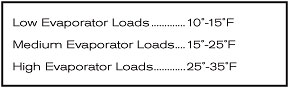
    Table 3. Common condenser splits for refrigeration applications only. (Note: These common condenser splits assume that the head pressure is not being floated with the ambient.)
    The temperature difference between the condensing temperature and the ambient is called the condenser's delta T (∆T) or split. The service industry often refers to this as the condenser split. The term condenser split will be used from here on in this article in place of delta T.

    The equation for this is:

    Condensing Temperature - Ambient Temperature = Condenser Split

    As the condenser sees less and less heat from the evaporator and compressor because they are both being starved of refrigerant from the undercharge, the condenser split will decrease. No matter what the ambient temperature is, the condenser split - the difference between the condensing temperature and the ambient - will remain the same if the load remains the same on the evaporator.

    Condenser split will change if the load on the evaporator changes. Some common condenser splits for refrigeration applications are listed in Table 3. Box temperatures will tell the technician what evaporator load the system is under. A low box temperature means a low load; high box temperature means a high load.

    CONCLUSION

    As you can see, systematic troubleshooting requires a thorough knowledge of the refrigeration system and its components. How and why temperatures and pressures respond the way they do when something goes wrong with the system can be understood with a thorough analysis of a system checklist. System checklists let the service technician organize his thoughts and help him find tough problems faster.

    John Tomczyk is a professor of HVACR at Ferris State University, Big Rapids, Mich. He can be reached by e-mail at tomczykkj@tucker-usa.com.

    Publication date: 01/09/2006

  • Looking for quick answers on air conditioning, heating and refrigeration topics? Try Ask ACHR NEWS, our new smart AI search tool. Ask ACHR NEWS →

    Share This Story

    Looking for a reprint of this article?
    From high-res PDFs to custom plaques, order your copy today!


    Recommended Content

    JOIN TODAY
    To unlock your recommendations.

    Already have an account? Sign In

    • HVAC-enrollment

      The Trades Are Back: HVACR Programs See Nearly 30% Enrollment Spike

      A new wave of future technicians is entering the pipeline.  
      Training and Education
      By: Matt Jachman
    • 2025 Top 40 Under 40

      2025 Top 40 Under 40 HVACR Professionals List

      The 11th annual Top 40 Under 40 list highlights those...
      HVAC Light Commercial Market
      By: Hannah Belloli-Oster
    • LG Ductless Mini-Split Systems

      The 9 Types of Heat Pumps

      As the U.S. moves toward electrification, heat pumps are...
      HVAC Residential Market
      By: Joanna R. Turpin
    Subscription Center
    • Create an Account
    • Start a Subscription
    • Manage My Account
    • Sign Up for Newsletters
    • Visit Customer Service
    • Update Preferences

    More Videos

    Sponsored Content

    Sponsored Content is a special paid section where industry companies provide high quality, objective, non-commercial content around topics of interest to The News audience. All Sponsored Content is supplied by the advertising company and any opinions expressed in this article are those of the author and not necessarily reflect the views of The News or its parent company, BNP Media. Interested in participating in our Sponsored Content section? Contact your local rep!

    close
    • Piggy Bank
      Sponsored byWatercress Financial

      Energy Prices, Inflation, and HVAC: What Today’s Homeowners Care About

    • Refrigerated Food
      Sponsored bySolstice Advanced Materials

      R-455A Refrigeration: A Cold Storage Solution for the Future

    • Airex Rooftop Units
      Sponsored byAirex Manufacturing Inc

      Consolidating Roof Penetrations: A Growing Trend in Multifamily HVAC Design

    Popular Stories

    HVAC-Price-Increase-graphic

    HVAC Price Increase List: June 2026

    Trump-Section-232.jpg

    Trump Reduces Section 232 Tariffs on HVAC Equipment to 15%

    Heat-pump-cutaway.jpg

    PFAS Rules and A2L Building Codes Continue to Evolve

    Midea-training.jpg

    HVAC Workforce Crisis Expands Beyond Technicians to Instructor Shortages

    U.S. Supreme Court building

    95% Furnace Efficiency Rule to Get New Hearing

    View The ACHR NEWS
    Centennial Anniversary Timeline

    The ACHR News Timeline Chart
    Submit a Letter
    Submit a letter to our editors.

    Events

    November 6, 2025

    Next-Gen Data Center Cooling: HVAC Innovation and Real-World Solutions

    On Demand As AI workloads and high-density computing push traditional cooling methods to their limits, the data center industry is accelerating the adoption of next-generation HVAC technologies.

    June 17, 2026

    Decarbonization Without Disruption

    This webinar will explore practical HVAC decarbonization strategies that minimize disruption while maximizing long-term performance and ROI.

    View All Submit An Event

    Poll

    Summer Staff

    Are you fully staffed for the summer season?
    View Results Poll Archive

    Products

    BNI Mechanical/Electrical Square Foot Costbook, 2026 Edition

    BNI Mechanical/Electrical Square Foot Costbook, 2026 Edition

    See More Products
    Decarbonization Without Disruption - Free Webinar - 6/17/2026

    Related Articles

    • The Professor: Refrigerant Undercharge

      See More
    • The Professor: Refrigerant Undercharge

      See More
    • Troubleshooting the Root Cause for a Refrigerant Starved Evaporator

      See More

    Related Products

    See More Products
    • Troubleshooting Tips for Servicing Refrigeration Systems

    • HVAC/R Electrical Troubleshooting: Deciding where to begin DVD

    • HVACR Troubleshooting Fundamentals Cover Image One Sheet.jpg

      HVACR Troubleshooting Fundamentals: Refrigeration and Air Flow Systems - Student Text

    See More Products

    Related Directories

    • A-Gas

      A global leader in the supply and lifecycle management of refrigerants, offering a range of products and services, including recovery, buyback, reclamation, separation, and destruction.
    • A-Gas Rapid Recovery

      We provide refrigerant recovery services for HVAC, refrigeration, demolition, and marine industries. We are dedicated to delivering high-speed EPA-compliant recoveries to our customers.
    • Refrigerant Services Inc.

      Replacement refrigerants.
    ×

    Sign Up. Stay Informed.

    The #1 trusted source for the HVACR industry since 1926

    SUBSCRIBE
    • RESOURCES
      • Advertise
      • Contact Us
      • Advisory Board
      • Classifieds
      • Submit a Letter
      • Directories
      • Store
    • ACCOUNT CENTER
      • Create an Account
      • Start a Subscription
      • Manage My Account
      • Sign Up for Newsletters
      • Visit Customer Service
      • Update Preferences
    • SERVICES
      • Marketing Services
      • Reprints
      • Market Research
      • List Rental
      • Survey/Respondent Access
    • STAY CONNECTED
      • LinkedIn
      • Facebook
      • Instagram
      • YouTube
      • X (Twitter)
    • PRIVACY
      • PRIVACY POLICY
      • TERMS & CONDITIONS
      • DO NOT SELL MY PERSONAL INFORMATION
      • PRIVACY REQUEST
      • ACCESSIBILITY

    Copyright ©2026. All Rights Reserved BNP Media, Inc. and BNP Media II, LLC.

    Design, CMS, Hosting & Web Development :: ePublishing