ACHR News
search
Ask ACHR NEWS AI
cart
facebook twitter instagram linkedin youtube
  • Sign In
  • Subscribe
  • Sign Out
  • My Account
ACHR News
  • NEWS
    • Breaking News
    • New HVAC Products
    • Featured Products
    • Manufacturer Reports
    • HVAC Data
    • Legislation
    • ACHR NEWS Centennial
  • RESIDENTIAL
    • Air Conditioners
    • Furnaces
    • Residential Heat Pumps
    • Ductless
    • Residential IAQ
    • Testing, Monitoring, Tools
    • Components & Accessories
  • COMMERCIAL
    • Air Handlers
    • Rooftop Units
    • Chillers and Cooling Towers
    • Commercial Heat Pumps
    • Boilers and Hydronics
    • VRF/Ductless
    • Commercial IAQ
  • REFRIGERATION
    • Refrigerants
    • Refrigerant Regulations
    • Leak Management
  • CONTRACTOR PRO
    • Geothermal
    • Homeowner Study
    • VRF and VRV Ductless
    • Unitary Trends
  • EDUCATION
    • Training and Education
    • Business Management
    • Service and Maintenance
    • Continuing Education
    • Market Research >
      • HVAC Brand Awareness Report
      • VRV, VRF, VRVZ Report
      • Unitary Trends Report
      • Water Heat Professionals Report
    • Webinars
    • Sponsor Insights
    • eProducts Info
    • White Papers
  • EVENTS
    • HVAC Contractor Forum
    • Industry Events and Webinars
  • MEDIA
    • Videos
    • AHR Expo 2025 Videos
    • Podcasts >
      • ACHR News Podcast
      • HARDI Podcasts
      • AHR Expo Podcasts
      • ACCA Podcasts
    • Interactive Spotlights
    • Quizzes
    • eBooks
    • HVAC Talkback
  • HVAC GROUP
    • ACHR NEWS >
      • Current Issue
      • Digital Edition
      • Subscribe
    • Distribution Trends
    • SNIPS NEWS >
      • Join SNIPS NEWS
    • Engineered Systems News >
      • Join ES News
    • HVACR Directory
    • Contests
    • Newsletters
    • Contact
    • Advertise
    • My Account

The Ups and Downs of Minnesota’s Energy Code

By Joanna R. Turpin
June 12, 2000
MINNEAPOLIS, MN — For several years now, the State of Minnesota has been telling contractors that substantial changes were to be made to its 2000 Energy Code as of April 15, 2000. One of the biggest issues was the requirement that mechanical ventilation be installed in all new residential construction.

The state even offered “Resi-dential Ventilation Strategies” classes, which instructed contractors on the mechanical requirements of the new code.

But for now, forget the mechanical requirements. There’s still a good deal of confusion about the code itself. Some contractors are even unsure whether or not the code took effect April 15.

One of the main reasons for the confusion is that newspaper reports erroneously stated that the code did not take effect. In addition, there was a last-minute revision to the code that allows builders to choose which standard to apply to their houses.

The bottom line, however, is that all new homes will require some kind of mechanical ventilation.

Many homebuilders aren’t happy with the new code, saying that homeowners can’t afford the additional $6,000 to $8,000 for a house built to new code standards.

Most contractors, on the other hand, believe that the mechanical ventilation outlined in the 2000 Energy Code is just what’s needed to fix many of the problems, such as moisture on windows, associated with new tight construction.

Still others are concerned with how they will comply with the new code and who will be enforcing it.

Looking for quick answers on air conditioning, heating and refrigeration topics? Try Ask ACHR NEWS, our new smart AI search tool. Ask ACHR NEWS →
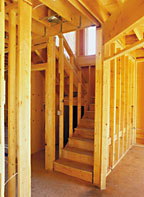
With recent changes to Minnesota's energy code, partially built homes are in limbo.

Two Standards

Minnesota’s 1994 Energy Code gave builders two standards for constructing homes:

According to the code, a Category 1 house is designed to be safer, more durable, and more energy efficient. Category 1 homes mandate that outdoor air must be delivered to each habitable room by some means such as individual inlets, separate duct systems, or a forced-air system.

It’s estimated that in recent years, only 10% of Minnesota houses have been built according to Category 1 standards.

All the rest have been built to Category 2 standards, which are considered to be a baseline construction level that relies on drafts and open windows for ventilation.

The 2000 Energy Code essentially outlawed Category 2 homes altogether and now requires builders to construct homes based on either Category 1 standards or the new energy code standards — the choice is theirs.

In addition to mechanical ventilation, the new code requires all non-solid fuel combustion appliances (furnaces, boilers, water heaters, and gas fireplaces) to be either direct vent, power vent, or sealed combustion. (There are other requirements of the new code as well, which can be found on the Minnesota Department of Commerce website at www.commerce.state.mn.us).

Contractors Agree

Mark Sims, president of Suburban Air, Minneapolis, says that another important requirement of the new code is a continuous air and vapor barrier.

“Based on experience learned from our previous energy code, which required sealing but not mechanical ventilation,” he explains, “the new code incorporates mechanical ventilation to help ensure adequate indoor air quality and minimize damage to the home due to excessive moisture build-up inside the house and wall cavities.”

Richard Wecker, of Apollo Heating and Ventilation, Oakdale, MN and Twin Cities Metropolitan Chapter president of ACCA, says, “We really do feel there are some problems that need to be addressed with tightening up homes.

“We see problems with moisture retention in houses, and there are problems with backdrafting of appliances when certain fans are running,” says Wecker.

Controversial Since Its Inception

The new code has been controversial from the beginning. One of the biggest sticking points is who will be enforcing the code.

Questions still arise, such as how can the state educate a multitude of inspectors in different communities? How can the state make sure the enforcement will be equal? Will the code be uniform throughout the state?

Phil Smith, energy specialist with the Minnesota Department of Commerce, says building inspectors have no choice but to base their decisions on the rules, which should make inspections uniform throughout the state. “We’re publishing interpretations of the code. There are some on our web page right now, and there will be more going up shortly. We’re going to continue that process.”

Wecker says that some of the controversy in regard to the energy code could have been eliminated had there been better communication between the Department of Energy, which wrote the energy code, and the Department of Building Codes and Standards, which wrote the mechanical code.

Another problem, Sims notes, is that the new requirement for mechanical ventilation increases the amount of time an hvac contractor will have to spend in a new home — time that he just might not have.

“With the existing labor shortage, this will only serve to put increased pressure on an already volatile situation,” says Sims. He also notes that installing mandatory mechanical ventilation will increase contractor revenue, so contractors can benefit.

Now that builders have a choice about which code to implement, partially built homes are in limbo. There are many new homes already earmarked to go forward with the new code. Builders are left to decide whether or not to still include all the options mandated in the new code, or just include what was in the Category 1 code.

Inspectors are confused, contractors are confused. “We’re still trying to sort it out,” says Wecker.

The one positive side to this issue is that it’s raised public awareness of the benefits of mechanical ventilation. Wecker notes that he’s seen a general increase in the number of homeowners looking for a solution to their moisture problems. He usually recommends air-to-air heat exchangers, which can cost anywhere between $1,500 and $3,000, depending on the home.

Wecker adds, “Most of the contractors feel that the best path with new homes is 90%-efficient, sealed-combustion equipment with air-to-air heat exchangers.”

Sidebar: Mechanical Ventilation Requirements

The following describes how contractors can comply with the 2000 Minnesota Energy Code.

Ventilation requirements: Calculate the size (in cfm) of the required mechanical ventilation system by multiplying the home’s conditioned square footage area (which normally would include the basement) by 0.05.

The Department of Public Service (DPS) recommends that this total ventilation rate be considered as having two parts — “people ventilation” for round-the-clock use, and “supplemental ventilation” for times when extra ventilation is needed. Calculate the people ventilation as 15 cfm for each bedroom, plus an additional 15 cfm; the people ventilation rate should not be less than 45 cfm.

The supplemental ventilation is the total ventilation computed as above, minus the people ventilation rate.

Equipment requirements: Fans providing the people ventilation (or all the ventilation fans if people ventilation is not separately identified) must be listed for continuous operation. The sound rating is limited for surface-mounted fans to 1.0 sone, and for other fans, 1.5 sones. Ventilation may be provided by systems using a heat-recovery ventilator (HRV), a mixing box, or separate fans.

Distribution, installation, and certification requirements: Residential mechanical ventilation system fans and ducts must be sized to provide the required airflow. Seal all ducts outside the interior air barrier with a product meeting UL181 or equivalent.

Note: Use of cloth-backed duct tape with rubber adhesive is specifically prohibited for this application.

Controls for fan(s) providing the people ventilation must be accessible to the homeowner and identified with the words “ventilation” or “ventilation fan.”

If either the ventilation exhaust or supply ducts connect to furnace ductwork, then the furnace blower must provide an hourly average minimum flow rate of 0.15 cfm per square foot of house area (typically 20 min per hr) whenever the residential ventilation system is running. If both exhaust and supply ventilation system ducts connect to furnace ductwork, then the furnace blower must run whenever the residential ventilation system is running.

Systems must be verified following installation by visual and physical examination. The verification must include measurement of the airflow at air intake and exhaust points (from the house, not from individual rooms within the house) with design airflow of 30 cfm and greater. This should be verified by the installer or builder.

— Joanna R. Turpin

Links

  • Minnesota Department of Commerce

Share This Story

Looking for a reprint of this article?
From high-res PDFs to custom plaques, order your copy today!


Tn joanna 2017
Joanna Turpin is a Senior Editor at The ACHR NEWS. She can be contacted at 248-786-1707 or joannaturpin@achrnews.com. Joanna has been with BNP Media since 1991, first heading up the company’s technical book division before moving over to The ACHR NEWS, where she frequently writes about refrigerants and commercial refrigeration. She obtained her bachelor’s degree in English from the University of Washington and worked on her master’s degree in technical communication at Eastern Michigan University.

Recommended Content

JOIN TODAY
To unlock your recommendations.

Already have an account? Sign In

  • HVAC-enrollment

    The Trades Are Back: HVACR Programs See Nearly 30% Enrollment Spike

    A new wave of future technicians is entering the pipeline.  
    Training and Education
    By: Matt Jachman
  • 2025 Top 40 Under 40

    2025 Top 40 Under 40 HVACR Professionals List

    The 11th annual Top 40 Under 40 list highlights those...
    HVAC Contracting
    By: Hannah Belloli-Oster
  • LG Ductless Mini-Split Systems

    The 9 Types of Heat Pumps

    As the U.S. moves toward electrification, heat pumps are...
    Air Source Heat Pumps
    By: Joanna R. Turpin
Subscription Center
  • Create an Account
  • Start a Subscription
  • Manage My Account
  • Sign Up for Newsletters
  • Visit Customer Service
  • Update Preferences

More Videos

Sponsored Content

Sponsored Content is a special paid section where industry companies provide high quality, objective, non-commercial content around topics of interest to The News audience. All Sponsored Content is supplied by the advertising company and any opinions expressed in this article are those of the author and not necessarily reflect the views of The News or its parent company, BNP Media. Interested in participating in our Sponsored Content section? Contact your local rep!

close
  • Piggy Bank
    Sponsored byWatercress Financial

    Energy Prices, Inflation, and HVAC: What Today’s Homeowners Care About

  • Refrigerated Food
    Sponsored bySolstice Advanced Materials

    R-455A Refrigeration: A Cold Storage Solution for the Future

  • Airex Rooftop Units
    Sponsored byAirex Manufacturing Inc

    Consolidating Roof Penetrations: A Growing Trend in Multifamily HVAC Design

Popular Stories

Lennox equipment

Platinum Equity to Sell Heat Controller to Lennox

Trade groups challenge EPA refrigerant rule

HVACR Trade Groups Challenge EPA Refrigerant Rule in Federal Court

heat-pump-tech-customer.jpg

DOE Updates $8.8B Home Energy Rebate Program Guidance

Lovato-refrigerant-rooftop_AC_Units_.jpg

When Refrigerants Change, So Do the Contactors

Martin Hoover

ACCA Leadership Shakeup: Barton James Out, Hoover Named Interim CEO

View The ACHR NEWS
Centennial Anniversary Timeline

The ACHR News Timeline Chart
Submit a Letter
Submit a letter to our editors.

Events

November 6, 2025

Next-Gen Data Center Cooling: HVAC Innovation and Real-World Solutions

On Demand As AI workloads and high-density computing push traditional cooling methods to their limits, the data center industry is accelerating the adoption of next-generation HVAC technologies.

July 28, 2026

How Top Home Services Companies Turn Every Conversation Into Predictable Revenue

In this webinar, we'll outline how top contractors are turning every conversation into predictable revenue by coaching every comfort advisor visit, not just the ones a manager rides along on.

View All Submit An Event

Poll

Summer Staff

Are you fully staffed for the summer season?
View Results Poll Archive

Products

BNI Mechanical/Electrical Square Foot Costbook, 2026 Edition

BNI Mechanical/Electrical Square Foot Costbook, 2026 Edition

See More Products
Designing Systems Using A2L Refrigerant - Free Webinar - 7/22/2026

Related Articles

  • Ups and Downs of Jackson County Schools

    See More
  • Panel Discussion at EPIC 2024

    Contractors Share Their Ups and Downs at EPIC 2024 Convention

    See More
  • Science Museum of Minnesota Honored with Energy Efficiency Leader Award from Trane

    See More

Related Products

See More Products
  • 21nrdpA-WVL.jpg

    2024 Uniform Mechanical Code Soft Cover w/Tabs

  • EHEP002028.jpg

    Principles of Heating, Ventilation, and Air Conditioning in Buildings, 1st Edition

  • 0071829598.jpeg

    HVAC Equations, Data, and Rules of Thumb, Third Edition

See More Products

Events

View AllSubmit An Event
  • July 16, 2025

    Let’s Talk: Condensing Equipment, (Acidic) Condensate, and the Code

    On Demand During this webinar, we will define what acidic condensate is, illustrate how it’s formed in today’s high-efficiency, gas-fired heating appliances, and hit on the damage it can cause if not treated.
View AllSubmit An Event

Related Directories

  • Coded Energy Inc.

    Kwik Model 3D EAGLE is an easy-to-use 3D residential HVAC design software (load calcs and duct design). No CAD experience needed! Now importing LiDAR scans!
  • Coded Energy Inc. (Software/Video)

    Kwik Model 3D EAGLE is an easy-to-use 3D residential HVAC design software (load calcs and duct design). No CAD experience needed! Now importing LiDAR scans!
  • The Energy Conservatory

    Manufacturer of the Minneapolis Blower Door and Minneapolis Duct Blaster and Blower Door, DG-1000 digital pressure and flow gauge, and TEC TrueFlow Meter.
×

Sign Up. Stay Informed.

The #1 trusted source for the HVACR industry since 1926

SUBSCRIBE
  • RESOURCES
    • Advertise
    • Contact Us
    • Advisory Board
    • Classifieds
    • Submit a Letter
    • Directories
    • Store
  • ACCOUNT CENTER
    • Create an Account
    • Start a Subscription
    • Manage My Account
    • Sign Up for Newsletters
    • Visit Customer Service
    • Update Preferences
  • SERVICES
    • Marketing Services
    • Reprints
    • Market Research
    • List Rental
    • Survey/Respondent Access
  • STAY CONNECTED
    • LinkedIn
    • Facebook
    • Instagram
    • YouTube
    • X (Twitter)
  • PRIVACY
    • PRIVACY POLICY
    • TERMS & CONDITIONS
    • DO NOT SELL MY PERSONAL INFORMATION
    • PRIVACY REQUEST
    • ACCESSIBILITY

Copyright ©2026. All Rights Reserved BNP Media, Inc. and BNP Media II, LLC.

Design, CMS, Hosting & Web Development :: ePublishing