ACHR News
search
Ask ACHR NEWS AI
cart
facebook twitter instagram linkedin youtube
  • Sign In
  • Subscribe
  • Sign Out
  • My Account
ACHR News
  • NEWS
    • Breaking News
    • New HVAC Products
    • Featured Products
    • Manufacturer Reports
    • HVAC Data
    • Legislation
    • ACHR NEWS Centennial
  • RESIDENTIAL
    • Air Conditioners
    • Furnaces
    • Residential Heat Pumps
    • Ductless
    • Residential IAQ
    • Testing, Monitoring, Tools
    • Components & Accessories
  • COMMERCIAL
    • Air Handlers
    • Rooftop Units
    • Chillers and Cooling Towers
    • Commercial Heat Pumps
    • Boilers and Hydronics
    • VRF/Ductless
    • Commercial IAQ
  • REFRIGERATION
    • Refrigerants
    • Refrigerant Regulations
    • Leak Management
  • CONTRACTOR PRO
    • Geothermal
    • Homeowner Study
    • VRF and VRV Ductless
    • Unitary Trends
  • EDUCATION
    • Training and Education
    • Business Management
    • Service and Maintenance
    • Continuing Education
    • Market Research >
      • HVAC Brand Awareness Report
      • VRV, VRF, VRVZ Report
      • Unitary Trends Report
      • Water Heat Professionals Report
    • Webinars
    • Sponsor Insights
    • eProducts Info
    • White Papers
  • EVENTS
    • HVAC Contractor Forum
    • Industry Events and Webinars
  • MEDIA
    • Videos
    • AHR Expo 2025 Videos
    • Podcasts >
      • ACHR News Podcast
      • HARDI Podcasts
      • AHR Expo Podcasts
      • ACCA Podcasts
    • Interactive Spotlights
    • Quizzes
    • eBooks
    • HVAC Talkback
  • HVAC GROUP
    • ACHR NEWS >
      • Current Issue
      • Digital Edition
      • Subscribe
    • Distribution Trends
    • SNIPS NEWS >
      • Join SNIPS NEWS
    • Engineered Systems News >
      • Join ES News
    • HVACR Directory
    • Contests
    • Newsletters
    • Contact
    • Advertise
    • My Account

Rooftop Maintenance Checked

June 19, 2006
Rooftop units have evolved and improved dramatically since first being introduced. The units now have high-tech controls and diagnostics, easier access to frequently serviced parts, and multiple innovations to improve IAQ. These improvements, when combined with regularly scheduled maintenance, can produce years of reliable performance and indoor comfort.

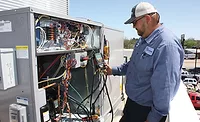
A light commercial package rooftop unit should be serviced regularly. Both quarterly and semiannual services are common, although monthly service, while extreme, also has a place, especially in critical applications. Regular maintenance should take place at the start of the heating season and again at the start of the cooling season. Filter maintenance, depending on the equipment application and filter type, may need to be performed on a more frequent monthly basis.

Many items that are part of a routine HVAC system maintenance inspection have remained constant over the years. Evolving technology designs and changing environmental laws, however, have resulted in adjustments to the inspection process.

USING A CHECKLIST

Many items that are part of a routine HVAC system maintenance inspection have remained constants over the years. However, evolving technology designs and changing environmental laws have resulted in adjustments and additions to the inspection process. The checklist that follows is a blend of previously established procedures and the new methods employed in maintenance inspections.

  • Speak to the building owners and occupants and develop a written record of any reoccurring or nuisance system problems identified. Discuss the space comfort to piece together the operating history of the unit.

  • Disconnect the electrical power to any HVAC equipment prior to performing service or maintenance. Shut off the unit at the service disconnect switch or main electrical distribution panel. If at all possible, arrange for a licensed electrician to install a weather-tight disconnect.

  • Clean or replace the air filters on a consistent basis.

  • Inspect the fan motor. Also, check both the pulley and belt on belt-driven units. If the belt is loose it can add wear to the pulley, reduce fan speed, and ultimately freeze the coil. Remove the fan belt and check the motor and blower bearings to be sure they are securely mounted and rotate easily and quietly. Then check the condition of the fan itself. Does the fan operate smoothly and quietly? A fan that's plugged up with dirt will reduce airflow. Defective motors and damaged fan blades should be replaced.

  • Inspect the belt and drive system and replace the belt if it is worn or cracked. Belts should be properly adjusted for tightness using a belt tension gauge. Loose belts will squeal and result in excessive belt and pulley wear. Excessively tight belts can result in premature damage to the blower bearings and mounts.

  • Inspect and periodically clean the evaporator coil using a hand pump garden sprayer containing a mixture of a nonacidic cleaner and water.

  • Test the economizer itself for proper operation, checking the linkage for binding, full stroke actuator operation and the proper functioning of the economizer limiting thermostats, including the mixed air thermostat, the enthalpy control, outdoor dry bulb control, and minimum outside air potentiometer.

  • Inspect the condensate drain and clean it, if necessary. An unclean drain can clog and leak condensate through the unit base pan onto the floor below. Mold and mildew are also a concern for any standing water in the drain pan, in the base of the unit or in the unit insulation.

  • Stop, look, and listen. Take a few minutes to visually scan the unit for anything that does not appear to be normal. Check to be sure barometric exhaust dampers are not stuck in the closed or fully open position. Inspect all outdoor fan motors to be sure they are operating as intended. Be certain that electrical wiring is properly secured and away from spinning fan blades. Inspect refrigerant piping for lines rubbing together. Noise and vibration are very good indicators of a potential problem. Listen and/or feel for any unusual bearing noises, belt squealing, rattles, humming or buzzing that would be an indicator of a mechanical problem.

  • Inspect the blower wheel and clean it if necessary. A dirt-filled blower wheel can reduce system evaporator airflow by as much as 35 percent.

  • Inspect, clean, and lubricate the economizer damper blades, bushings, linkage, and gaskets for a proper seal to ensure the appropriate amount of air for air balance.

  • On units with smart control modules, consult the manufacturer's operating manual on how to download equipment lockout information from the module. Newer systems retain the most recent equipment lockout information in the memory of the module. This information is extremely useful in determining the source of any nuisance lockouts with the individual circuits of the system.

  • Periodically clean the condenser coil using a hand pump garden sprayer containing only a mixture of nonacidic coil cleaner and water.

  • Inspect the cabinet for obvious damage, deterioration and signs of rainwater entry. Any sources of rainwater entry should be permanently repaired with gasketing or silicone-based caulk. Always replace all missing access panel screws.

    A light commercial package rooftop unit should be serviced regularly. Both quarterly and semiannual services are common, although monthly service, while extreme, also has a place, especially in critical applications.
  • Inspect the unit mounting supports to ensure quiet operation. Use cork/rubber gasketing to eliminate metal-to-metal vibration transmission.

  • Inspect duct connections for air leaks, recirculation, and damage.

  • Inspect the electrical compartment for signs of wear or overheated wires, contactors, or loose terminal connections. Loose connections can result in serious damage to the compressor.

    Remember that replacing a contactor is easier and much less expensive than replacing a compressor.

  • Functionally inspect the unit's safety components, such as the high-limit switch, and test them using the manufacturer's guidelines.

  • Check the refrigerant charge using the manufacturer's guidelines.

  • Inspect and record the amperages of the primary system components and verify that they are within the published limitations that appear on the unit data label and in the manufacturer's instructions.

  • Functionally inspect the heating components to ensure proper operation and firing rates on gas-fired equipment. Inspect the flue and burner components for excessive sooting.

  • Clean out debris that may have accumulated in the unit. Visually inspect a unit's coils, and ensure that nothing is blocking the condenser side airflow. In addition, check the P-trap. It may have dried out and cracked, which can lead to leaks, or simply have been broken off. An improperly functioning P-trap does not drain properly, an especially important point during the cooling season.

  • Finally, be sure to discuss with the business owner any findings that indicate potential problems and put an action plan together to correct the situation.

    Walt Jacobe is the commercial marketing manager at York, a Johnson Controls Co. He can be contacted at 405-419-6546 or at walt.jacobe@york.com.

    Publication date: 06/19/2006

  • Looking for quick answers on air conditioning, heating and refrigeration topics? Try Ask ACHR NEWS, our new smart AI search tool. Ask ACHR NEWS →

    Share This Story

    Looking for a reprint of this article?
    From high-res PDFs to custom plaques, order your copy today!


    Recommended Content

    JOIN TODAY
    To unlock your recommendations.

    Already have an account? Sign In

    • HVAC-enrollment

      The Trades Are Back: HVACR Programs See Nearly 30% Enrollment Spike

      A new wave of future technicians is entering the pipeline.  
      News
      By: Matt Jachman
    • 2025 Top 40 Under 40

      2025 Top 40 Under 40 HVACR Professionals List

      The 11th annual Top 40 Under 40 list highlights those...
      HVAC Contracting
      By: Hannah Belloli-Oster
    • LG Ductless Mini-Split Systems

      The 9 Types of Heat Pumps

      As the U.S. moves toward electrification, heat pumps are...
      Ground Source Heat Pumps
      By: Joanna R. Turpin
    Subscription Center
    • Create an Account
    • Start a Subscription
    • Manage My Account
    • Sign Up for Newsletters
    • Visit Customer Service
    • Update Preferences

    More Videos

    Sponsored Content

    Sponsored Content is a special paid section where industry companies provide high quality, objective, non-commercial content around topics of interest to The News audience. All Sponsored Content is supplied by the advertising company and any opinions expressed in this article are those of the author and not necessarily reflect the views of The News or its parent company, BNP Media. Interested in participating in our Sponsored Content section? Contact your local rep!

    close
    • Piggy Bank
      Sponsored byWatercress Financial

      Energy Prices, Inflation, and HVAC: What Today’s Homeowners Care About

    • Refrigerated Food
      Sponsored bySolstice Advanced Materials

      R-455A Refrigeration: A Cold Storage Solution for the Future

    • Airex Rooftop Units
      Sponsored byAirex Manufacturing Inc

      Consolidating Roof Penetrations: A Growing Trend in Multifamily HVAC Design

    Popular Stories

    HVAC-Price-Increase-graphic

    HVAC Price Increase List: June 2026

    Trump-Section-232.jpg

    Trump Reduces Section 232 Tariffs on HVAC Equipment to 15%

    R410A-Refrigerant-Cylinder.jpg

    Refrigerant Recovery is a Revenue Opportunity

    Heat-pump-cutaway.jpg

    PFAS Rules and A2L Building Codes Continue to Evolve

    Kroger.jpg

    Kroger to Spend $100 Million to Reduce Refrigerant Leaks

    View The ACHR NEWS
    Centennial Anniversary Timeline

    The ACHR News Timeline Chart
    Submit a Letter
    Submit a letter to our editors.

    Events

    November 6, 2025

    Next-Gen Data Center Cooling: HVAC Innovation and Real-World Solutions

    On Demand As AI workloads and high-density computing push traditional cooling methods to their limits, the data center industry is accelerating the adoption of next-generation HVAC technologies.

    June 17, 2026

    Decarbonization Without Disruption

    This webinar will explore practical HVAC decarbonization strategies that minimize disruption while maximizing long-term performance and ROI.

    View All Submit An Event

    Poll

    Summer Staff

    Are you fully staffed for the summer season?
    View Results Poll Archive

    Products

    BNI Mechanical/Electrical Square Foot Costbook, 2026 Edition

    BNI Mechanical/Electrical Square Foot Costbook, 2026 Edition

    See More Products
    Decarbonization Without Disruption - Free Webinar - 6/17/2026

    Related Articles

    • Rooftop Maintenance on the Heating Side

      See More
    • Preventive maintenance helps keep dirty condensers and evaporator coils clean and ensures operators and owners are aware when parts and components may be reaching the end of their lifespans.

      Preaching the Importance of Rooftop Maintenance

      See More
    • The added value of rooftop unit maintenance. - The ACHR News

      The Added Value of Rooftop Unit Maintenance

      See More

    Related Products

    See More Products
    • Green Tips for Building Maintenance Engineers

    • Tech_CommRef_Guide_Small.jpg

      Technician’s Guide & Workbook for Quality Maintenance on Commercial Refrigeration Equipment

    • HVAC and Refrigeration Preventive Maintenance.jpeg

      HVAC and Refrigeration Preventive Maintenance

    See More Products

    Events

    View AllSubmit An Event
    • September 9, 2025

      How Maintenance Plays into the HVAC Decarbonization Trend

      On Demand This webinar will explore maintenance strategies for advanced HVAC systems, including VAVs and demand-controlled ventilation.
    View AllSubmit An Event
    ×

    Sign Up. Stay Informed.

    The #1 trusted source for the HVACR industry since 1926

    SUBSCRIBE
    • RESOURCES
      • Advertise
      • Contact Us
      • Advisory Board
      • Classifieds
      • Submit a Letter
      • Directories
      • Store
    • ACCOUNT CENTER
      • Create an Account
      • Start a Subscription
      • Manage My Account
      • Sign Up for Newsletters
      • Visit Customer Service
      • Update Preferences
    • SERVICES
      • Marketing Services
      • Reprints
      • Market Research
      • List Rental
      • Survey/Respondent Access
    • STAY CONNECTED
      • LinkedIn
      • Facebook
      • Instagram
      • YouTube
      • X (Twitter)
    • PRIVACY
      • PRIVACY POLICY
      • TERMS & CONDITIONS
      • DO NOT SELL MY PERSONAL INFORMATION
      • PRIVACY REQUEST
      • ACCESSIBILITY

    Copyright ©2026. All Rights Reserved BNP Media, Inc. and BNP Media II, LLC.

    Design, CMS, Hosting & Web Development :: ePublishing