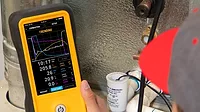
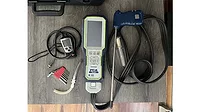
Performing Residential Combustion Analysis

A combustion test should be the first and last step of every fossil fuel appliance inspection.
[Editor’s Note: This is the first of a two-part series taking a look at combustion analysis.]
In general when performing a combustion analysis, the service tech needs to look at three things: safety, efficiency, and environment.
Combustion testing of an installed appliance should be performed both before and after servicing it. This will give the service tech information that can determine how equipment was operating before and after service. However, no combustion analysis should be considered final until the complete commissioning procedure has been performed. This would include ensuring proper air or water flow across the heat exchanger, fuel pressures, and draft.
Additionally, the tech needs to verify combustion and ventilation air by performing the ventilation air test, with all panels and/or burner covers in place. Any mechanical or operational changes made after the combustion test is performed can still affect the final combustion test results. Therefore, a combustion test should always be the first test performed at the appliance, as well as the very last test.
FOR SAFETY'S SAKE
Carbon monoxide (CO) is readily absorbed in the body, and it can impair the oxygen-carrying capacity of the blood (hemoglobin). This results in less oxygen being carried to the brain, heart, and tissues. Even short-term overexposure to CO can be critical or fatal to people with heart and lung diseases, the very young, or the elderly. It may also cause headaches and dizziness and other medical problems in healthier people.During the combustion process, a series of reactions oxidizes carbon in the fuel to form carbon dioxide (CO2). However, 100 percent conversion of carbon to CO2 is often not achieved; some carbon only oxidizes to the intermediate step, CO. This occurs in lab and field testing.
In today’s equipment, high levels of CO emissions primarily result from incomplete combustion due to lack of combustion air, ventilation air, or mechanical problems. Examples include an improper air-fuel ratio, a misaligned burner, back drafting, and improper maintenance. Proper burner maintenance, system inspections, setup, and operation (including ventilation air testing), prevent or limit the formation of CO, keeping it at an acceptable stack level.
No standards have been agreed upon for CO levels in indoor air. The U.S. National Ambient Air Quality Standards for outdoor air are 9 ppm (40,000 micrograms per meter cubed) for 8 hours, and 35 ppm for 1 hour.
You could argue that no CO (0 ppm) is the best level indoors. However, this cannot always be achieved due to smokers in the home, and/or appliances like stoves that produce acceptable levels of CO during operation. When you detect CO in the home, the source should be determined and corrective action taken. The goal is to ensure occupant safety and minimize exposure.
Consult the local jurisdiction to determine the maximum safe CO level allowed in the home before you shut down the appliance and/or make it inoperable. Keep in mind that an appliance with rising CO production should always be shut down, no matter how low CO production is at the time of testing. Rising CO problems are usually the result of improper venting or lack of combustion air.

Natural gas pressures should always be set per the manufacturer’s installation operation instructions.
AMBIENT CO AND RECOMMENDED ACTIONS
• 0-9 ppm - These are considered normal levels within the home. If there are no smokers, however, investigation is recommended. These levels are measured above ambient levels in most cases, because the CO instrument has been zeroed in outdoor air.• 10-35 ppm - Advise occupants of the level, ask them about possible symptoms (slight headache, tiredness, dizziness, nausea, or flu-like symptoms). Check all unvented and vented appliances, including the furnace, water heater, and boiler. Check for other sources, including attached garages or small engine operation.
• 36-99 ppm - Recommend fresh air; check for symptoms; ventilate the space, recommend medical attention.
• 100 ppm and higher - Evacuate the home (including yourself) and contact emergency medical services. Do not attempt to ventilate the space. Short-term exposure to these levels can cause permanent physical damage.
Equipment levels (maximum), vented equipment. (CO readings must remain stable and are measured on an air-free basis.):
• 400 ppm (coaf) stack ANSI Z 21.1.
• 100 ppm stack recommended.
Equipment levels (maximum), unvented equipment:
• 30-50 ppm stable.
• Less than 10 ppm recommended.
LIGHT-OFF LEVELS
Recently, light-off levels of CO have been addressed by some. Gas and oil appliances have no prescribed maximum CO level in order to light off. High CO levels at light off usually indicate rough or delayed ignition, which warrants further investigation. (It’s more common on direct-ignition gas appliances, but they are not considered to pose health concerns due to the low volume of CO produced; short times at this higher rate of CO production.)In general, CO readings should peak at less than 400 ppm, then drop below the prescribed level allowed in the stack. CO readings should stabilize within 10 minutes of operation, and should never rise during operation.
Note: When troubleshooting oil appliances, high CO light-off levels can indicate electrode maladjustment, nozzle, draft, or a host of other problems.
Techs should also be aware that many manufacturers of combustion testing equipment do not filter out the nitric oxide (NOx) from the equipment’s combustion gas sample. NOx is an acid gas which is a cross-interferent to all electrochemical CO sensors. (A cross-interferrent adds false CO to the reading, an amount proportional to the amount of NO present; e.g., 100 ppm of NO will show on an unfiltered CO sensor as an additional 25 to 50 ppm of CO. All Testo stack gas analyzers have replaceable NO filters that remove NOx gas from the CO sample to provide an accurate CO reading. Such filters are not important when measuring ambient CO, because NO rapidly converts to NO2 in ambient air. NO2 is not a cross-interferrent.)
Make sure your equipment is specifically designed to measure low levels of CO and incorporates an NO filter. Many combustion analyzers used for low-level CO detection have inherent error in instrumentation or the measurement process.
MECHANICAL PROBLEMS
A mechanical problem can cause higher-than-acceptable CO air-free levels, even though there is sufficient combustion/ventilation and infiltration air. Burners should be inspected for cleanliness and proper alignment. Gas pressures should be verified and set to manufacturer-specified levels; the flame should be closely examined for evidence of impingement, and the vent connector, chimney, and heat exchanger should all be inspected for corrosion, failure, and blockage.Impingement occurs when the flame hits an object that has sufficient mass, or can transfer enough heat from the flame to cause low-flame temperatures and incomplete combustion. This can be something as simple as a screw poking into the flame from the heat exchanger, or as major as a warped cell. Burners should always be carefully removed and reinserted to ensure proper placement and alignment.
Missing burner covers, improper air band adjustment on fuel oil systems, and improper manifold or oil pressures also can contribute to higher-than-normal CO levels. Too much excess air can cool the flame, lowering the flame temperature and creating higher-than-acceptable CO levels. This is one of the reasons two-stage furnaces produce slightly higher CO levels on low fire: The excess air on a two-stage appliance is often significantly higher by percentage than required for safe combustion. Higher levels of secondary air, and lower gas velocity through the burner both contribute to higher CO levels due to poor fuel and air mixing and lower flame temperatures.
On two-stage or modulating furnaces, however, this factor does not outweigh the value in comfort and efficiency gained through longer operating cycles and the elimination or reduction of short cycling; it is simply a contributing factor to slightly higher CO levels on low fire.
CO AIR TESTING
For your and your customers’ safety, do not skip this step! Before you even enter an existing home installation, check ambient CO levels and run the equipment through a complete cycle. If ambient CO levels exceed 100 ppm at any time during this test, evacuate occupants and ventilate the dwelling immediately.For lower CO levels, consult the Ambient CO Limits in the “Testo Combustion Guide,” or check with the local authority that has jurisdiction over these matters. Perform this test before you enter any home, boiler room, basement, or crawl space near an appliance.
Always verify the CO level before you enter a home, and before you zero the analyzer for a combustion test of the appliance. If you aren’t using an ambient combustion air temperature probe, the analyzer must be rezeroed with the probe in air similar in temperature to that being used for combustion if CO is present.
Publication Date: 12/17/2007
Looking for a reprint of this article?
From high-res PDFs to custom plaques, order your copy today!