ACHR News
search
Ask ACHR NEWS AI
cart
facebook twitter instagram linkedin youtube
  • Sign In
  • Subscribe
  • Sign Out
  • My Account
ACHR News
  • NEWS
    • Breaking News
    • New HVAC Products
    • Featured Products
    • Manufacturer Reports
    • HVAC Data
    • Legislation
    • ACHR NEWS Centennial
  • RESIDENTIAL
    • Air Conditioners
    • Furnaces
    • Residential Heat Pumps
    • Ductless
    • Residential IAQ
    • Testing, Monitoring, Tools
    • Components & Accessories
  • COMMERCIAL
    • Air Handlers
    • Rooftop Units
    • Chillers and Cooling Towers
    • Commercial Heat Pumps
    • Boilers and Hydronics
    • VRF/Ductless
    • Commercial IAQ
  • REFRIGERATION
    • Refrigerants
    • Refrigerant Regulations
    • Leak Management
  • CONTRACTOR PRO
    • Geothermal
    • Homeowner Study
    • VRF and VRV Ductless
    • Unitary Trends
  • EDUCATION
    • Training and Education
    • Business Management
    • Service and Maintenance
    • Continuing Education
    • Market Research >
      • HVAC Brand Awareness Report
      • VRV, VRF, VRVZ Report
      • Unitary Trends Report
      • Water Heat Professionals Report
    • Webinars
    • Sponsor Insights
    • eProducts Info
    • White Papers
  • EVENTS
    • HVAC Contractor Forum
    • Industry Events and Webinars
  • MEDIA
    • Videos
    • AHR Expo 2025 Videos
    • Podcasts >
      • ACHR News Podcast
      • HARDI Podcasts
      • AHR Expo Podcasts
      • ACCA Podcasts
    • Interactive Spotlights
    • Quizzes
    • eBooks
    • HVAC Talkback
  • HVAC GROUP
    • ACHR NEWS >
      • Current Issue
      • Digital Edition
      • Subscribe
    • Distribution Trends
    • SNIPS NEWS >
      • Join SNIPS NEWS
    • Engineered Systems News >
      • Join ES News
    • HVACR Directory
    • Contests
    • Newsletters
    • Contact
    • Advertise
    • My Account

Open BAS Assists Cost Cutting
By Ron Bernstein
September 22, 2008
An open building automation system specification defines the requirements for each aspect of the system.

Having a specification that allows for any system option and protocol leads to a more complex system, one that can be cumbersome to install, commission, and maintain. It can be compared to allowing all employees in a company to use PCs, Macs, UNIX, and Linux computers, while allowing Ethernet, ARCNET, and Token Ring as network communications media - then insisting that the IT department maintain and service all of these.

The workload would become unbearable, which is typically why IT departments pick one platform and stick with it.

Likewise, it is typically recommended to pick one common protocol for an entire building control system infrastructure and stick with it. The costs go down and the maintainability goes up. If there is a specific application or subsystem component that is not available on this standard protocol, or if there is a specific need for using an alternate, this should be justified and a gateway (protocol translator) identified and specified. However, this should be the exception, not the norm.


SYSTEM COMPONENTS

Defining a common system architecture using standard, open methods is important and more appropriate than specifying the buffet style that allows anything to be used. An open building automation system (BAS) provides interoperability where software and hardware from multiple vendors can communicate and coexist without the use of protocol converters and gateways.

A good, open BAS specification defines the requirements for each aspect of the system. When defining an open spec, it is important to remember it is more than just the protocol that needs to be specified. There are five elements that also need to be defined:

1. The infrastructure - including the protocol, routers, media type, IT connectivity, etc. All these should be specified based upon open standards, not on one vendor’s specific product. A single system infrastructure provides the benefits of a reduction in construction costs, lower lifecycle and maintenance costs, and an improvement in performance for the whole building.

2. The devices - controllers in the network that produce, consume, or manipulate data and control/monitor the system. In an open system, it is possible to use devices from different vendors because they all conform to a uniform industry standard. This means that the system is not locked into a single supplier allowing the best and most cost-effective equipment to be used. In this way, suppliers are able to concentrate on developing products, which focus on their core competency and do not have to develop a complete system.
Conversely, an integrator who is capable of working with the open protocol will be able to install a complete system selecting the most suitable products from different suppliers. This way, only one integrator is required for the entire system instead of multiple integrators, which can be expensive and cause isolation of the subsystems. An open system also makes upgrading easier and more flexible.

3. Tools - software or network management tools that configure, commission, and maintain the system. The tools on the system need to be able to coexist. Device configuration plug-ins (modules) have been developed to allow the use of any standard network management tool. This allows vendors to configure their devices with an open tool, so users are free to use tools from any vendor they choose.

4. Graphical user interfaces - typically the visualization tools that the user or controls manager uses to obtain a view into the system. User interfaces allow control, monitoring, reporting, alarming, scheduling, and diagnostics. An operator workstation (user interface) affords the means to efficiently and effectively manage operations, as well as display and print a graphical representation of the control network.
A user interface provides the same look and feel for monitoring and control regardless of which vendor’s system or subsystem an operator is viewing. As a result, system operators need only become proficient with one user interface.

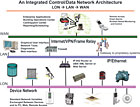
5. Enterprise connectivity - the method for connecting the building control network into the data network, known as the LON-LAN-WAN architecture. This ensures that the control system becomes an element of all the data sources available to the enterprise. Open interfaces have been developed to ensure data communication between the LON and LAN is accessible by a vendor. To provide this connectivity, enterprise-level infrastructure devices are needed, and they must be specified as open. Standard routers are used, which means no gateways are required.


OPEN COMMUNICATION

With this information in mind, it is often strongly suggested that contractors limit the main system specification to just one methodology for communication. To ensure a truly open system, all five system elements must be open.

Each element must be interoperable, and all training and servicing also must be specified as open; in other words, not locked into one system service provider.

Following this strategy can help reduce costs, improve flexibility and choice of products, provide the option for choosing the best system integrator, and allow for open bidding on both the initial installation and the long-term service contract.

For more information, visit www.lonmark.org.

Publication Date: 09/22/2008

Share This Story

Looking for a reprint of this article?
From high-res PDFs to custom plaques, order your copy today!


Ron Bernstein is the executive director for LonMark International, a non-profit, mutual-benefit trade association with close to 600 members worldwide, and local affiliates in the Americas, Asia, and Europe. For more information, visit www.lonmark.org.

Recommended Content

JOIN TODAY
To unlock your recommendations.

Already have an account? Sign In

  • HVAC-enrollment

    The Trades Are Back: HVACR Programs See Nearly 30% Enrollment Spike

    A new wave of future technicians is entering the pipeline.  
    Training and Education
    By: Matt Jachman
  • 2025 Top 40 Under 40

    2025 Top 40 Under 40 HVACR Professionals List

    The 11th annual Top 40 Under 40 list highlights those...
    HVAC Contracting
    By: Hannah Belloli-Oster
  • LG Ductless Mini-Split Systems

    The 9 Types of Heat Pumps

    As the U.S. moves toward electrification, heat pumps are...
    Air Source Heat Pumps
    By: Joanna R. Turpin
Subscription Center
  • Create an Account
  • Start a Subscription
  • Manage My Account
  • Sign Up for Newsletters
  • Visit Customer Service
  • Update Preferences

More Videos

Sponsored Content

Sponsored Content is a special paid section where industry companies provide high quality, objective, non-commercial content around topics of interest to The News audience. All Sponsored Content is supplied by the advertising company and any opinions expressed in this article are those of the author and not necessarily reflect the views of The News or its parent company, BNP Media. Interested in participating in our Sponsored Content section? Contact your local rep!

close
  • Piggy Bank
    Sponsored byWatercress Financial

    Energy Prices, Inflation, and HVAC: What Today’s Homeowners Care About

  • Refrigerated Food
    Sponsored bySolstice Advanced Materials

    R-455A Refrigeration: A Cold Storage Solution for the Future

  • Airex Rooftop Units
    Sponsored byAirex Manufacturing Inc

    Consolidating Roof Penetrations: A Growing Trend in Multifamily HVAC Design

Popular Stories

HVAC-Price-Increase-graphic

HVAC Price Increase List: June 2026

Trump-Section-232.jpg

Trump Reduces Section 232 Tariffs on HVAC Equipment to 15%

R410A-Refrigerant-Cylinder.jpg

Refrigerant Recovery is a Revenue Opportunity

Heat-pump-cutaway.jpg

PFAS Rules and A2L Building Codes Continue to Evolve

Kroger.jpg

Kroger to Spend $100 Million to Reduce Refrigerant Leaks

View The ACHR NEWS
Centennial Anniversary Timeline

The ACHR News Timeline Chart
Submit a Letter
Submit a letter to our editors.

Events

November 6, 2025

Next-Gen Data Center Cooling: HVAC Innovation and Real-World Solutions

On Demand As AI workloads and high-density computing push traditional cooling methods to their limits, the data center industry is accelerating the adoption of next-generation HVAC technologies.

June 17, 2026

Decarbonization Without Disruption

This webinar will explore practical HVAC decarbonization strategies that minimize disruption while maximizing long-term performance and ROI.

View All Submit An Event

Poll

Summer Staff

Are you fully staffed for the summer season?
View Results Poll Archive

Products

BNI Mechanical/Electrical Square Foot Costbook, 2026 Edition

BNI Mechanical/Electrical Square Foot Costbook, 2026 Edition

See More Products
Decarbonization Without Disruption - Free Webinar - 6/17/2026

Related Articles

  • Open BAS Protocol: On a Mission with a Vision

    See More
  • How an Open Building Automation System Cuts Costs, Increases Flexibility

    See More
  • BAS: Inclusive Open Data-Driven Reinvention

    BAS: Inclusive Open Data-Driven Reinvention

    See More

Related Products

See More Products
  • air came to a stop.jpg

    The Air Came to a Stop

See More Products

Events

View AllSubmit An Event
  • November 19, 2025

    Balance Cost and Efficiency with Self-contained Systems

    On Demand Discover the newest advancements in self-contained systems, including new technologies and design improvements. We will delve into the principles and applications of self-contained Variable Air Volume (VAV) system design, highlighting their benefits and implementation strategies.
View AllSubmit An Event
×

Sign Up. Stay Informed.

The #1 trusted source for the HVACR industry since 1926

SUBSCRIBE
  • RESOURCES
    • Advertise
    • Contact Us
    • Advisory Board
    • Classifieds
    • Submit a Letter
    • Directories
    • Store
  • ACCOUNT CENTER
    • Create an Account
    • Start a Subscription
    • Manage My Account
    • Sign Up for Newsletters
    • Visit Customer Service
    • Update Preferences
  • SERVICES
    • Marketing Services
    • Reprints
    • Market Research
    • List Rental
    • Survey/Respondent Access
  • STAY CONNECTED
    • LinkedIn
    • Facebook
    • Instagram
    • YouTube
    • X (Twitter)
  • PRIVACY
    • PRIVACY POLICY
    • TERMS & CONDITIONS
    • DO NOT SELL MY PERSONAL INFORMATION
    • PRIVACY REQUEST
    • ACCESSIBILITY

Copyright ©2026. All Rights Reserved BNP Media, Inc. and BNP Media II, LLC.

Design, CMS, Hosting & Web Development :: ePublishing