Contamination Could Equal Burnout
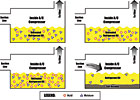
Additives are available designed to neutralize excess acid in a system.
“Ignoring mineral oil and other residual contaminants during a R-22 to R-410A refrigeration system conversion will likely result in a compressor burnout,” said Robert P. Scaringe P.E., the president of Rockledge, Fla.-based Mainstream Engineering. His comments were made to an audience for which such advice is especially important - members of the Refrigeration Service Engineers Society, who are, for the most part, hands-on service technicians and contractors.
Scaringe’s talk came during a seminar called “Don’t Treat Today’s Refrigeration/AC Systems with Yesterday’s Techniques,” at the RSES International Conference this past fall in San Antonio, Texas.
Scaringe outlined two key maintenance points in the session, and he said both can be resolved with proper flushing methodology and preventative maintenance:
1. Mineral acids that can cause problems in HFC systems and need to be removed properly; and
2. HFC/POE systems that need flushing during operation to remove moisture that can accelerate the conversion of oil to precipitates and sludge.
Some skeptics don’t believe inorganic mineral acids can burn out a HFC system conversion because they use synthetic oil instead of mineral oil. However Scaringe, whose firm regularly performs laboratory tests on equipment as part of its HVACR research and development work for NASA and the U.S. military, brought recent test results showing that HFC system corrosive acid burnouts can happen if HCFC-mineral oil (inorganic oil) impurities remain from prior HCFC-mineral oil operations in the same system.
In one experiment, Mainstream took two identical new hermetic compressor HFC-POE systems and put them through rigorous testing. One system was converted to R-22-mineral oil and then converted back to R-410A-POE. Traces of mineral oil were left in the system after Mainstream researchers performed typical preventative maintenance comparable to what most service techs do in the field - diluting the mineral oil out of the system by filling and draining the system with POE oil several times. “You can’t totally eliminate all mineral oil with the dilutions method,” Scaringe said.
The experiment included removing the thermal overload interrupter and operating the system under extremely hot, overloaded conditions. The system that had been exposed to mineral oil failed after just over one hour’s operation. The failure was a classic mineral acid burnout that destroyed the motor windings, according to Scaringe.
The second system remained an HFC-POE system and was not converted (never exposed to mineral oil), but operated under the same overloaded conditions. It ran for more than 3,000 hours and eventually failed not from a classic burnout, but because the oil eventually increased in viscosity and turned into sludge, which caused a compressor seizure due to a lack of lubrication.
Although there is no hard data to support it yet, Scaringe suspects hundreds and maybe thousands of HCFC to HFC-POE (typically R-22 to R-410A) conversions have failed because service technicians haven’t flushed the existing line sets thoroughly of residual mineral oil. Air-handling coils, condensers, and line sets are typically replaced during conversions. However it’s not always economical or even possible to replace line sets when they are buried under slabs and/or inside walls. Typically these line sets are reused with the new R-410A components. It’s also not feasible to change line sets in many commercial applications such as supermarkets and restaurants where line sets are typically dozens of feet long and inaccessible, Scaringe said.
The problem, he said, comes down to proper line set flushing methods, which are totally different than those used with HCFC and CFC refrigerant systems, he said.
Since the dilution method is ineffective, some service techs use special products specifically designed for flushing.
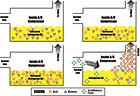
Flushing agents remove oil and sludge from a system.
MILITARY USE
Through its work with the U.S. Air Force, Scaringe said Mainstream is now marketing a non-toxic, biodegradable and non-flammable product, Qwik-11™ that was originally developed to flush out oxygen breathing systems on fighter jets. The U.S. Air Force banned R-11 and R-113-based flushes it used previously because of their potentially harmful effects to pilots and the environment. It then contracted Mainstream to develop a safer product. Scaringe said the new patent-pending product works well in its second life as a refrigeration system flush because it easily eliminates contaminants such as residual mineral oil, acid, moisture and other impurities without harming the environment or the technician applying it.Before any flushing agents are used, Scaringe recommended blowing lines out with nitrogen, which presents a cleaner beginning for the flushing agent. The nitrogen must also be used later during brazing to eliminate the introduction of new contaminants during the brazing process. “If you don’t carry nitrogen on your trucks, you should start because that’s part of this new age of service work methods,” Scaringe said.
Before applying the flushing agent, Scaringe also recommended putting fittings on the indoor openings of the line set (or using a connection tool that comes optional with the flush product), crimping the outdoor ends to create some resistance, then connecting the pressurized flushing agent container to the line set for the procedure. Although the flushing agent is non-toxic and biodegradable, the oil, sludge and other junk that is flushed out of the system should be captured and disposed with waste refrigerant oil. A used milk jug at the outdoor ends of the line set makes a good receptacle.
Besides the urgency for line set flushing on conversions, Scaringe also emphasized the importance of eliminating both moisture and oxygen - two items that weren’t as critical in CFC and HCFC systems - from today’s HFC/POE systems.
Consequently, another flushing taboo is the use of water-based flushing agents. “POE has an affinity for water, so the last thing you want to do is introduce water to the system,” said Scaringe. “Moisture wasn’t a problem in CFC and HCFC systems because mineral oil can only hold 25 parts per million (ppm). Conversely, POE, PVE and PAG oils hold 100 times or more water at 2,500, 6,500 and 10,000 ppm, respectively.”
Moisture and acid can combine to create sludge inside the HFC system that eventually locks up the compressor. Add to the fact that there may be contaminants left over from the manufacturing process, phosphates added to many HFC refrigerants for lubrication reasons, and general additives previous service techs might have injected in the system, then today’s systems have a good chance of failing from sludge build-up, according to Scaringe.
For example, Scaringe warned that additives designed to neutralize excess acid typically leave a residue that can multiply and eventually affect the system. Instead of neutralizing, he recommended products that transport acid and moisture into the filter-drier.
“When acid is in the system, it’s a race,” explained Scaringe, who originally developed the vaporizing moisture/acid flush, QwikShot®, for heat pumps on NASA’s future lunar outpost’s vehicles where system failure is not an option.
“How fast can the acid reach the motor windings versus how fast the acid is removed? If there’s nothing to remove the acid, the race has a sure winner - acid. But if an acid remover is present in the system, then both the acid and the water is transferred into the filter-drier and captured before it can damage the system.”
In the conclusion of his RSES address, Scaringe confirmed the focus of the session. “Today’s refrigeration service business requires decidedly different techniques and maintenance methods. You can’t treat these new HFC-POE systems like the systems of 15 years ago,” Scaringe said. “If you do, they will fail.”
Publication Date: 01/14/2008
Looking for a reprint of this article?
From high-res PDFs to custom plaques, order your copy today!