ACHR News
search
Ask ACHR NEWS AI
cart
facebook twitter instagram linkedin youtube
  • Sign In
  • Subscribe
  • Sign Out
  • My Account
ACHR News
  • NEWS
    • Breaking News
    • New HVAC Products
    • Featured Products
    • Manufacturer Reports
    • HVAC Data
    • Legislation
    • ACHR NEWS Centennial
  • RESIDENTIAL
    • Air Conditioners
    • Furnaces
    • Residential Heat Pumps
    • Ductless
    • Residential IAQ
    • Testing, Monitoring, Tools
    • Components & Accessories
  • COMMERCIAL
    • Air Handlers
    • Rooftop Units
    • Chillers and Cooling Towers
    • Commercial Heat Pumps
    • Boilers and Hydronics
    • VRF/Ductless
    • Commercial IAQ
  • REFRIGERATION
    • Refrigerants
    • Refrigerant Regulations
    • Leak Management
  • CONTRACTOR PRO
    • Geothermal
    • Homeowner Study
    • VRF and VRV Ductless
    • Unitary Trends
  • EDUCATION
    • Training and Education
    • Business Management
    • Service and Maintenance
    • Continuing Education
    • Market Research >
      • HVAC Brand Awareness Report
      • VRV, VRF, VRVZ Report
      • Unitary Trends Report
      • Water Heat Professionals Report
    • Webinars
    • Sponsor Insights
    • eProducts Info
    • White Papers
  • EVENTS
    • HVAC Contractor Forum
    • Industry Events and Webinars
  • MEDIA
    • Videos
    • AHR Expo 2025 Videos
    • Podcasts >
      • ACHR News Podcast
      • HARDI Podcasts
      • AHR Expo Podcasts
      • ACCA Podcasts
    • Interactive Spotlights
    • Quizzes
    • eBooks
    • HVAC Talkback
  • HVAC GROUP
    • ACHR NEWS >
      • Current Issue
      • Digital Edition
      • Subscribe
    • Distribution Trends
    • SNIPS NEWS >
      • Join SNIPS NEWS
    • Engineered Systems News >
      • Join ES News
    • HVACR Directory
    • Contests
    • Newsletters
    • Contact
    • Advertise
    • My Account

So Many TXVs to Troubleshoot
By Barbara A. Checket-Hanks
May 22, 2006
Many expansion valves are returned to their manufacturers due to a perceived malfunction, but in reality the problem is in the system, not the valve.
The move to higher-efficiency unitary systems has caused, among other things, a veritable explosion in the use of thermal expansion valves (TXVs/TEVs) in the residential-light commercial market. They have been applied in higher-end unitary systems for some time, but now TXVs are in almost every new system trying to squeeze out higher efficiency.

In the case of heat pumps, there may be two TXVs to be concerned with, one indoors and one outdoors. Many that are returned to the manufacturer have nothing wrong with them. This fact eventually leads to callbacks for the service contractor because the problem that caused the customer to call in the first place will recur.

"On heat pumps, a lot of the OEMs have been using TXVs on the outdoor coil and a cap tube or orifice valve on the indoor side," said Al Maier, vice president of application engineering, Flow Controls, Emerson. "Now there are TXVs on both the outdoor and the indoor coils."

"On the indoor unit, in heating mode, there is a check valve in the valve that opens," explained Jan Holm, application engineering manager, Danfoss. "It's only operating as a pipe, not as a valve. In the cooling mode only, it works as a valve."

"We get valves back from the field where somebody thought it was defective, but more than half are not defective," Maier said. "People do not properly troubleshoot expansion valves. It's an area that needs to be focused on."

THE TXV'S OPERATION

In order to understand how misdiagnoses happen, it is important to understand how a TXV operates.

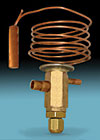
According to Sporlan, "A sensing valve is connected to the TEV by a length of capillary tubing which transmits bulb pressure to the top of the valve's diaphragm." Liquid refrigerant applies pressure to the diaphragm; this, in turn, actuates a mechanism that causes the valve to open to a preset degree. When the pressure backs off, the valve closes.

If there isn't enough pressure in that suction line leading up to the diaphragm, the valve either won't open enough, or may not open at all. To a technician in a hurry, it could look like the TXV is malfunctioning, but it isn't. It's a symptom of a problem somewhere else in the system.

"In order for a TXV to work properly, you've got to have liquid going to the valve," Maier said. If the line contains too much vapor, that could be causing the valve's malfunction. "The only way to properly evaluate it is to calculate superheat.

Looking for quick answers on air conditioning, heating and refrigeration topics? Try Ask ACHR NEWS, our new smart AI search tool. Ask ACHR NEWS →

"Look at the pressure and temperature of liquid going to the valve," he said. "You take the pressure and convert it to a temperature, then subtract; 5°F of subcooling is safe for R-410A - you need solid liquid going to the valve, not a lot of vapor."

"Of course, make sure that the valve has solid liquid in front of it," said Holm. "You need subcooled refrigerant in front of the TXV. If it's vapor, or there's not enough subcooling, or flashing, the valves don't have any possibility of opening enough to supply the evaporator with enough refrigerant."

That lack of refrigerant in the evaporator is typically what prompts customers to call a contractor. Their house isn't being cooled down.
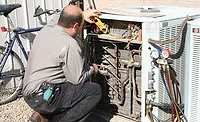
Liquid must be going to the TXV in order for the valve to work properly. If the line contains too much vapor, that could be causing the valve’s apparent malfunction.

THE SERVICE CALL

When there isn't enough refrigerant flowing to the evaporator, it can't carry away enough heat from the system. The system may keep running without satisfying the thermostat ... or the homeowner.

"Say the heat pump isn't cooling sufficiently," Maier said. "If the technician is busy, he may only measure the suction pressure, which will not give him a complete picture. If I were servicing the system, I would put a set of gauges on it.

"The TXV could be starving. It could be an undercharge or some sort of restriction in the liquid line, like a kink in the refrigerant tubing or a clogged filter-drier.

"You measure the suction pressure at the outlet of the evaporator coil, and the temperature at the same point," he reiterated. "Look up that corresponding pressure on a pressure-temperature chart. The difference between that and the actual pressure is the superheat."

"People do not properly troubleshoot expansion valves," agreed Holm. "The real problem could be a leak in the system. As more refrigerant goes out of the system, when you reach a certain point, you don't have solid liquid in front of it [the TXV] because you can't subcool the refrigerant. It could also be that if there is a filter installed in front of the TXV; if that is plugged up, it may not allow enough refrigerant to the valve."

Holm continued, "Many times when they [service technicians] analyze the system, the conclusion is that the TXV is the problem. But many times it's due to the charge. So when they replace the valve, they have to recharge the system so that it has enough refrigerant. It works, so it looks like you fixed the problem by replacing the TXV."

Unfortunately, the problem still exists out in the system. And it may lead to a callback, or a call to your competitor.
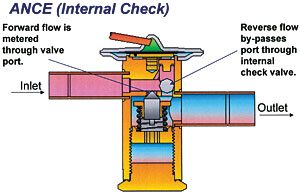
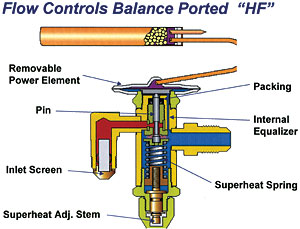
Basic operation of an Emerson thermal expansion valve; understanding this type of valve’s operation is critical to accurately troubleshooting today’s unitary heat pump and air conditioners.

TXV TROUBLESHOOTING TIPS

In addition to checking superheat and subcooling, Maier and Holm agreed that technicians must verify that the valve is properly attached to the suction line. "The problem could be the bolt, which must have good contact to the suction line," Holm said.

"The temperature is sensed by the bulb, which is strapped to the suction line attached to the coil," said Maier. "That's what senses the temperature, transmits the temperature to the power element, which opens the valve. Making sure that the bulb is tightly attached at the proper position on the suction line is something that could be easily overlooked."

Maier also said that the bulb can be "a handy tool to verify that the valve is working properly. For example, in a case where somebody thinks the valve isn't feeding properly, you would detach the bulb and hold it in your hand. If your hand is warmer than the bulb, you should see the suction pressure go up." This is simply a good check to see if the valve is working or not.

"If the valve does not respond to holding it in your hand, it's a good indication that the valve has lost its charge," he said. The power element of the valve, which opens and closes it, has its own charge of nitrogen or another inert gas. "If it has escaped, the valve will not function."

Losing the charge can be due to many things, Holm said, "like dirt in the system making its way into the diaphragm of the valve body. It makes a hole in the diaphragm and it leaks." It doesn't take a very big hole for the valve to lose its entire charge, he said.

"When we do have valves that come back and they aren't working properly, we find that they're full of dirt and gunk and garbage," said Maier. "You need to have a good filter-drier on the system and perform proper evacuation."
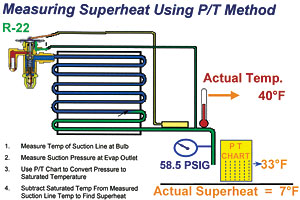
To properly evaluate expansion valve operation, a service tech needs to be able to calculate subcooling. If the subcooling is too high, there may not be enough liquid refrigerant in the line leading to the valve.

INSTALLATION TIPS

This is especially true for the POE oils used with R-410A. "POEs are a much better solvent than mineral oil," Maier said.

"You need to do a better job of evacuating, getting moisture out, and making sure the system is clean and free of contaminants. Put in a filter-drier, not just a drier. On R-410A systems, it becomes mandatory that technicians replace the filter-drier when they break into that system for any reason at all."

When it comes to installing a new TXV, "There are things that you need to be aware of," said Holm. "Normally when technicians install a valve, they cut the pipes, put the valve in, and put everything together. With TXVs, they must place a wet rag on the valve when they weld the pipes. If they're not wet ragging, too much heat around the power head and brass body can cause failure.

"Let's say they sweat it in without wet ragging," he said; "the orifice may be incapable of changing the stroke, and the system won't perform as it should.

"Weld the cover pipe on the inlet, and then the outlet, depending on what valve you have," said Holm. "If the contractor is using our TU stainless steel valve, he doesn't need to wet rag. It saves a little time, makes the job a lot easier, and it prevents him from putting water into the system."

Like Superman, TXVs do have one weakness, Maier said. "It's where the cap tube attaches to the top of the power element. The braze where the capillary tube attaches is a common area where a crack or leak can develop. Take care in handling the capillary tube. Don't apply force where the cap tube joins the power element."

Publication date: 05/22/2006

Share This Story

Looking for a reprint of this article?
From high-res PDFs to custom plaques, order your copy today!


Barbara Checket-Hanks is Service & Maintenance Editor. E-mail her at barbarachecket-hanks@achrnews.com.

Recommended Content

JOIN TODAY
To unlock your recommendations.

Already have an account? Sign In

  • HVAC-enrollment

    The Trades Are Back: HVACR Programs See Nearly 30% Enrollment Spike

    A new wave of future technicians is entering the pipeline.  
    Training and Education
    By: Matt Jachman
  • 2025 Top 40 Under 40

    2025 Top 40 Under 40 HVACR Professionals List

    The 11th annual Top 40 Under 40 list highlights those...
    News
    By: Hannah Belloli-Oster
  • LG Ductless Mini-Split Systems

    The 9 Types of Heat Pumps

    As the U.S. moves toward electrification, heat pumps are...
    Air Source Heat Pumps
    By: Joanna R. Turpin
Subscription Center
  • Create an Account
  • Start a Subscription
  • Manage My Account
  • Sign Up for Newsletters
  • Visit Customer Service
  • Update Preferences

More Videos

Sponsored Content

Sponsored Content is a special paid section where industry companies provide high quality, objective, non-commercial content around topics of interest to The News audience. All Sponsored Content is supplied by the advertising company and any opinions expressed in this article are those of the author and not necessarily reflect the views of The News or its parent company, BNP Media. Interested in participating in our Sponsored Content section? Contact your local rep!

close
  • Piggy Bank
    Sponsored byWatercress Financial

    Energy Prices, Inflation, and HVAC: What Today’s Homeowners Care About

  • Refrigerated Food
    Sponsored bySolstice Advanced Materials

    R-455A Refrigeration: A Cold Storage Solution for the Future

  • Airex Rooftop Units
    Sponsored byAirex Manufacturing Inc

    Consolidating Roof Penetrations: A Growing Trend in Multifamily HVAC Design

Popular Stories

Outdoor-condensing-units.jpg

EPA Removes R-410A Installation Deadline

Trump-Section-232.jpg

Trump Reduces Section 232 Tariffs on HVAC Equipment to 15%

cooling-habits.jpg

50 Percent of Americans Have Skipped HVAC Maintenance

ACHR NEWS Editor Chris Gray Presenting HVAC Minute 5-18-2026

HVAC Manufacturers Fight Pricing Lawsuits

tim-brooks.jpeg

2026’s Best Distributor Partners With Customers

View The ACHR NEWS
Centennial Anniversary Timeline

The ACHR News Timeline Chart
Submit a Letter
Submit a letter to our editors.

Events

November 6, 2025

Next-Gen Data Center Cooling: HVAC Innovation and Real-World Solutions

On Demand As AI workloads and high-density computing push traditional cooling methods to their limits, the data center industry is accelerating the adoption of next-generation HVAC technologies.

June 9, 2026

Before You Go All In on AI: Set Up Your Business to Actually Win

In this webinar, we'll walk you through exactly what to get in place before you add AI to your business. You'll leave with a clear picture of where you stand today and a practical action plan to set yourself up for real results.

View All Submit An Event

Poll

EPA Decision

Are you happy the EPA decided contractors can continue to install R-410A equipment?
View Results Poll Archive

Products

BNI Mechanical/Electrical Square Foot Costbook, 2026 Edition

BNI Mechanical/Electrical Square Foot Costbook, 2026 Edition

See More Products
A2L Refrigerants - Free Webinar - May 21, 2026

Related Articles

  • Learn How To Troubleshoot Microprocessors

    See More
  • How to Troubleshoot Air Conditioning Systems - The ACHR News

    How to Troubleshoot Air Conditioning Systems

    See More
  • So many problems, but there are solutions

    See More

Related Products

See More Products
  • Using Schematic Diagrams to Troubleshoot HVAC/R Electrical Circuits

  • The ACHR News - February 2, 2026

    ACHR NEWS February 2, 2026, Issue

See More Products

Events

View AllSubmit An Event
  • April 14, 2026

    Inside HVAC Lending: What Contractors Need to Know to Close More Sales

    On Demand From this webinar, attendees will learn how to use financing as a strategic sales tool for growth in a repair market. 
View AllSubmit An Event

Related Directories

  • Alliance to Save Energy

    Coalition of business, government, environmental, consumer leaders promoting the efficient and clean use of energy worldwide to benefit consumers, the environment, the economy, national security.
  • A to Z Sales & Marketing

    We strive to revolutionize indoor living through innovative solutions that improve air quality, enhance comfort, and promote sustainable living for people around the world.
×

Sign Up. Stay Informed.

The #1 trusted source for the HVACR industry since 1926

SUBSCRIBE
  • RESOURCES
    • Advertise
    • Contact Us
    • Advisory Board
    • Classifieds
    • Submit a Letter
    • Directories
    • Store
  • ACCOUNT CENTER
    • Create an Account
    • Start a Subscription
    • Manage My Account
    • Sign Up for Newsletters
    • Visit Customer Service
    • Update Preferences
  • SERVICES
    • Marketing Services
    • Reprints
    • Market Research
    • List Rental
    • Survey/Respondent Access
  • STAY CONNECTED
    • LinkedIn
    • Facebook
    • Instagram
    • YouTube
    • X (Twitter)
  • PRIVACY
    • PRIVACY POLICY
    • TERMS & CONDITIONS
    • DO NOT SELL MY PERSONAL INFORMATION
    • PRIVACY REQUEST
    • ACCESSIBILITY

Copyright ©2026. All Rights Reserved BNP Media, Inc. and BNP Media II, LLC.

Design, CMS, Hosting & Web Development :: ePublishing