Turning Condensate Loss into a Systemwide Steam Efficiency Opportunity
How APM Steam helped Atrium Health Cabarrus uncover hidden steam system inefficiencies and build an actionable repair plan
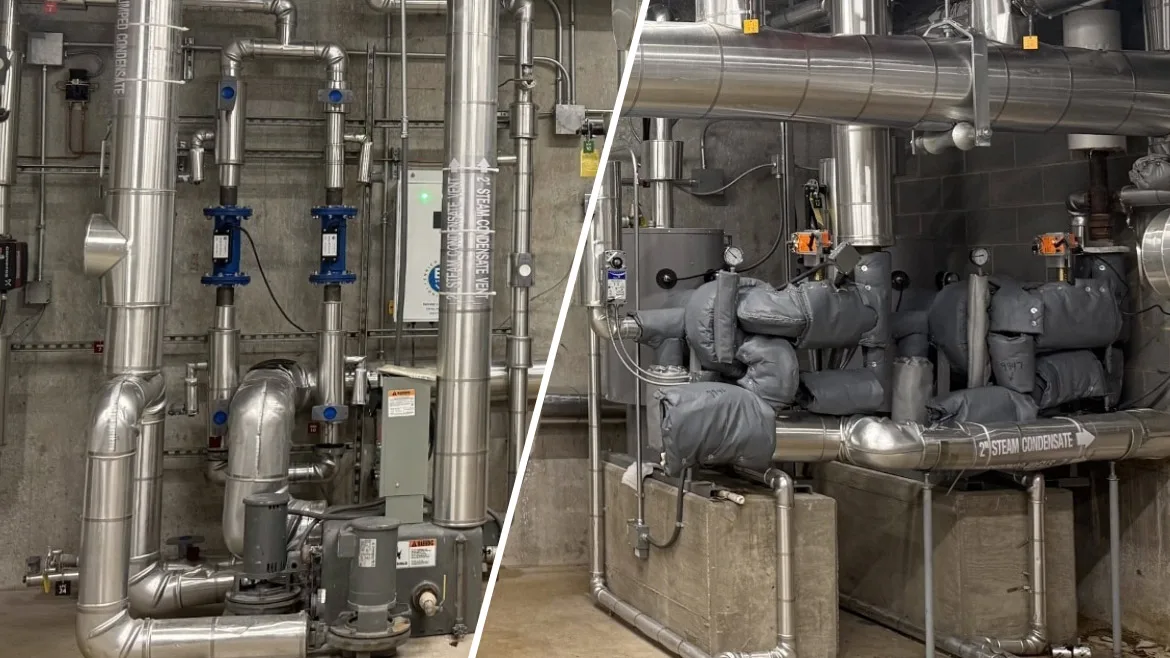
CONDENSE: From left: Condensate return equipment helps recover valuable heat and treated water in steam systems; upgraded insulation reduces heat loss and boosts overall energy savings.
In a hospital, steam does much of its work out of sight. It moves behind walls, above ceilings, and through mechanical rooms, supporting essential functions like heating, humidification, sterilization, hot water, and foodservice. As buildings expand, undergo renovations, and are reconfigured for new needs, the steam system is often asked to serve conditions it was not originally designed for. Even in well-maintained facilities, that gradual evolution can create hidden inefficiencies as equipment ages, operating pressures change, staff turns over, and original system assumptions no longer match the way the campus functions today.
At Atrium Health Cabarrus, a comprehensive steam system assessment revealed how these realities can affect both day-to-day maintenance and long-term energy performance. The facility partnered with APM Steam to evaluate the health of its steam distribution system, with particular attention to condensate recovery and the performance of 22 condensate return units. What began as a focused look at recurring condensate return challenges ultimately became a broader opportunity to identify energy waste, operational risks, and repair priorities across steam traps, heat exchangers, pressure reducing valves, insulation, and condensate return equipment.
Tom Grosso, Manager of Facilities Operations at Atrium Health Cabarrus, outlined several challenges the facility was facing: “We knew we had some faulty steam traps that were allowing steam into our condensate return tanks. At the same time, we were experiencing issues with condensate pump seals burning out and our return tanks having pressure problems. Additionally, some of our instantaneous water heaters were showing a high failure rate in their steam control valves.”
The resulting repair package projected approximately $144,949 in annual energy savings, including $10,300 tied directly to condensate return improvements, with a total projected reduction of 79,177 therms across the proposed scope of work.
The Challenge: Recurring Condensate Issues in a Complex Healthcare Environment
Condensate is one of the most valuable resources in a steam system because it contains both recoverable heat energy and treated water. When it returns to the boiler, the system avoids starting over with colder makeup water that must be chemically treated and reheated. In a large healthcare environment, even small failures in that recovery process can become costly over time.
At Atrium Health Cabarrus, condensate return challenges pointed to a larger system health issue. APM Steam’s assessment found signs of energy and water loss, missing or improperly installed components such as flow control valves and pressure gauges, pumps operating outside ideal conditions, audible cavitation, and failed units that were no longer supporting efficient recovery.
These issues can be easy to miss because they do not always create an immediate shutdown. A struggling condensate return unit may allow the hospital to keep operating, but it can quietly shift the system into a more wasteful mode by increasing fuel, water, and chemical treatment demand. In some environments, excessive discharge temperatures can also create compliance concerns with local limits.
For facilities teams, this creates a difficult maintenance reality. The problem may appear as a pump issue, a seal failure, a noisy line, or a recurring emergency repair. But the real cause may sit elsewhere in the system. Steam trap failures, pressure issues, incorrect component settings, or equipment that is no longer operating according to its original specifications can all contribute to premature wear and energy waste. Without a broader system assessment, a facility may continue replacing failed components without addressing the underlying conditions that caused them to fail.
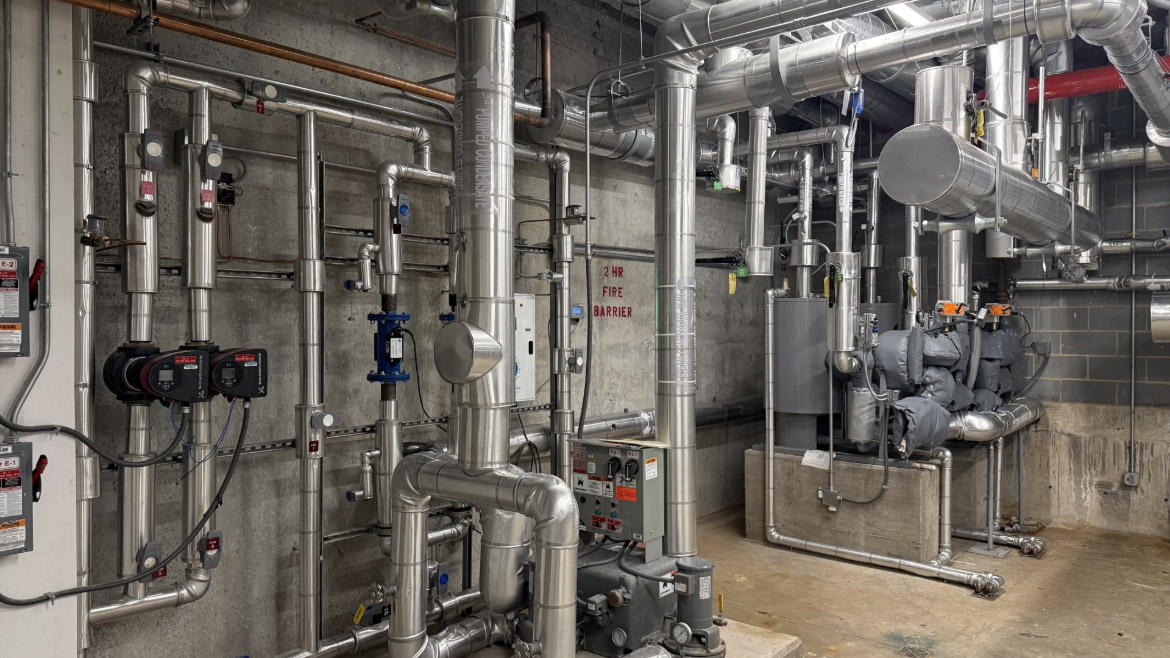
RETURN: Condensate return equipment and improved insulation work together to recover heat and save energy throughout the steam system. (Courtesy of APM Steam)
The Assessment: Looking Beyond One Component at a Time
APM Steam’s work at Atrium Health Cabarrus focused on the broader health of the steam distribution system, not just the individual pieces of equipment that appeared to be causing trouble. Technicians assessed steam traps, heat exchangers, pressure reducing valves, condensate return units, and insulation heat loss to build a more complete picture of where the system was losing energy and where repairs would have the greatest impact.
That broader view was essential because healthcare steam systems often evolve significantly over time. Atrium Health Cabarrus had undergone changes in boiler plant configuration over the years. As the facility moved toward a more centralized boiler plant approach, some downstream pressure requirements had not been fully re-evaluated. In practice, that meant some components were still configured around older system conditions rather than the current operating reality of the campus.
This is a common challenge in large institutional facilities. A valve, pump, or pressure setting may have been appropriate when it was installed, but after facility shifts, that same configuration may no longer support efficient operation. Facility staff may inherit systems with incomplete documentation, hidden components above ceilings, or equipment that has been modified by multiple contractors over many years. Even highly capable in-house teams can struggle to investigate every steam system detail while also responding to the daily demands of a healthcare campus.
“We would typically do a steam trap survey every two to three years and just replace whatever traps were found that were bad,” said Grosso. “But this assessment brought several items to our attention that we didn’t really know about, including some of our steam PRV stations that were actually incorrectly sized.”
APM Steam’s assessment process helped identify these kinds of mismatches. Just as importantly, they translated those findings into an actionable plan that facility leaders could use to prioritize repairs, understand projected savings, and connect boiler room issues to broader operational and financial outcomes.
The Solution: A Bundled Repair Plan Built Around System Performance
Rather than treating each issue as a separate maintenance task, APM Steam developed a bundled scope of work that addressed the interconnected nature of the steam system. The proposed package included steam trap repairs, custom insulation jackets, trap insulation jackets, heat exchanger cleanings, heat exchanger isolation valve replacements, PRV repair, and condensate return unit improvements. The condensate return portion of the project centered on improving the facility’s ability to collect and return condensate to the boiler system. An electric condensate return unit was identified as part of the targeted solution, with the goal of helping the system overcome pressure and elevation limitations, restore balance, and reduce avoidable losses.
“We really didn’t expect to learn so much about our system and the ways we could improve the overall performance with relatively minor repairs. We’re especially looking forward to properly sizing the PRV stations and upgrading the condensate return tanks, which should deliver immediate payback. Every bit of condensate we can return to the steam plant without hard water infiltration directly improves efficiency and reduces energy consumption. That’s the real highlight for us.”
This approach reflects a key principle of steam system management: the best repair is often not the most isolated repair. A condensate return pump may fail prematurely because it is operating against the wrong conditions. A heat exchanger may appear to be the problem when downstream piping or valve issues are contributing to repeated failures. Steam traps may create losses that show up elsewhere in the system. Insulation gaps may not seem urgent individually, but across a large facility, they can contribute to meaningful heat loss and unnecessary fuel use.
By evaluating these components together, APM Steam was able to create a repair plan that connected technical findings to financial impact. According to the executive repair summary, the project anticipates a total annual energy savings of $144,949 and an estimated payback period of 2.56 years.
That bundled model also offered an operational benefit. Instead of handing the facility a dense engineering report with limited practical next steps, APM Steam packaged findings in a way that could be acted on. The facility could see what needed to be repaired, why each repair mattered, what it would cost, and how much energy savings each measure was expected to produce.
The Results: Measurable Savings Opportunities and a Clearer Maintenance Path
The assessment at Atrium Health Cabarrus identified significant savings opportunities across the steam system. The condensate return unit scope alone was projected to save over $10,000 annually and 6,600 therms per year. Larger savings were also identified through steam trap repairs, heat exchanger cleanings, PRV repair, and insulation improvements. Steam trap repairs represented the largest single projected annual savings category at $48,869, while heat exchanger cleanings accounted for $28,936 and custom insulation jackets accounted for $22,778.
Taken together, the proposed work showed how a systemwide assessment can uncover value that may not be visible when a facility looks only at the most urgent repair. A leaking seal or failing pump may trigger the service call, but a deeper evaluation can reveal overlooked components that all affect system performance.
The assessment also created value beyond the projected energy savings. During the process, APM Steam shared observations with the facility team, pointing out what technicians were looking for and why certain findings mattered. That educational component is especially important in healthcare environments, where steam expertise is increasingly difficult to replace as experienced tradespeople retire. By helping facility staff recognize issues, the assessment supported stronger internal awareness as well as better long-term maintenance planning.
“We learned a lot of things from this assessment that we didn’t know we didn’t know,” Tom explained. “The expertise APM brought and shared throughout the process not only made for a thorough assessment, but also created a valuable learning opportunity for our team.”
For Atrium Health Cabarrus, the larger takeaway was not simply that individual components needed repair. It was that the steam system could be understood, prioritized, and improved as an interconnected whole. The proposed scope gave the facility a practical path toward lower energy waste, improved condensate recovery, better boiler efficiency, and reduced strain on critical equipment.
A More Proactive Model for Healthcare Steam System Reliability
Healthcare facilities cannot afford to manage steam systems only through emergency repairs. The systems are too important, the infrastructure is often too complex, and the cost of hidden inefficiency is too high. A single failed component may be the visible problem, but in many cases, the real opportunity lies in understanding why that component failed and what other system conditions are contributing to the issue.
The Atrium Health Cabarrus assessment demonstrates the value of that broader perspective. With their assessment, APM Steam helped the facility move from isolated maintenance concerns toward a more complete view of steam system performance and a clear repair path that connected technical corrections to operational and financial outcomes.
For healthcare campuses, that kind of insight can support more than one round of repairs. It can help facility leaders justify investment, prioritize capital planning, reduce avoidable energy waste, and preserve institutional knowledge in systems that are often difficult to document fully. Just as importantly, it gives maintenance teams a partner who can look beyond a single failure and help identify the conditions that allow steam systems to operate safely, efficiently, and reliably over time.
Looking for a reprint of this article?
From high-res PDFs to custom plaques, order your copy today!