The Unlocked Efficiency Opportunity of On-site Power
Reusing waste heat from on-site combined heat and power (CHP) systems is an emerging practical strategy for data center cooling
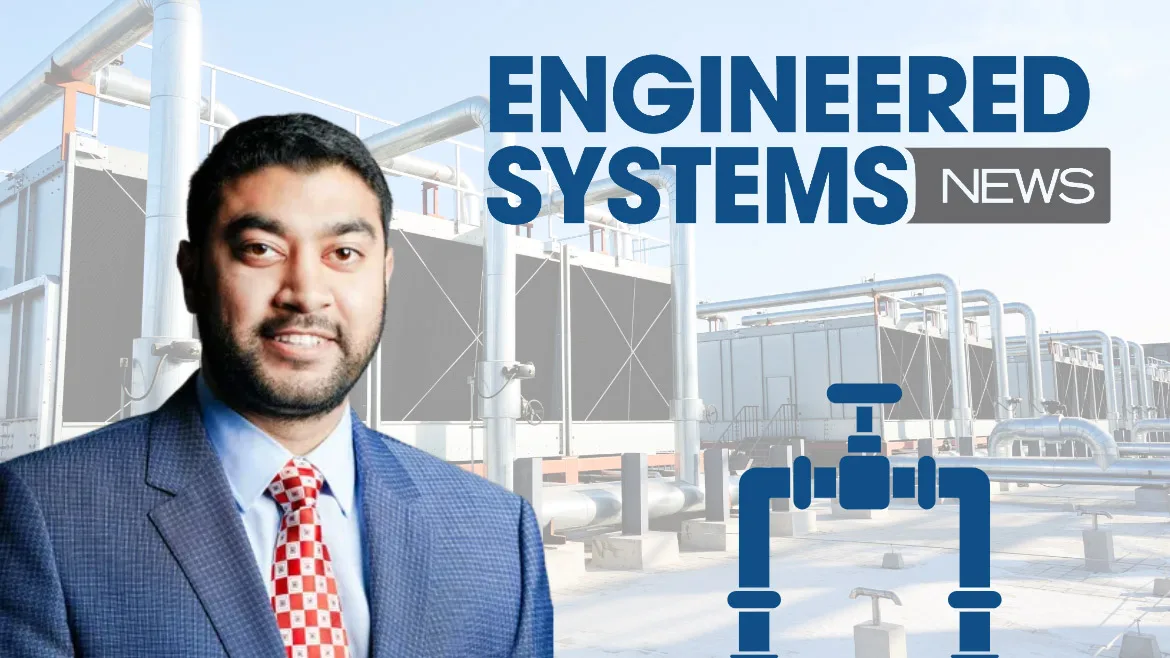
ONSITE: Onsite power is the new norm for data centers. And with absorption chillers, waste heat becomes a valuable asset, not a byproduct, writes Mihir Nandkeolyar of Johnson Controls.
Data center growth is accelerating, but supply power is falling behind. Grid congestion and multiyear interconnection delays are no longer concentrated in key markets; they’re now the primary bottleneck to deploying new energy capacity globally. McKinsey and the International Energy Agency project that global data center energy demand could nearly triple by 2030 (based on 2024 levels), yet power infrastructure is not scaling at the same pace. To keep building, operators are bringing power generation onsite to gain speed, resilience, and control. This shift is fundamentally changing how data centers are designed and operated – and creating more opportunities for HVAC contractors.
As power generation moves onsite, waste heat becomes a powerful resource – and a valuable opportunity for contractors to further serve data centers. Advanced thermal integration allows data centers to capture waste heat from onsite power and put it to work across the cooling system. Absorption chillers do this with unmatched efficiency, delivering roughly 2 MW of cooling with just 20 to 25 kW of electrical input, compared to 500 kW or more for traditional electric chillers. The payoff is immediate and compounding: lower electrical demand, reduced reliance on constrained grids, improved water performance, and stronger operational resilience at scale.
Maximizing On-site Power Generation
Some industry forecasts predict that about a third of data centers will operate 100% onsite-powered campuses by 2030. Operators are using alternative sources of electric power generation, such as combined heat and power (CHP) systems using gas engines, gas turbines, fuel cells, and small modular reactors – all of which produce waste heat.
Today, gas engines are the most common prime movers used in CHP systems. When natural gas is used to generate electricity, only 35–50% of its energy becomes usable power; the rest escapes as heat.
Data centers can capture and repurpose this existing energy source using absorption chiller technology. Absorption chillers convert waste heat into free cooling, delivering chilled water with virtually no incremental electricity draw.
Capturing and reusing this energy cuts electrical consumption for cooling, reduces water use, and drives environmental and business goals.
Putting Waste Heat to Work
Absorption chillers can recover the waste heat from prime movers and use the existing thermal energy rather than additional grid electricity as their primary energy source.
By delivering the same level of cooling with a fraction of the electrical demand required by conventional electric chillers, this approach can cut chiller electricity use by 90% and the full chiller plant by more than 40%.
The chiller contains lithium bromide as the absorbent at two different concentrations:
-
A high concentration absorbs refrigerant vapor to drive evaporation.
-
A low concentration discharges refrigerant vapor and heat from the data center into the condenser.
Using hot water or steam provides thermal energy to modify the solution’s concentration, thereby utilizing water as the refrigerant. The savings in electricity at the chiller translate into an 8-10% reduction in PUE for large AI-scale data centers.
Accessing Benefits and Business Opportunities
The many benefits of free cooling and the business opportunities it uncovers make the application of absorption chillers a practical strategy for data centers – and a valuable selling point for contractors.
Contractors can make a business case for adding absorption chillers to a data center’s cooling and energy management strategy based on the following factors:
Energy efficiency – Capturing and reusing waste heat improves overall central plant system efficiency by 43% and reduces operating costs.
Water conservation and adaptability – Both data centers and utility generation use water. This system would eliminate both the evaporation for cooling and the evaporation for power production.
Resilience – With onsite power, a data center has access to an untapped source of energy that can be used for cooling, reducing grid dependency and improving uptime.
Speed to deployment – Data centers that deploy onsite power can start receiving energy much faster, often in about a year, compared to waiting for access to the grid, which can take an average of 3–7 years depending on the connection requirement and data center location.
Regulatory compliance and incentives – In the European Union, a rating/classification system for data centers is being introduced that will assess energy efficiency, water use, and renewable energy consumption. Germany is leading the charge with its Energy Efficiency Act, which requires new data centers with an IT capacity of 300 kW or more to reuse at least 10% of waste heat by July 2026, rising to 20% by 2028. German regulations also require new data centers built after July 2026 to have a PUE equal to or less than 1.2, while existing ones must achieve a PUE equal to or less than 1.5 by 2027 and 1.3 by 2030.
Even in regions without such mandates, economic and environmental benefits are driving adoption – especially in areas with overburdened grids or water scarcity.
Assessing In-the-field Success
Many contractors are already familiar with absorption chiller technology and its advantages in district heating and industrial applications. Waste heat from combined heat and power (CHP) and industrial processes powers absorption technology and reduces electrical grid demand in high-value applications such as commercial cooling, peak shaving, and industrial process cooling.
There are hundreds of proven applications throughout Europe and Asia.
One example comes from Austria, where a biomass heating plant uses an absorption heat pump to reclaim waste heat and put it back to work. The system boosts overall efficiency by up to 15%. That recovered energy feeds the regional network, providing low-carbon heat equivalent to the needs of about 10,000 households and avoiding an estimated 45,000 tons of CO₂ annually, or the equivalent of 9,522 gasoline-powered passenger vehicles driven for one year.
Earning More Data Center Contracts Through Strategic Thermal and Energy Management
As AI continues to drive rapid data center expansion, operators are increasingly turning to on-site generation and generating more waste heat in the process. Instead of simply releasing this thermal energy, there is a massive opportunity for contractors to help facilities repurpose waste heat to power or supplement cooling processes. The approach addresses thermal and energy management simultaneously, positioning contractors as strategic partners who can help data centers reduce electrical demand for cooling and grid dependency while improving site resilience.
Looking for a reprint of this article?
From high-res PDFs to custom plaques, order your copy today!