USMCA’s Future in Doubt as U.S. Declines to Renew Pact
Here's what this headline news means for HVAC and sheet metal contractors
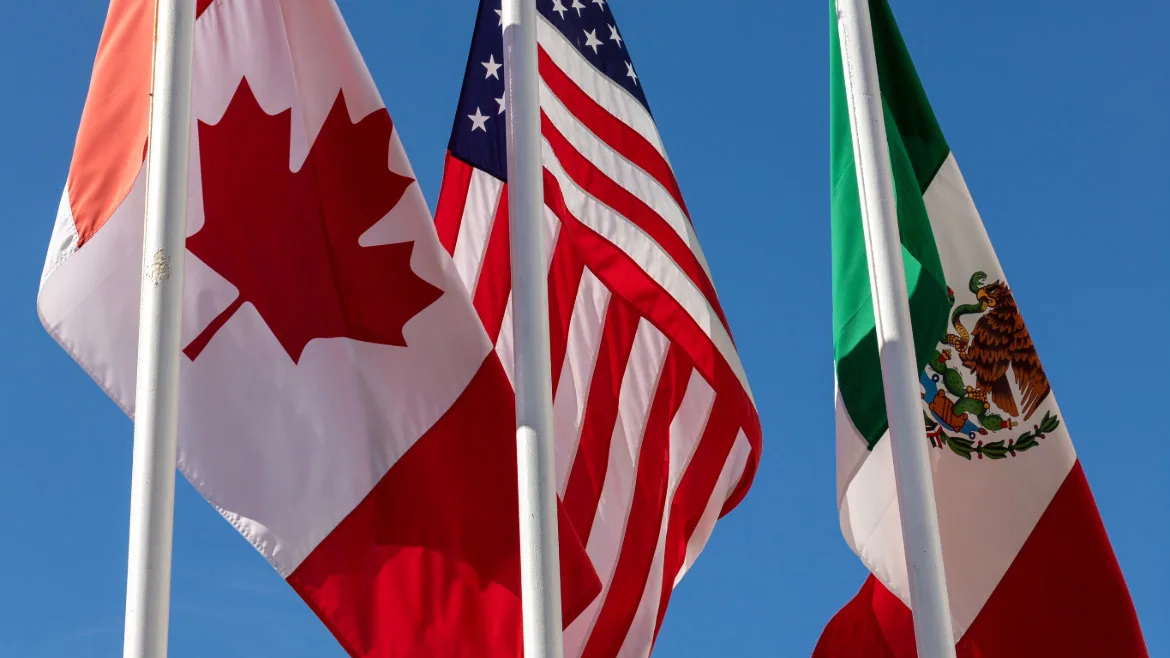
In a move jolting manufacturers and unions alike, the United States has declined to renew the USMCA trade agreement “in its current form” after the deal’s first mandatory review, setting the stage for annual, high-stakes negotiations. With the agreement’s future now subject to year-by-year bargaining, companies that rely on cross-border supply chains – especially in HVAC and sheet metal – face a new wave of uncertainty.
For North American manufacturers, USMCA was supposed to deliver stability after years of turbulence under NAFTA. The deal tweaked rules of origin, added labor protections, and promised certainty for cross-border trade. Yet union leaders like Brian Bryant, International President of the 600,000-member International Association of Machinists and Aerospace Workers (IAM Union), say too many jobs are still being lost.
“Workers are still watching their jobs leave. Manufacturing jobs continue to move south of the border,” Bryant said in a statement marking the agreement’s sixth anniversary. “Trade agreements should raise wages, strengthen manufacturing and create opportunity for working people across North America. They should not serve as a roadmap for outsourcing jobs and enriching multinational corporations.”
Tariffs: Stability or Sticking Point?
The USMCA eliminated most tariffs on industrial goods crossing North American borders, including HVAC units, compressors, and raw materials like sheet metal. That predictability has been a lifeline for many American and Canadian manufacturers, who rely on a seamless flow of parts and materials from Mexico’s lower-cost factories.
But the six-year review opens the door to renegotiation. Union leaders are pushing for tougher rules of origin and higher minimum wage standards in Mexico – measures that, if implemented, could upend established supply chains and potentially trigger retaliatory tariffs if talks sour.
From the federal side, U.S. Trade Representative Jamieson Greer set the tone at the opening of talks: “The ministers instructed negotiators to begin a scoping discussion on the necessary measures to ensure the benefits of the Agreement accrue primarily to the parties, including by reducing dependence on imports from outside the region, strengthening rules of origin, and enhancing the security of North American supply chains.”
Industry and Data: Certainty vs. Uncertainty
Industry groups are watching closely. “The agreement supports millions of American jobs, reinforces resilient supply chains, and ensures that manufacturers can compete and win in the global economy,” said a spokesperson for the National Association of Manufacturers (NAM). “The high standards in the agreement provide certainty and favorable environment for businesses to build efficient, productive supply chains across North America.”
For the HVAC sector, supply chain security became an existential issue during the pandemic, when component shortages and border delays sent prices soaring. “Neither NAFTA nor USMCA were designed to foster resilience,” former USTR Katherine Tai warned in a recent industry panel. “It is high time to learn from the painful lessons of recent years.”
According to the Congressional Research Service, the review process itself has been a source of anxiety for some U.S. lawmakers and businesses. “Some members of Congress argued the mandatory review process could ‘create uncertainty that could discourage private investment and harm U.S. businesses.’”
Sheet Metal: The Raw Nerve
Sheet metal is a case study in how North American trade works – and how it doesn’t. American factories buy raw steel and aluminum from both domestic and Mexican sources, cut it, stamp it, and ship finished HVAC ductwork or appliance panels across borders. Under USMCA, these goods move duty-free – unless the rules of origin aren’t met, in which case tariffs snap back into place.
Union officials argue enforcement isn’t strong enough to prevent companies from shifting manufacturing to Mexico while still qualifying for tariff-free treatment. “We opposed the USMCA in 2020 because it still failed to adequately address the incentives that encourage companies to move jobs to Mexico in search of lower wages and weaker labor standards,” Bryant said.
Supporters of the agreement point to the USMCA's Rapid Response Labor Mechanism, which the USTR says has benefited more than 27,000 workers through back pay, reinstatements, and independent union elections since 2021.
Perspectives from Across the Border
Officials from Mexico’s Secretariat of Economy have publicly emphasized the importance of a balanced approach, warning that measures perceived as protectionist could impact regional competitiveness. In a June press conference, Economy Minister Raquel Buenrostro said Mexico “will continue working to ensure that North American trade remains open and mutually beneficial, with respect for our labor obligations and the need for strong, competitive industry.”
Canadian Minister of International Trade Mary Ng said in a recent statement, “Canada will always stand up for rules-based trade and for the interests of Canadian workers and businesses. Maintaining a stable and predictable environment for trade across North America remains our top priority.”
By the Numbers
-
U.S. freight trade with Canada and Mexico reached approximately $1.6 trillion in 2025.
-
Trucks moved roughly $1.0 trillion of that trade.
-
Canada and Mexico buy nearly $600 billion in U.S. manufactured exports.
-
The USMCA remains fully in force despite the July 1 review; the U.S. declined to renew it “in its current form,” triggering annual reviews rather than terminating the agreement.
What’s Next?
The Trump administration faces pressure from unions to demand stronger labor standards and enforcement mechanisms, while Canada and Mexico are wary of any moves that could disrupt trade or drive up costs. For now, most HVAC and sheet metal goods will continue to flow freely – but almost everyone in the industry is watching the negotiations with unease.
Business groups argue that the agreement has become the backbone of North American manufacturing. The National Association of Manufacturers says Canada and Mexico purchase nearly $600 billion in U.S. manufactured exports and that integrated supply chains help American factories stay competitive globally. Labor organizations counter that those same supply chains still encourage companies to relocate production to lower-wage regions of Mexico despite USMCA labor reforms.“It’s a balancing act,” said NAM’s O’Neill. “If the USMCA is amended to favor domestic production too aggressively, you risk supply shortages and higher prices. If it’s left as is, the complaints about job losses and offshoring aren’t going away.”
For the 600,000 machinists represented by the IAM Union – and for the companies that depend on a stable, predictable trade environment – the outcome of this review could determine not just the cost of an air conditioner, but where it’s made, and by whom.
Looking for a reprint of this article?
From high-res PDFs to custom plaques, order your copy today!