A Practical Path to Heat Reuse: Linking Data Centers to District Heating Networks
District energy systems can recycle data center waste heat to advance community energy efficiency, writes Rob Thornton of IDEA

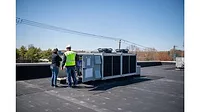
HEAT HARVESTED: Markham District Energy in Ontario and other systems across North America are putting data center waste heat to work for local communities.
Data centers are growing faster than the grid can keep pace with. Interconnection queues are long, transformer lead times are stretching to years, and communities are pushing back on new development. Meanwhile, the sector's thermal profile is shifting from air cooling to liquid cooling – concentrating heat into a form far more useful than hot exhaust. That’s the context in which district energy belongs in this conversation.
By 2028, data center electricity demand is projected to reach as much as 12% of total U.S. electricity consumption – though forecasts vary widely and remain contested. What is not contested is the direction: demand is growing, and it is growing fast. For operators, energy leaders, and hyperscalers, one near-term opportunity deserves more serious consideration: the heat produced by servers.
Heat recovery facilitated by district energy systems can help optimize site energy performance, reduce on-site and system-wide emissions, and support grid stability by putting otherwise rejected heat to productive use. In this model, waste heat becomes a resource that can serve real community needs.
District Energy and Waste Heat Recovery in Short
District energy systems use a network of underground pipes to distribute steam, hot water, or chilled water from a central plant to multiple buildings for heating and cooling. Depending on the community and system design, the central energy source may include combined heat and power (CHP), geothermal energy, biomass, biogas, and often industrial waste heat, which is most relevant for cities seeking efficiency gains.
Two defining advantages of district energy are scale and efficiency. By centralizing thermal production, buildings can reduce or eliminate reliance on individual boilers and chillers, which can be costly to maintain and less efficient at smaller scales. Central systems can also enable investment in more resilient local energy resources and operational strategies tailored to occupant needs.
In data centers, server waste heat can be captured using heat exchangers or liquid cooling loops and then upgraded, often through heat pumps, to useful temperatures. That thermal energy can be distributed through a district network to end users such as homes, commercial buildings, hospitals, and university campuses.
The Present Imperative
As demand for computing grows, operators are increasing rack densities and overall facility throughput. A direct byproduct is more heat, concentrated in smaller footprints. Without heat recovery, that thermal energy is rejected to the environment.
The cost of wasted heat extends beyond missed opportunities. Persistent heat rejection can reduce overall energy efficiency and increase electricity consumption, operating costs, and emissions across the system.
Unrecovered waste heat can also create a form of “mechanical debt.” As operational demands rise and more heat is produced (adding to already overheated servers), cooling becomes more challenging and expensive. At its worst, excess waste heat can spill beyond the data center, contributing to thermal pollution in the surrounding environment.
Breaking this waste-and-loss cycle supports both long-term operational performance and the many sectors that rely on advanced computing.
In the U.S., this challenge is particularly salient. As a global leader in data center growth, the nation faces compounding pressures from aging energy infrastructure and impending net-zero targets, making scalable waste heat recovery strategies most urgent.
Further, from state-level moratoriums on new-build tax incentives to executive-level initiatives such as the Ratepayer Protection Plan – designed to curb electricity price spikes and encourage data center self-generation – legislative and policy efforts aimed at curbing the effects of unsustainable data center operations signal that favorable public sentiment is just as important to data center growth as mechanical capacity.
Waste heat recovery offers a credible path to reframe data centers as community-aligned infrastructure that supports energy efficiency and local resilience. The DATA HEAT: Sector Coupling of Data Centers & District Heating research initiative – a multi-jurisdictional sector-coupling study co-funded by IDEA, the Danish Energy Agency, the Danish Trade Council, and NYSERDA – has documented the technical and commercial conditions under which these partnerships succeed and provides a practical framework for operators and municipalities evaluating this path.
How to Begin: An Operator Checklist
For owners and operators evaluating waste heat recovery for district heating, three steps can help establish a practical foundation for system design and durable partnerships:
- Complete Initial Assessments: Identify available waste-heat sources (e.g., warm water returned from liquid cooling or hot exhaust air) and document their quantities, temperatures, and variability. Research suggests that data centers with air-side cooling are the most common application, but liquid cooling is emerging as the preferred approach. Waste heat reuse is possible with air-side cooling, but lower output temperatures require integrating a bridge solution such as heat pumps. During this stage, operators should also evaluate their proximity to existing district networks and compatibility with infrastructure requirements.
- Engage Potential Partners Early: Initiate early discussions with municipalities and district energy providers to align system design needs, confirm available incentives, and explore long-term energy offtake agreements.
- Identify Opportunities for Hybrid Configuration: Explore hybrid system options, such as pairing CHP, thermal storage, and advanced cooling technologies, to maximize operational flexibility, particularly when grid interconnections may be delayed. Evaluate how each technology may complement site-specific requirements and constraints.
A More Energy Efficient Future
Across the EU, municipal heat plans call for data center operators to seek out district energy providers for heat export opportunities. In some cases, permitting processes require that surplus heat be made available for harvest. States like Virginia and Pennsylvania are promulgating heat-reuse policies that direct state agencies to assess potential opportunities, study best practices, and develop actionable policy recommendations. Today, a growing number of projects in North America and abroad demonstrate how data center waste heat can support district energy systems when the right technical and commercial conditions are in place. Dense with new developments, Northern Virginia’s “Data Center Alley” is a prime prospect for district heating integration, and stakeholders are currently exploring pathways to advance commercial heat exchange programs in the region.
In Markham, Ontario, an Equinix data center retrofitted for heat recovery now supplies heating to residential, commercial, and institutional users – condominiums, schools, and a university campus – through integration with Markham District Energy, an IDEA member. In Toronto, Telehouse Canada has partnered with Enwave Energy, also an IDEA member, to leverage access to the downtown district cooling system, combining deep lake-water cooling with waste-heat recovery. And in Seattle, a major technology company campus has documented heat reuse serving over four million square feet of development at roughly four times the efficiency of conventional boilers for more than a decade – one of the more compelling proof points we have seen in North America.
Across these examples, heat reuse helps data centers contribute tangibly to community well-being, which is an increasingly important requirement for long-term sustainability and energy resilience. Often, the best energy option is using thermal energy that has already been created and is available in a local economy. Aggregating a network of users to achieve economies of scale is the key to success.
Data center waste heat recovery integrated with a district energy system offers a practical and proven path forward – one that does not require waiting for expansion of the regional electricity grid or a new technology or policy breakthrough. The infrastructure model, technologies, and case studies already exist. The question is whether operators, municipalities, and district energy providers can come together early enough to make the options work.
Looking for a reprint of this article?
From high-res PDFs to custom plaques, order your copy today!