Decarbonizing Without Disruption: A Practical Path to Building Performance Standards Compliance
New regulations spark innovation in urban energy sharing, cutting carbon and complexity
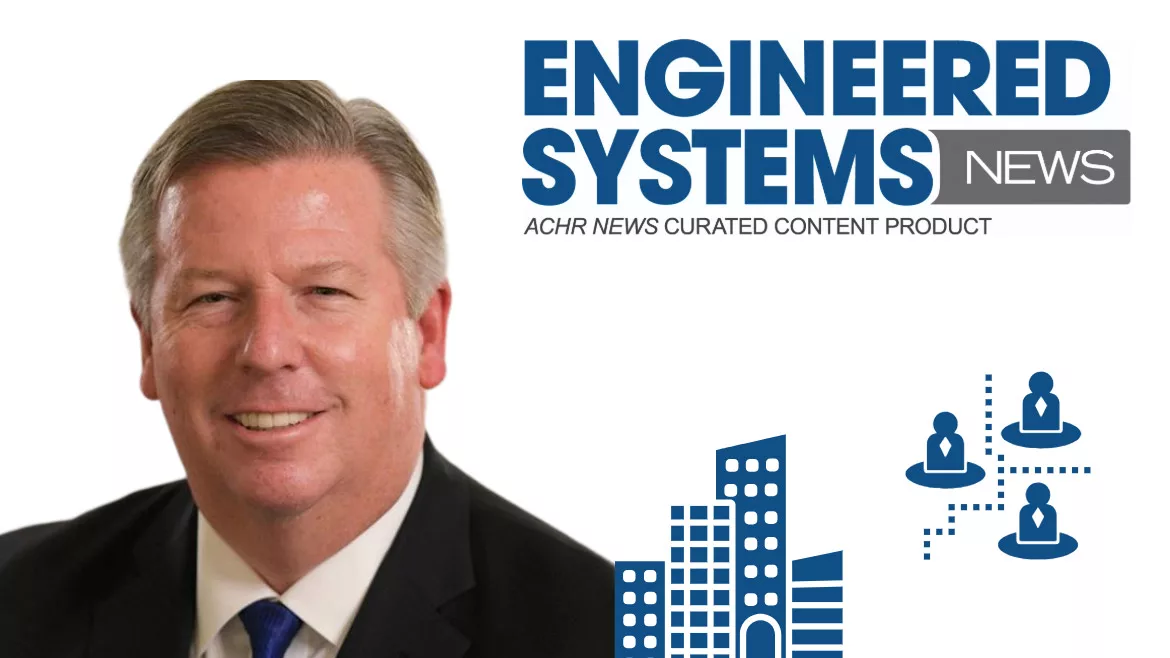
AMBITION: Rob Thornton, president and CEO of the International District Energy Association, advocates for practical, scalable solutions to help building owners meet ambitious climate goals.
As the 2030 deadline for many decarbonization commitments draws closer, building owners in U.S. cities are under increasing pressure to comply with stringent building performance standards. These local regulations, aimed at slashing greenhouse gas emissions from existing buildings, are no longer abstract future targets. They are arriving in real time, with substantial financial penalties for those who fall short.
For many commercial real estate and multifamily property owners, the path to compliance appears paved with expensive, disruptive retrofits: gut renovations, full HVAC replacements, or building-wide electrification. These measures may be effective, but they are not always feasible, particularly for older buildings or high-rise properties with tight margins and long-term tenants.
However, there is another route for property owners to the financial and logistical headaches of full-scale renovations, and access clean, efficient energy: leveraging district energy systems. District energy systems, which distribute steam, hot water, or chilled water from a central plant to multiple buildings through a network of underground pipes, are becoming an increasingly practical tool for meeting climate mandates.
Rethinking Retrofit Assumptions
Electrification is often held up as the default path to compliance. In many cases, it’s an important step forward, but for certain buildings, particularly in dense urban cores with constrained electrical capacity, electrifying at the building level can be both expensive and complicated. It typically requires new electrical service, costly load upgrades, and new equipment, not to mention the disruption to tenants during construction.
District energy, by contrast, can often be integrated with far less disruption. For buildings located near existing district systems, connection may involve little more than a piping interconnection. This streamlined installation allows owners to avoid ripping out mechanical rooms or repurposing occupied space while still reducing emissions, especially if the district system is shifting toward low- or zero-carbon generation.
In this way, district energy offers a complementary approach to electrification: decarbonization at the system level, instead of the individual building level.
Meeting Performance Standards at Scale
This approach is already proving effective in cities where electricity costs are high and building performance regulations are strict. In San Francisco, for example, the 2020 All-Electric New Construction Ordinance bans natural gas in new buildings and adds pressure on existing ones to decarbonize quickly. Yet grid constraints and high retail electricity costs – more than 100% above the national average, according to the Bureau of Labor Statistics – make full building electrification a tough sell.
To address this, energy provider Cordia is updating its district energy network in San Francisco by installing an electric boiler powered by hydroelectricity from the city’s Hetch Hetchy system. The result: dozens of buildings across a dense two-square-mile downtown area can access lower-carbon thermal energy without having to upgrade or replace their HVAC systems independently.
The City of Boston presents a similar story. The city’s BERDO 2.0 regulations require buildings over a certain size to begin meeting emissions targets by 2025 and reach net zero by 2050. In response, Vicinity Energy has invested in a 42 MW electric boiler, powered by renewable electricity, to decarbonize its steam network serving more than 70 million square feet of real estate across Boston and neighboring Cambridge across the Charles River. By aggregating customer demand, Vicinity can access wholesale power markets and offer a more stable, resilient energy supply, something increasingly important as electricity demand from AI and data centers grows.
Unlocking Benefits Beyond Emissions
District energy is especially well-suited to urban clusters of commercial, institutional, and multifamily buildings. By pooling heating and cooling loads across multiple users, these systems can invest in technologies, like electric boilers, heat recovery, and thermal storage, that would be difficult to justify on a single-building basis.
But the benefits aren’t purely technical. Building owners can also reclaim valuable roof and mechanical space by removing on-site chillers and boilers. Maintenance burdens shift to the district energy provider, freeing up internal teams. And property values may increase as buildings become more energy-efficient and future-proofed against emissions compliance fees.
Still, district energy isn’t a silver bullet. Adoption is often limited by awareness and the availability of infrastructure. Many cities lack district systems altogether, and even where they exist, not all buildings are located near the piping network. Additionally, economic comparisons between district energy and electrification can be challenging to assess, especially when considering allocation of capital and operating costs or factoring in long-term electricity market volatility and compliance risks.
What Comes Next
Expanding access to district energy – and making it easier for owners to compare options – will require better coordination between policymakers, utilities, and industry stakeholders. Regulatory frameworks should incorporate district energy as a legitimate compliance pathway, particularly when it achieves measurable carbon reductions. More broadly, cities can support decarbonization by investing in shared infrastructure, incentivizing system upgrades, and enabling education for building decision-makers.
Ultimately, the best approach to building decarbonization is one that maximizes flexibility and minimizes disruption. For some, that may mean investing in heat pumps or envelope upgrades. For others – particularly those in dense, infrastructure-rich areas – connecting to a decarbonizing district energy system may be the fastest, least invasive, and most cost-effective route. With the clock ticking toward 2030 and beyond, building owners need options. District energy won’t work everywhere. But where it fits, it deserves a seat at the table.
Looking for a reprint of this article?
From high-res PDFs to custom plaques, order your copy today!