Code Compliance vs. Real-World Performance
Why code-compliant designs can still fail in operation, and what engineers miss when performance is treated as a checkbox

COMPLIANCE: IES Vice President Nathan Kegel weighs in on why systems that check all code requirements don't always perform as well in practice.
Nathan Kegel, vice president at IES, shares his insights on why HVAC systems that check every code requirement can still fall short in practice – and what engineers can do to close the gap between compliance and true building performance.
Based in Minneapolis, Kegel holds degrees in business and construction management from the University of Minnesota and the University of Phoenix.
What are the most common reasons code-compliant HVAC systems underperform in real-world settings?
A common reason is that codes are met under a narrow set of assumed conditions, using a prescriptive path that rarely reflects how buildings actually operate. Systems are often designed around peak loads, ideal schedules, and simplified occupancy patterns, but real buildings operate at part load for the majority of their useful lives. When equipment sizing, control sequences, and system interactions are not evaluated across those everyday conditions, performance can suffer.
Another frequent issue is that design intent gets diluted between design, modeling, value engineering, construction, commissioning, and operations. Each alteration introduces risk to actual performance, even when the original design was technically sound.
How do codes and standards fall short in ensuring sustained system performance?
Codes are useful for establishing minimum requirements, but they are not intended to guarantee long-term performance. Under most energy codes and standards, there are two primary paths: prescriptive and performance. Neither path attempts to predict the actual performance of the building.
The prescriptive path offers only a checklist of minimum requirements to apply. This results in limited value when informing the choices made in the design process, because checklists don’t ask, “What if?” And while the performance path uses physics to compare options and comply with code, this path is still constrained to comparing “like for like” in terms of occupancy schedules, climate data, and more. Thus, options can be reasonably compared, paybacks calculated, and lifecycle assessments completed, but the actual performance is not predicted.
The performance path offers much more “freedom” to meet the intent of the code, but still can’t account for all the possible variables a building might experience, including weather, shifts in setpoints, occupancy and associated internal gains, and potential envelope changes, to name just a few. As a result, a building can meet every requirement on paper and still struggle once it is occupied and operated by real people under real constraints.
That said, the performance path can create a potential “digital twin.” After occupancy, this model can be calibrated using measured data, replacing assumptions with verified numbers and helping teams optimize building performance once construction is complete. No such digital twin is available using the prescriptive path.
Can you share examples where meeting code led to unexpected operational issues?
There are many unknowns that become assumptions in the design of a new building, or in the case of remodeling an existing building. These include (but are not limited to): weather conditions, including temperature, humidity, solar radiation, wind speed and direction; occupancy rates and time of use; the internal gains from equipment changing from design to initial occupancy; deviations from construction details, which can impact infiltration rates; and comfort complaints from occupants causing changes in setpoints. All of these factors may compound to significantly impact the actual performance of the building once in operation.
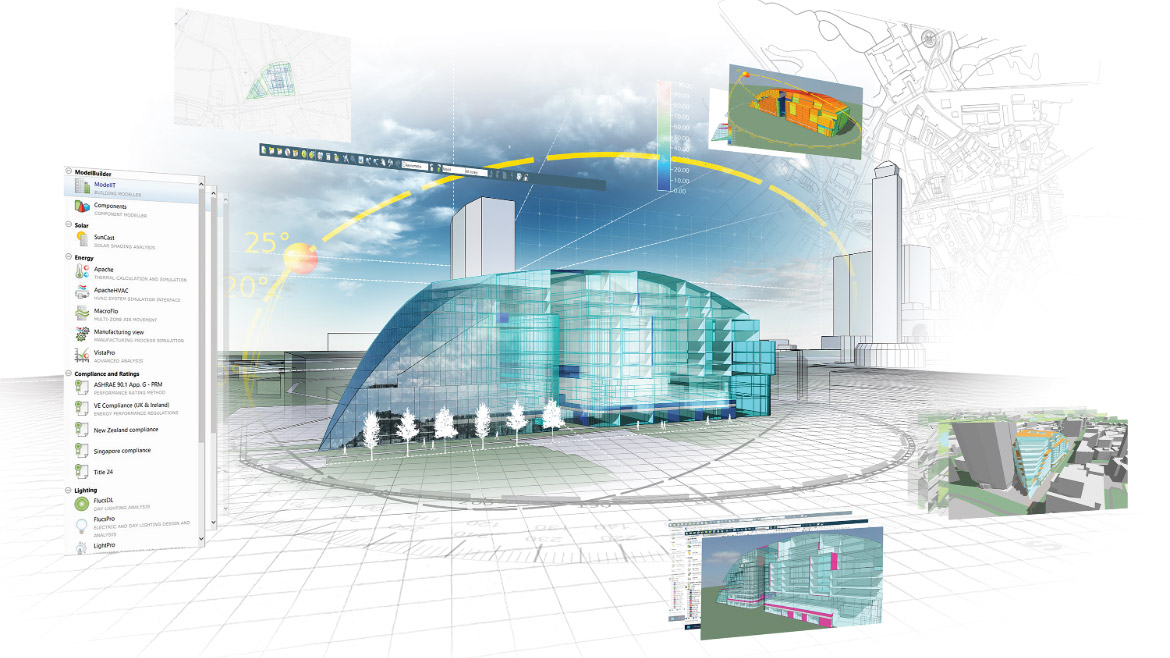
REAL WORLD: Innovative HVAC solutions are essential for bridging the gap between code compliance and real-world building performance. (Courtesy of IES)
What are the risks of treating performance metrics as a checklist rather than a continuous process?
When performance (compliance) is treated as a checklist, no actual testing of the performance occurs. That mindset discourages design teams from asking “what happens if” questions. What happens during part-load conditions, partial occupancy, alternate constructions, or a change in climate? Without that exploration, problems remain hidden until they show up as comfort complaints, rising energy bills, or operational workarounds. At that point, fixes are far more expensive and disruptive.
How can engineers bridge the gap between code compliance and actual building performance?
The gap is bridged by expanding the definition of design success. Performance-based compliance should be the starting point, not the finish line. Engineers (and the broader design team) can improve outcomes by evaluating systems across a wider range of operating scenarios, stress-testing control strategies, and thinking through how buildings will actually be used and managed. That means designing for robustness, not just efficiency, and validating performance under conditions that reflect reality rather than assumptions. When performance is treated as an ongoing objective instead of a one-time requirement, buildings are far more likely to deliver on their promises.
Looking for a reprint of this article?
From high-res PDFs to custom plaques, order your copy today!