Modular Data Centers and AI: Essential Insights for MEP Professionals
AI is raising the stakes for data center cooling, construction, and design
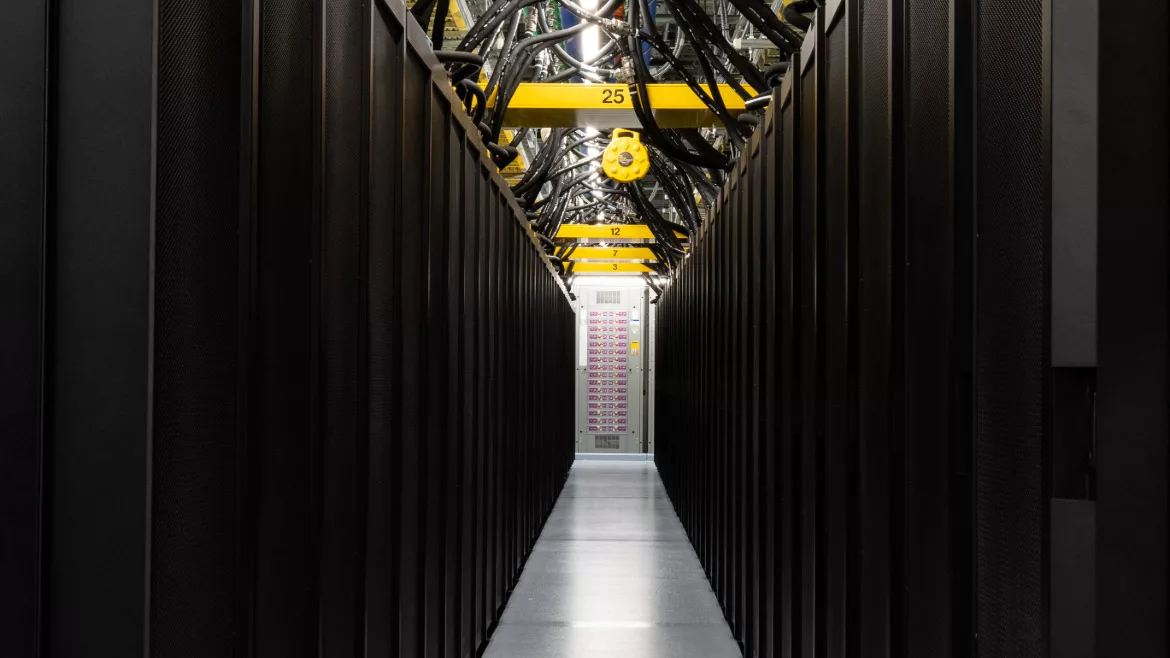
AI: Private-sector AI data centers are multiplying, reflecting the ambition of public sector supercomputers like Summit – with commercial scale and innovation.
The rapid rise of artificial intelligence workloads is transforming data center design and construction, posing new challenges and opportunities for mechanical, electrical, and plumbing professionals. As these demands grow, experts from across the industry offer critical insights into what’s changing and how MEP professionals must adapt.
Michael Obradovitch, vice president of Global Accounts at Ecolab, explained that traditional air cooling systems can no longer keep pace with the heat generated by high-performance AI servers. “It comes to a point where being able to just move air over the servers no longer is able to provide adequate enough heat exchange to prevent overheating,” he said. This has led to a significant shift toward liquid cooling, which transfers heat nearly 24 times more effectively than air, making it indispensable for cooling next-generation AI hardware.
This rapid increase in heat output is intertwined with the progression of Moore’s law – as chips get denser and more powerful, each new generation of computing hardware runs even hotter than before. The traditional approach of moving more air through larger ductwork simply can’t keep up with this escalating thermal challenge.
Travis Schumacher, senior project manager at DPR Construction, noted that the industry is increasingly moving away from extensive ductwork traditionally used for air cooling. “Approximately 80 percent of cooling loads in new data centers are now liquid-cooled, with only about 20 percent relying on air,” he said. This shift demands more complex piping systems and a growing use of materials like stainless steel for durability and compatibility with liquid cooling.
What HVAC Contractors Need to Know
Schumacher highlighted a major change in HVAC design driven by AI workloads and liquid cooling adoption. Traditional ductwork flooding entire rooms is giving way to more targeted airflow systems integrated into mechanical components. “We are starting to see kind of a shift of movement going away from heavy duct work,” he explained.
He also pointed out that server fans within racks have become part of the HVAC airflow system. “The fans within them, they're more efficient, which means we need less [HVAC airflow]. They're pulling the cold air in, rather than we're pushing it through, which is how it was 15 years ago. We use those server fans as part of our HVAC engineering system ... and we're calculating that into the design.”
HVAC contractors will need to adapt by incorporating server fan airflow into ventilation calculations, designing for complex liquid cooling piping, and preparing for commissioning protocols that differ substantially from traditional systems.
What Sheet Metal Contractors Need to Know
Sheet metal work is evolving in parallel with HVAC changes. Schumacher said sheet metal teams are increasingly involved in prefabricated insulated metal panels and modular mechanical components, instead of extensive ductwork. “We have started utilizing their resources in different areas, whether it be insulated metal panels, where they're actually putting the skins on those, creating different shafts and whatnot for the building to operate more as a mechanical piece of equipment itself, rather than utilizing an air handler.”
Louvers and air intake/exhaust systems remain critical, especially in facilities facing environmental challenges. Schumacher recalled a project in Oregon with large louvers and a dedicated corridor designed to keep sand and dust out of air handler intakes – components requiring specialized sheet metal fabrication and installation.
Sheet metal contractors should anticipate working closely on prefabricated multi-trade racks and modular assemblies where ductwork may be integrated with piping, fire protection, and security conduits.
What All MEP Professionals Should Prepare For
Prefab and modular construction are becoming central to data center build strategies. Schumacher stressed early coordination, saying, “Multi-trade racks is actually one of my favorite things to do. It creates so much simplicity. The one thing that has to happen, though, is it’s got to be built into the design.” Prefabricated assemblies combining electrical conduit, mechanical piping, fire sprinkler pipe, and ductwork are fabricated offsite and delivered ready for installation, reducing field labor and schedule risk while also preventing the trades from stepping on each other’s toes in a more controlled manufacturing environment.
Commissioning is more complex for AI data centers. Schumacher explained, “The traditional commissioning method is not valid for AI liquid cooling design … So rather than 40 load banks on the floor, we could have potentially 200 to 400 load banks on the floor just to test the various systems.” Early involvement of commissioning agents and planning for specialized test equipment are essential.
Change orders are increasingly driven by design revisions and supply chain constraints. Schumacher said, “Most of the change orders we see are design-driven or tenant-driven … Equipment substitutions due to availability force redesigns of ductwork and piping. We sometimes have to rework systems in the field due to these substitutions.” Flexibility and proactive value engineering are critical to managing these challenges.
Material choices between steel and concrete are increasingly influenced by lead times rather than solely by performance. Prefab concrete can accelerate schedules, while steel provides more usable floor space, requiring MEP teams to adapt to the structural approach selected.
Water use remains a nuanced topic. Obradovitch clarified that many data centers use air-cooled chillers with minimal water demand, while those with water-cooled chillers often use alternative sources such as reclaimed gray water or treated black water. He emphasized that data center water consumption constitutes a fraction of global industrial water use, and prudent on-site water use can reduce overall energy consumption.
Future-proofing cooling infrastructure is vital. Obradovitch recommended designing flexibility to accommodate rapidly evolving workloads, including separate cooling loops with distinct temperature setpoints for air- and liquid-cooled systems. Schumacher noted that modular construction allows phased growth but cautioned that long-term costs and customization needs may favor more conventional, concrete builds for some clients.
Closing Insights from World Wide Technology
Chris Campbell, senior director at World Wide Technology, brought the conversation full circle by emphasizing how fundamentally different AI infrastructure demands are compared to traditional data centers. He explained that the rapid evolution of computing power and cooling needs has propelled modular data centers into the spotlight.
“The requirements of AI infrastructure are entirely different,” Campbell said. “The amount of power to the rack is different … modular allows you to come in and have all those capabilities built right away.”
He highlighted how modular data centers serve a critical role in enabling rapid deployment and meeting the intense power and cooling demands that legacy facilities often cannot accommodate. By offering a pre-engineered, integrated solution, modular units can be placed wherever power is available – whether in a parking lot or remote site – helping organizations scale quickly without the multi-year timelines of traditional construction. Campbell’s outlook is clear: modular data centers aren’t a passing trend.
Looking for a reprint of this article?
From high-res PDFs to custom plaques, order your copy today!