Guest Column
Cooling AI Infrastructure: What Mechanical Contractors Should Know
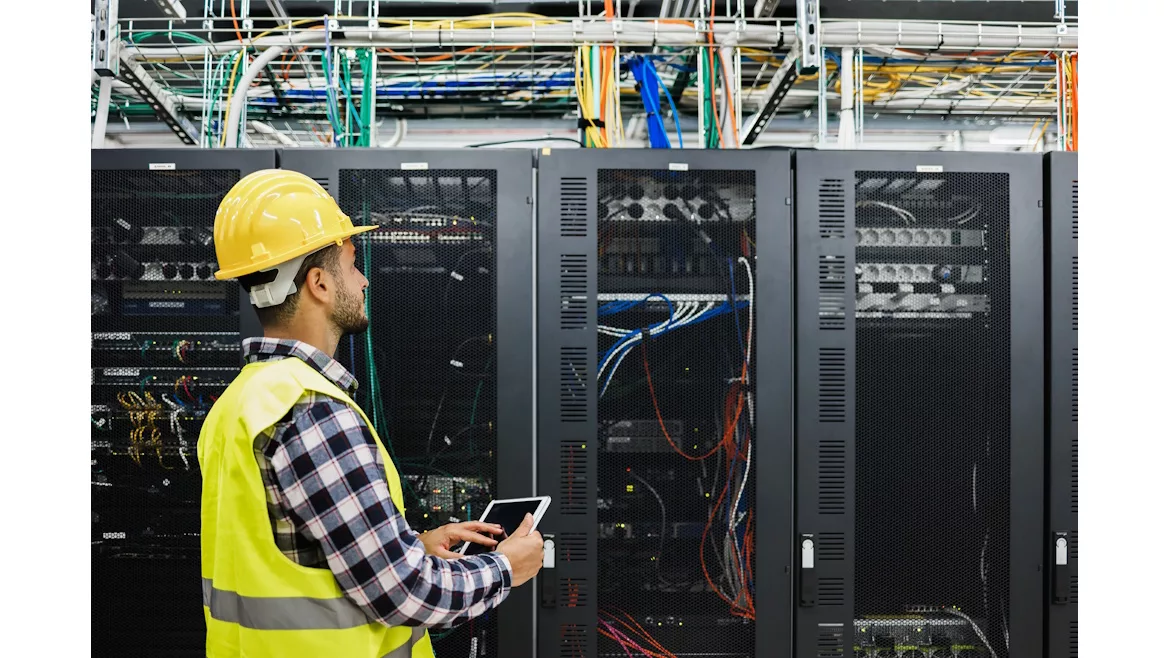
UNPRECEDENTED DEMAND: AI racks drive heat loads that push traditional data center cooling to its limits.
Artificial intelligence continues to drive unprecedented demand for data processing power, and mechanical contractors find themselves on the front line of one of the most significant infrastructure shifts in decades. New data centers are being designed and built at a record pace, but effective heat management at these facilities is changing even faster.
AI workloads generate far more concentrated thermal loads than traditional computing. Cooling systems that worked well just a few years ago now struggle to meet higher density requirements. For mechanical contractors, this evolution means navigating complex decisions around cooling design, water usage, and long-term service implications, all while balancing cost, sustainability, and reliability.
Understanding the Water-Energy Tradeoff
The fundamental challenge in modern data center cooling comes down to a tradeoff between energy and water efficiency.
Evaporative systems offer the best thermal performance per unit of energy consumed (approximately 1,000 times that of sensible heat transfer), but they depend on water, a resource increasingly constrained by local regulations, cost volatility, shortage concerns, and expectations around environmental stewardship. Air-cooled systems reduce water dependency; however, they often increase power usage and decrease the efficiency of heat rejection in hot climates. In fact, water possesses approximately 25 times the thermal conductivity of air, relative to heat removal.
Mechanical contractors are often caught between these competing priorities, especially when working across regions with variable water quality and availability. The most effective solutions increasingly rely on hybrid configurations that can toggle between air- and water-cooling modes as operating conditions demand.

NEW STRATEGY: Balancing water and energy use has become the core challenge in AI-era cooling design. (Courtesy of AdobeStock / eric1207cvb)
Common Missteps in Cooling System Design
Field experience has revealed several recurring issues that have emerged as data center operators and their mechanical partners adapt to higher heat densities.
-
Underestimating Water Quality Requirements
Inadequate water treatment can quickly degrade system performance. High mineral content, microbiological activity, and particulate fouling increase scaling and corrosion, reducing heat transfer and system reliability. Even closed-loop systems require monitoring to reduce degradation over time. This includes both facility cooling loops and direct-to-chip technical cooling loop systems. -
Overlooking Startup and Passivation Protocols
As construction timelines compress, startup procedures are often rushed or skipped entirely. Emphasizing proper cleaning, passivation, and water treatment from day one is key to reducing the likelihood of long-term maintenance issues and efficiency losses. Water savings goals often dictate the level of due diligence given to flush/clean/passivate procedures, potentially a very short-sighted calculation when it comes to maintaining system reliability. -
Neglecting Local Water Regulations
Municipal discharge limits, blowdown restrictions, and reuse requirements vary widely across jurisdictions. Failing to account for these during the design phase may result in costly retrofits or compliance challenges after commissioning. Ensuring adequate makeup of water and discharge connections is instrumental in meeting the requirements of an effective flush/clean/passivate protocol. -
Assuming Design Efficiency Equals Operational Efficiency
Even the best-designed system can drift from optimal performance if water chemistry or flow conditions are not maintained. Coordination between the mechanical contractor, facility operator, and water treatment partner will help sustain efficiency over time.
Integrating Water Reuse and Treatment Strategies
As sustainability expectations rise, more owners are asking contractors to help them integrate reuse processes into water system design. This typically involves incorporating point-of-entry treatment systems or plumbing provisions that allow water from blowdown, condensate (AHU), or rainfall (rooftop collection/distribution systems) to be recycled for cooling tower makeup or other non-potable uses.
Mechanical contractors do not have to become water treatment experts, but understanding how these systems interface with mechanical infrastructure and collaborating with treatment providers can prevent conflicts in piping layouts, control sequences, and monitoring systems.
Where site conditions or local regulations limit water reuse, onsite polishing loops offer an alternative option. These compact treatment skids help maintain water quality within closed systems, and are especially valuable in hyperscale and AI-driven facilities where uptime and equipment life are paramount.
Adapting to AI-Era Cooling
AI infrastructure is pushing the industry toward direct-to-chip and liquid cooling technologies that transfer heat from servers more efficiently. These systems operate at higher pressures and require different materials and maintenance practices than traditional chilled water or air-cooled systems.
For mechanical contractors, this shift introduces new considerations:
- Material compatibility between metals, elastomers, and heat exchange fluids
- Water purity requirements to reduce fouling or corrosion in microchannel plates
- Integration of secondary cooling loops that isolate sensitive components
- Precision startup, flushing, and filtration procedures
- Footprint needs for proper water treatment, chemical storage and feed, and system monitoring equipment
While many of these systems are still deployed at pilot scale, contractors with expertise in liquid cooling installation and maintenance will have a competitive advantage as adoption accelerates.
The Path Forward
Mechanical contractors are uniquely positioned to help bridge the gap between data center design and operational reality. By approaching projects with a clear understanding of the water-energy tradeoff, integrating water reuse strategies early, and collaborating closely with operators and treatment partners in a timely manner, up front, contractors can help set up facilities that meet performance, regulatory, and sustainability goals.
The industry’s trajectory is clear: data centers will continue to grow more complex, hot, and resource-intensive. Those who understand the balance between thermodynamics and water management will play a leading role in cooling the AI revolution.
Looking for a reprint of this article?
From high-res PDFs to custom plaques, order your copy today!