Industry Backs Bipartisan Push for Better School Indoor Air Quality
SMACNA, ASHRAE weigh in on reintroduced legislation
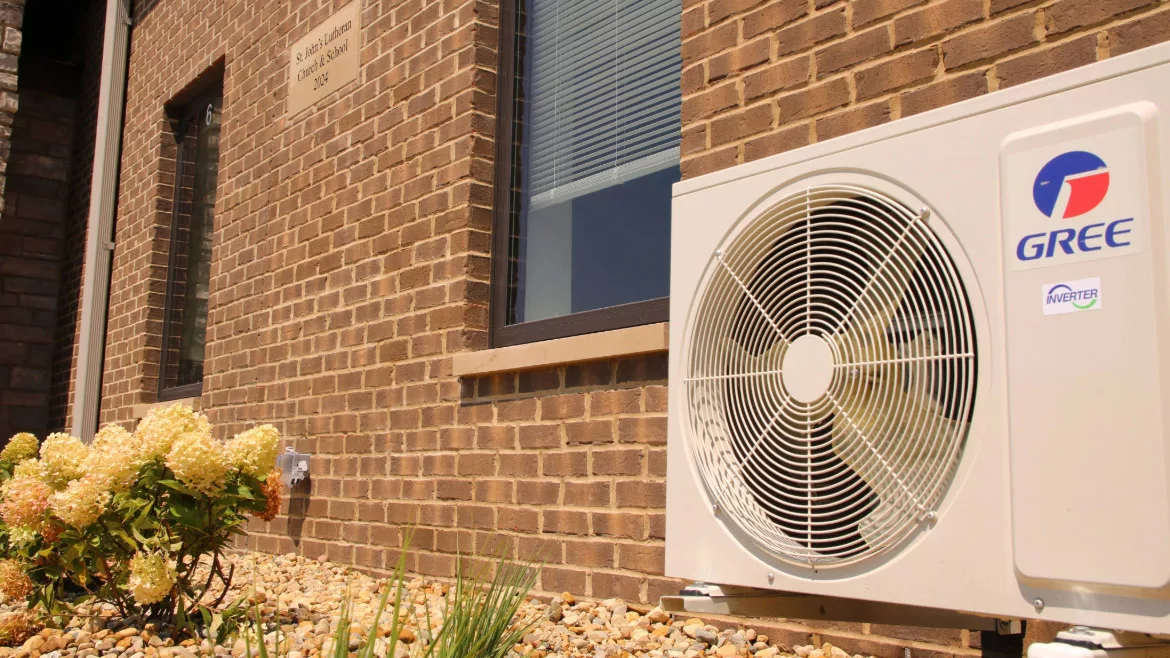
IAQ: A mini split heat pump, zoned to serve a single classroom, works in tandem with a dedicated outdoor air unit supplying fresh air via ductwork. (Staff photo)
When it comes to the air America’s children breathe in school, the stakes have never been higher – and the HVAC and sheet metal industry is stepping up. In a rare show of bipartisan cooperation, Representatives Paul Tonko (D-NY) and Brian Fitzpatrick (R-PA) have re-introduced H.R.5123, the Indoor Air Quality and Healthy Schools Act, aiming to transform the nation’s approach to indoor air for students.
For those on the front lines – contractors, engineers, and sheet metal workers – this legislation hits close to home. “Our firms are leading the charge in upgrading and maintaining IAQ mechanical systems in schools across America,” said Stan Kolbe, Executive Director for Government and Political Affairs at SMACNA, in 2025 testimony. “We know firsthand how essential clean indoor air is for protecting the health and success of our nation’s students, educators, and staff.”
While outdoor air pollution laws like the Clean Air Act have seen decades of investment and attention, indoor air remains the “silent giant” of public health risks. According to the EPA, indoor air can be two to five times more polluted than outdoor air – and sometimes even higher. With Americans spending nearly 90% of their time indoors, the cumulative risks are significant.
Asthma, allergies, and cancer-causing radon all become more dangerous in poorly ventilated spaces. The COVID-19 pandemic only highlighted how critical healthy air is in classrooms, where millions of children and educators spend their days.
What the Bill Does
The Indoor Air Quality and Healthy Schools Act would give the EPA expanded authority and resources to finally tackle these risks head-on. The bill calls for:
- Updating and expanding the EPA’s Indoor Environments Division
- Requiring the EPA to create and regularly update a list of significant indoor contaminants, with voluntary health-based guidelines
- Developing or recognizing voluntary certifications for buildings that minimize indoor air health risks
- A nationwide assessment of IAQ in schools and childcare facilities, including technical assistance and best practices for improvement
For Kolbe and SMACNA’s 3,500 member firms, this is more than policy – it’s a call to action. “SMACNA members are proud to deliver the clean, safe air Americans depend on in schools, hospitals, and public buildings,” Kolbe said in a 2025 statement. “We see H.R. 9131 as a crucial step forward for our industry and for the health of every child in America.”
Industry Sees Opportunity and Responsibility
This isn’t just a legislative win for IAQ advocates; it’s a pivotal moment for the HVAC and sheet metal industry. Upgrading and retrofitting schools nationwide means more opportunities for skilled contractors – and more chances to showcase technical expertise.
M. Dennis Knight, President of ASHRAE for 2024-25, sees the Act as foundational for the future of building standards. “This legislation provides much-needed support for improving indoor air quality, essential for health, productivity, and positive learning outcomes. As we work to decarbonize and enhance building resilience and sustainability, prioritizing healthy indoor environments is vital,” Knight says. “Incorporating ASHRAE IAQ standards into building codes will be foundational to this goal.”
A Coalition for Cleaner Air
The bill has drawn wide support, from the American Federation of Teachers to the Allergy and Asthma Network, Healthy Schools Network, and the International Association of Sheet Metal, Air, Rail and Transportation Workers (SMART). “Every child deserves clean air in school,” said Claire Barnett, executive director of Healthy Schools Network.
If passed, H.R. 9131 would mark a turning point for indoor air quality in America’s schools. For the sheet metal and HVAC industries, it’s both an endorsement of their expertise and a challenge to keep setting the bar higher.
“We spend 90% of our time indoors, and we pay far too little attention to the quality of the air we breathe,” Kolbe concluded. With this legislation, and the industry’s know-how, that’s about to change.
Looking for a reprint of this article?
From high-res PDFs to custom plaques, order your copy today!