Tariff Turmoil: Court Rulings, Rising Prices, and Uncertainty for the HVAC Industry
Supply chain and logistics expert says ruling, and immediate appeal, will drag tariff debacle into the fall ‘at least’
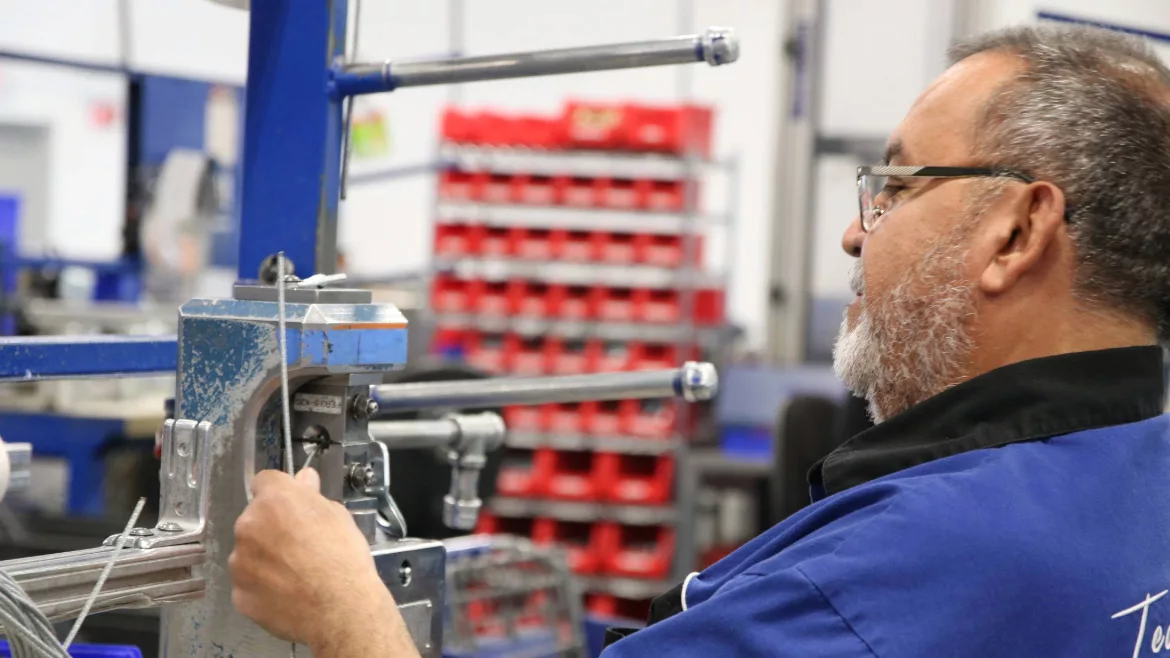
FLASHPOINT: Steel imports have become a flashpoint for the HVAC industry, with $38 billion worth brought into the U.S. in 2024 alone. (Staff photo)
This story has been updated to reflect a new development: A federal appeals court granted the Trump administration’s request to temporarily pause a trade court ruling that struck down most of President Donald Trump’s tariffs.
A fresh wave of uncertainty swept through the HVAC industry Thursday as a federal appeals court granted the Trump administration’s request to temporarily reinstate tariffs that a lower court had just struck down. The move, which pauses a landmark trade-court decision that would have blocked most of President Donald Trump’s global tariffs, has left contractors and manufacturers scrambling to adapt yet again.
This rapid legal about-face means the billions in tariff revenue that the court had ordered refunded to affected businesses may remain tied up for months, if not longer. The administration’s legal team has already signaled it may seek “emergency relief” from the Supreme Court, escalating the fight to the highest level. “They’re challenging the court ruling already,” said Dr. Sunderesh S. Heragu, Regents Professor at Oklahoma State University and president of the Institute of Industrial and Systems Engineers. “Even the Supreme Court might just kick it back and say the lower court ruling holds, but they’ll probably fight all the way, and that means delay. It’s going to continue into the fall, at least.”
For now, the appeals court's stay gives the administration breathing room as it argues that the lower court’s order should be put on hold while the appeals process plays out. The plaintiffs — a coalition of state attorneys general and domestic businesses — have one week to respond, and the government will reply by June 9.
The original court ruling, which had invalidated Trump’s “reciprocal” tariffs and other duties, was sweeping: the three-judge panel — including a Trump appointee — found that the 1970s-era law used to enact the tariffs does not grant “unbounded authority” to presidents. The nationwide, permanent block had covered all the retaliatory tariffs Trump issued in early April as part of his “liberation day” trade plan, and barred the administration from making future modifications to those tariffs.
But with Thursday’s stay, the tariffs are back in effect, at least temporarily, and the administration’s allies are on the offensive. Trump trade advisor Peter Navarro insisted, “We think we have a strong case. Yes, we will immediately appeal and try to stay the ruling,” and downplayed the practical impact for now: “Nothing has changed after the tariff ruling… the court, interestingly enough, basically said we were right—just use different rules and laws.” Stephen Miller, Trump’s deputy chief of staff, called the trade court’s action “out of control” and warned of “judicial tyranny.”
For HVAC contractors, the legal and policy whiplash continues to reverberate.
“The uncertainty created by these tariffs is already doing long-term damage,” Heragu explained. “Canada and Mexico are already seeking new alliances. If we can’t count on steady imports of steel, aluminum, and key components, costs will go up and timelines will get longer. The U.S. just doesn’t have the capacity or labor to make up for all the lost imports in the short term—there’s not enough machinery, and not enough ‘human capital’ willing or able to do that work at current wage rates.”
The numbers tell the story: In 2024 alone, the U.S. imported nearly $38 billion in iron and steel and $17 billion in aluminum. “If you suddenly slap a 25% tariff across the board, it’s not just a linear price hike. You can’t just flip a switch and expect American factories to fill that gap,” Heragu said. “We’re already seeing companies in other countries redirect their exports elsewhere, and that’s going to further squeeze U.S. contractors.”
Manufacturers have responded swiftly. Goodman, for example, has announced an 8% to 10% price increase on all residential unitary and ductless products. Robertshaw has raised prices by 15% on selected items, directly citing tariffs as the reason. These are just two examples from a growing list of manufacturers implementing similar increases, as tracked by the ACHR NEWS.
“Contractors are getting squeezed from both sides,” Heragu said. “If you’ve already put in a bid at one price and the cost of equipment jumps 10 or 15 percent, you’re either eating the loss or passing it on to the customer. That’s not a sustainable way to run a business.”
The price hikes are also arriving at the worst possible time. With summer demand surging, many contractors report scrambling to secure inventory before further increases hit. With high uncertainty in input pricing, businesses are avoiding operating at full capacity.
“It’s a holding pattern,” Heragu said. “CEOs are waiting to see what happens, but the reality for smaller contractors is they can’t afford to wait. They’re trying to keep projects on track, but every new round of tariffs or price hikes makes that harder.”
Yet, amid the chaos, not everyone is raising prices. Tony Petrossian, president of Rossi HVAC Hardware, recently reassured customers that his company would keep prices steady, crediting Rossi’s long-standing commitment to American-sourced materials. “While others are raising prices, we are not implementing any increases at this time – and we don’t anticipate the need to in the foreseeable future,” Petrossian wrote in a customer letter. Rossi’s stability in pricing stands in stark contrast to much of the HVAC market, where uncertainty is the new normal.
Heragu believes the volatility goes beyond immediate costs.
“There’s no part of this tariff policy that puts downward pressure on the price. It only puts upward pressure,” he said. “It’s not just about tariffs. We’re seeing labor shortages, stricter immigration policies, even cuts to university research, and fewer international students in technical fields. All of these things matter for innovation and productivity in HVAC and related sectors.”
He estimates that, as the dust settles, the industry could face sustained cost increases of 10% to 30%.
“And that’s if things don’t escalate further,” he warned. “We’re already seeing inflation in the 8-10% range for many goods, and if tariffs stick at even 10–25%, you could see that number go much higher. Contractors who rely on imported parts are going to feel it most.”
As the administration presses its appeal and manufacturers continue to adjust, Heragu cautions that the only sure thing is more unpredictability.
“Uncertainty is never good for business. Companies are being forced to delay investments, consumers are putting off big purchases, and everyone is waiting to see what happens next,” Heragu said, noting servicing and maintaining existing equipment – instead of replacing it – is becoming a significant preference for consumers.
For now, HVAC contractors and their customers are left to navigate a turbulent market defined by rapid legal shifts, rising material costs, and a policy environment where the only constant is change.
“This is not just about economics,” Heragu concluded. “It’s about the entire ecosystem of how we build, cool, and heat our homes and businesses in America. And right now, that ecosystem is under a lot of strain.”
Looking for a reprint of this article?
From high-res PDFs to custom plaques, order your copy today!