ETH Zurich Unveils Revolutionary 'Smart Walls' That Could Replace Ventilated AC
New material could turn a building's walls into humidity controlled lungs
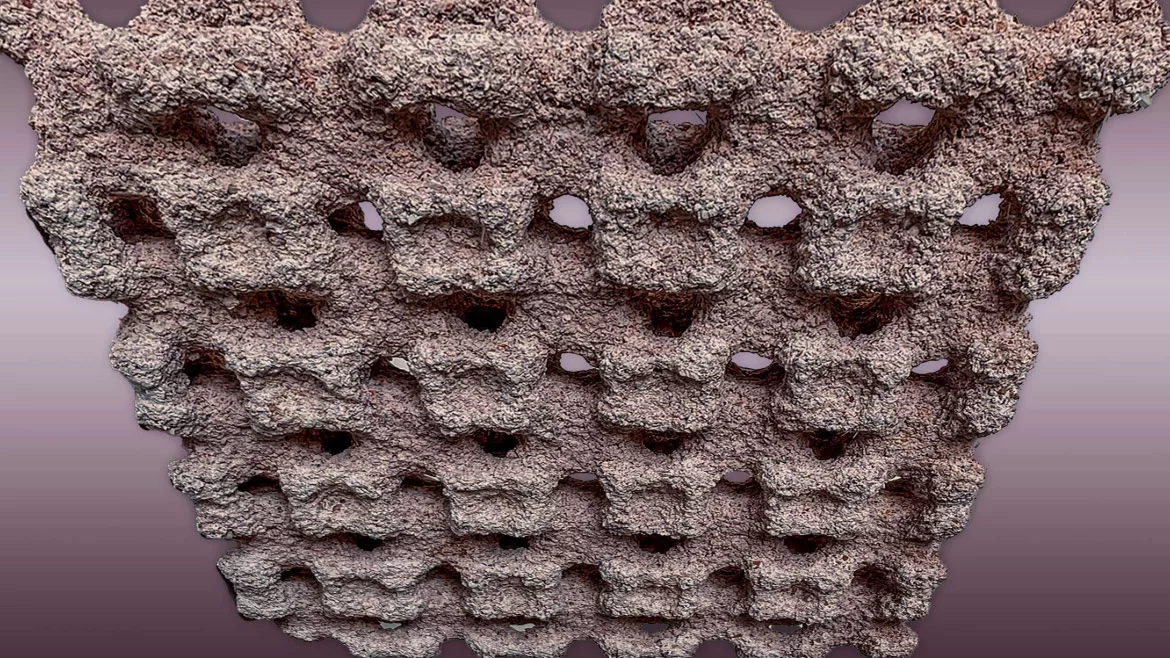
NATURAL: Wall and ceiling materials, shown here in a laboratory demonstration at ETH Zurich, can absorb excess moisture from crowded indoor spaces, acting like a building's natural dehumidifier. (Photo courtesy of Pietro Odaglia / Josef Kuster)
Can buildings breath? New research from Switzerland shows how.
Researchers at ETH Zurich have developed an innovative building material that naturally regulates indoor humidity without using electricity. The technology could significantly reduce the carbon footprint of commercial buildings while improving air quality for occupants.
The new material, created from recycled marble quarry waste, can be 3D-printed into wall and ceiling components that act like a building's lungs, absorbing excess moisture when rooms are crowded and releasing it later when needed. In simulations, these components reduced humidity-related discomfort by up to 85 percent compared to conventional walls.
"Our solution is particularly effective for high-traffic spaces where existing ventilation systems struggle to keep up," explained Professor Guillaume Habert, who supervised the research at ETH Zurich's Sustainable Construction department.
The innovation comes at a crucial time, as buildings account for a significant portion of global energy consumption, with ventilation and climate control systems being major contributors. Traditional mechanical dehumidification systems, while effective, consume substantial energy and often rely on electricity sources that generate greenhouse gases.
From Waste to Walls
What makes this development particularly noteworthy is its circular economy approach. The researchers used finely ground marble waste—a material typically discarded by quarries—combined with a special geopolymer binder that produces significantly less CO2 than traditional cement during production.
The components are manufactured using an advanced 3D printing technique called binder jet printing, where the marble powder is applied in layers and bonded using the geopolymer solution.
"This process enables the efficient production of components in a wide variety of shapes," noted Professor Benjamin Dillenburger, who leads the Digital Building Technologies group at ETH.
Real-World Impact
The technology's effectiveness was demonstrated through a virtual case study of a public library reading room in Porto, Portugal. When the room's walls and ceiling were lined with 5-centimeter-thick panels of the new material, the simulation showed dramatic improvements in air quality and comfort levels.
Dr. Magda Posani, who led the study of the material's properties before taking a position at Aalto University, emphasizes the long-term environmental benefits: "Over a 30-year lifecycle, these components produce significantly lower greenhouse gas emissions compared to traditional ventilation systems."
While traditional clay plasters offer similar humidity-regulating properties with an even smaller carbon footprint, the new material boasts superior moisture storage capacity, making it particularly suitable for modern commercial spaces with high occupancy rates.
The research team is already working on next-generation versions of the material in collaboration with Turin Polytechnic and Aalto University, aiming to further reduce its carbon footprint. As Switzerland pushes toward its 2050 net-zero target, innovations like this could play a crucial role in creating more sustainable built environments.
The findings were published in Nature Communications on January 10, 2025.
Looking for a reprint of this article?
From high-res PDFs to custom plaques, order your copy today!