Heating and Cooling the Communities of the Future – Geothermal, Geo-exchange and District Energy
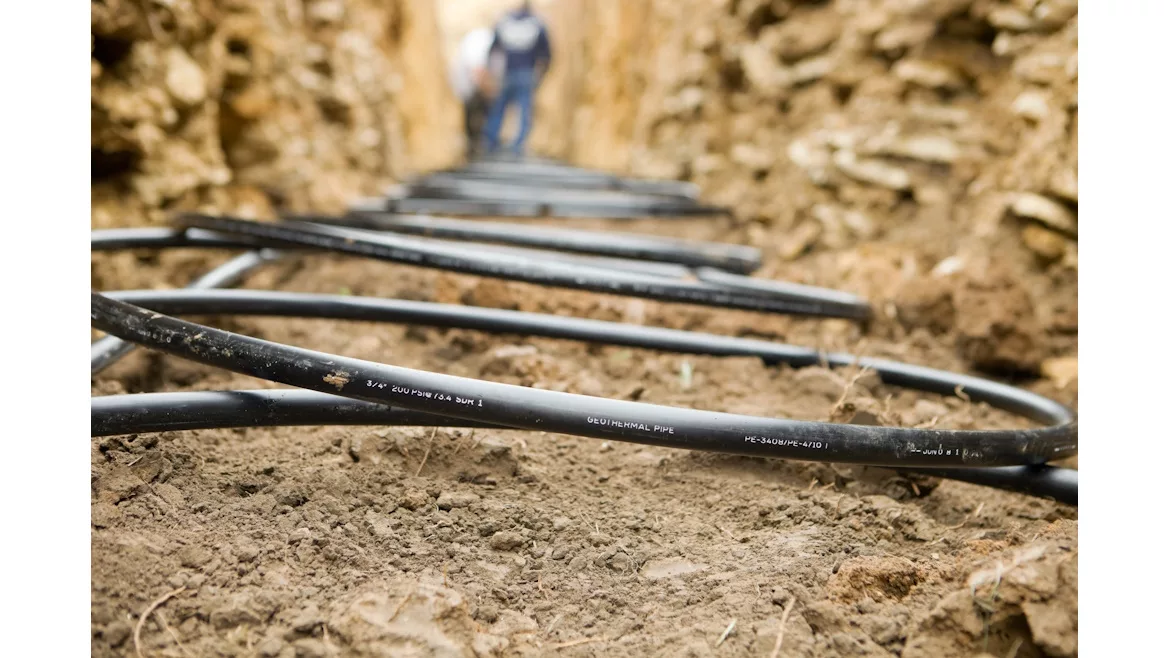
BENEATH THE SURFACE: Geothermal and geo-exchange are helping to shape the future of low-carbon communities. (Courtesy of Getty Images / BanksPhotos)
District energy is a decarbonization solution beneath our feet – with the thermal energy infrastructure of heating, cooling, and combined heat and power (CHP) systems housed below many of our city centers, college campuses, hospital complexes, and military bases. But, there is another important element of the energy transition that’s also hidden beneath the surface of the Earth – geothermal and geo-exchange.
What are geothermal and geo-exchange?
Geothermal energy is a type of renewable energy that uses accessible thermal energy deep underground, extracting the heat from geothermal reservoirs in the Earth’s crust. Since the heat from the Earth’s interior is constantly replenished by the decay of naturally occurring radioactive elements, this energy source will be viable for centuries to come. Deep geothermal converts heat and pressure to electricity. According to the Department of Energy, there is potential for 90 gigawatts of geothermal electricity-generating capacity in the US by 2050, and, depending on the development of storage capabilities and other emerging technologies, there is potential for up to 300GW of next-generation geothermal electricity generation.
Of course, not all geothermal generates electricity. Heating and cooling with shallower geo-exchange (400-800 foot deep borehole fields), as Princeton University describes it, operates more like a “thermal piggy bank.” During summer months, when buildings require comfort cooling, heat from buildings is removed via a heat pump and stored in the ground through geo-exchange bores. During winter months, the stored heat is extracted from those same bores and the warmed rock functions as a heating source for the buildings. The relatively constant range of temperature for the heat pump helps to optimize energy efficiency year-round. The coefficient of performance (COP) of a ground-sourced heat pump can range from 3 to 6, which means that one unit of energy (electricity) consumed to run the heat pump is converted into 3 or 6 units of useful thermal energy. Some consider this electrification of heating and cooling and depending on state, provincial, or local policies, can be viewed favorably as a means to decarbonize the economy.
Part of a low-carbon strategy
Geothermal and geo-exchange can both be used as a low carbon strategy. While geothermal uses heat deep within the earth as a renewable source of heat by extraction, in geo-exchange systems, the earth is essentially employed as a battery to store thermal energy.
Coupled with district energy systems, geothermal and geo-exchange can be a valuable tool to accelerate the path to net zero for cities, communities, and campuses. In Canada, Enwave is using geo-exchange in innovative ways for both suburban settings and an urban, downtown environment in Toronto
In nearby Markham, Ontario, about 300 homes are connected to a geo-exchange district energy system. The neighborhood does not use fossil fuels for heating or cooling the homes, resulting in a 75% reduction of carbon emissions. The market demand for low-carbon homes is very strong.
We can also look to college campuses in the US for leadership in the deployment of district energy geo-exchange systems. Oberlin College in Ohio has implemented a project known as the Sustainable Infrastructure Program, which is vital for Oberlin’s progress on its 2006 pledge to become carbon neutral by 2025. After drilling approximately 850 boreholes, the new heat pump system will reduce campus energy consumption by 30 percent, cut annual water use by 5 million gallons and sewer discharge by 4 million gallons while significantly cutting overall campus energy costs.
Cornell University is well known for its highly successful Lake Source Cooling (LSC) project launched in 2000 to leverage renewable cooling from Lake Cayuga, which reduced its energy use for cooling by 85%, saving over 20 million kWh per year. Cornell is now testing the potential for deep geothermal technology to meet their sustainability goals. The Cornell University Borehole Observatory (CUBO) used a $7.2 million grant from the U.S. Department of Energy to drill an approximately two-mile deep geothermal exploration well in 2022.
The goal of this exploration is to determine the viability of using enhanced geothermal system technology to mitigate remaining greenhouse gas emissions by up to 30%. The proposed system would include a pair of wells that would puncture the earth to a depth where internal heat is significantly hotter than at the surface. An injection well would be used to pump water down through the rock, where it would naturally heat up. This heated water would then return to the surface through a second well and pump to a heat exchange facility, which would then distribute the water into a secondary loop. From there, the heated water would be sent to warm campus buildings.
Since 2022, enough data has been collected to prove that the subsurface temperature is indeed hot enough and in sufficient volume to allow Cornell to move on to a proposed second phase of testing. Cornell University would be heated by deep geothermal and cooled by deep lake water, essentially covering over 20 million square feet of building space with renewable thermal energy.
Reliable, durable, and cost-effective
Geothermal energy is “always on” and doesn’t dissipate when the sun goes down or the wind stops blowing. Geo-exchange and deep geothermal systems are designed to last for decades. These are generally long-life durable assets. Pumps and heat exchangers may have a useful life of 25 years while other components may depreciate over 50 years or longer. While the initial capital costs for geo-exchange may involve a large investment, pairing it with a district energy system has advantages of economies of scale. Higher operating efficiencies coupled with lower emissions make geo-exchange systems an attractive solution both for new-build developments and existing campus or community settings.
The future of geothermal and geo-exchange
As cities, communities, and campuses seek robust, resilient, and lower-carbon energy solutions, the interest in geo-exchange with district energy is growing. Aggregating the heating and cooling needs of dozens or even hundreds of buildings through a district energy network can be a vital infrastructure investment to support the economics of a preferred environmental solution.
Looking for a reprint of this article?
From high-res PDFs to custom plaques, order your copy today!